
Why GaN Chargers Are Replacing Traditional Chargers Faster Than Ever
GaN charging technology is changing modern charging with faster speeds higher efficiency and lower heat output.
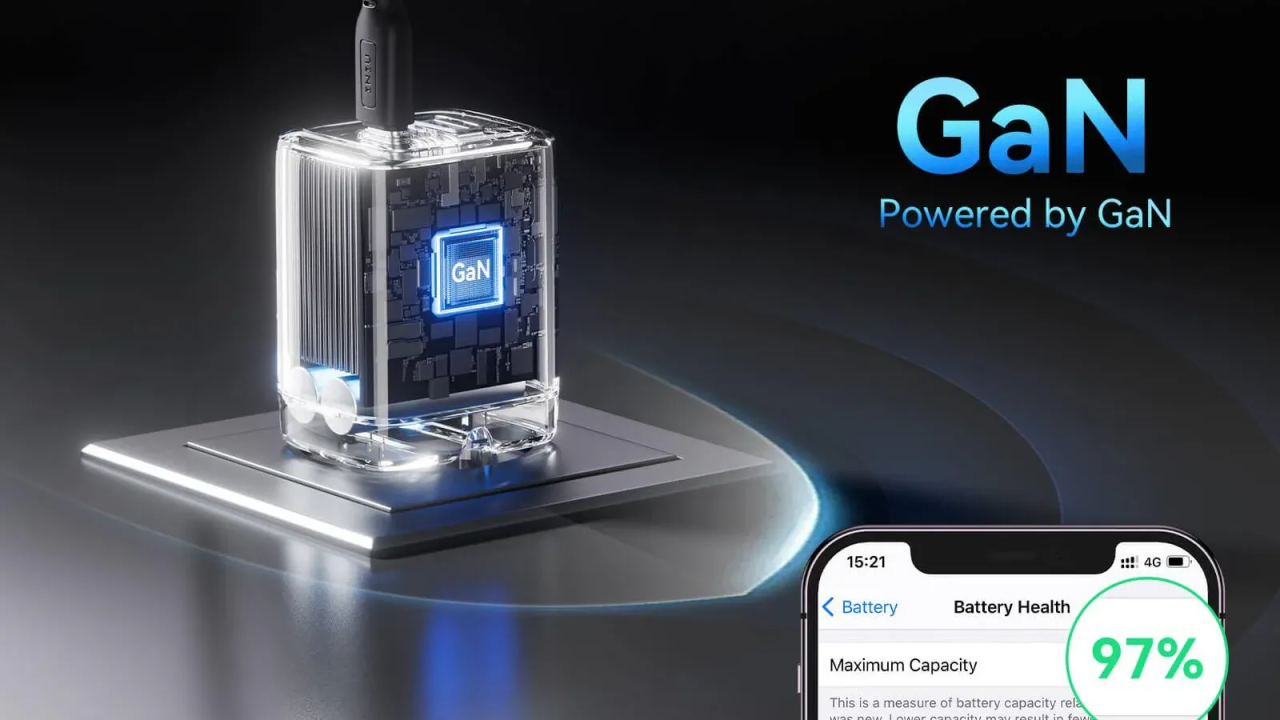
GaN chargers are becoming increasingly common in the world of consumer electronics, with many smartphone and laptop brands now offering them as part of their charging lineup. While the name may appear on the charger itself, many users are still unfamiliar with what the technology actually does and why it is gaining attention. The shift from traditional silicon based chargers to GaN technology is largely driven by the demand for faster, safer and more efficient charging solutions.
Unlike conventional chargers, GaN chargers use Gallium Nitride as the main semiconductor material instead of silicon. This advanced material is capable of handling higher voltages and operating efficiently even at elevated temperatures. As a result, chargers built with GaN technology are able to transfer power more effectively while reducing energy loss during the charging process.
One of the biggest advantages of GaN technology is its improved efficiency. Traditional silicon chargers typically operate at around 85 to 90 percent efficiency, while GaN chargers can reach nearly 95 percent. This means more electrical power reaches the connected device instead of being wasted as heat. Faster charging and improved energy management are direct benefits of this higher efficiency.
The compact size of GaN chargers is another major reason for their growing popularity. Since the technology generates less heat, manufacturers do not need to include large cooling components inside the charger. This allows them to design smaller adapters that can still deliver high power output. Despite their portable size, many GaN chargers are capable of charging smartphones, tablets and even laptops without compromising performance.
High powered GaN chargers also support charging multiple devices at the same time. For example, a 160W GaN charger can power several compatible gadgets simultaneously through multiple ports. This reduces the need to carry separate chargers for different devices, making it especially useful for people who travel frequently or work with multiple electronics every day.
Although GaN chargers offer several advantages, they are generally more expensive than traditional chargers. The manufacturing process is more advanced and requires specialized semiconductor materials along with additional safety components. These factors increase production costs, which are reflected in the retail price.
A standard 15W charger can often be purchased for between Rs 500 and Rs 1000, while a GaN charger may cost around Rs 2500 or more depending on its power output and features. For users who own only a basic smartphone that supports low speed charging, investing in a premium GaN charger may not provide significant benefits.
However, for people who regularly use fast charging smartphones, tablets, laptops or other compatible devices, a GaN charger can be a practical long term investment. It combines high power delivery, energy efficiency and portability into a single charging solution, making everyday charging more convenient while reducing clutter.
As more electronics manufacturers adopt GaN technology, these chargers are expected to become even more common in the market. Their ability to deliver powerful performance in a compact form factor positions them as one of the most significant advancements in modern charging technology.