India to Introduce Quality Rules for Smartphone Screen Protectors
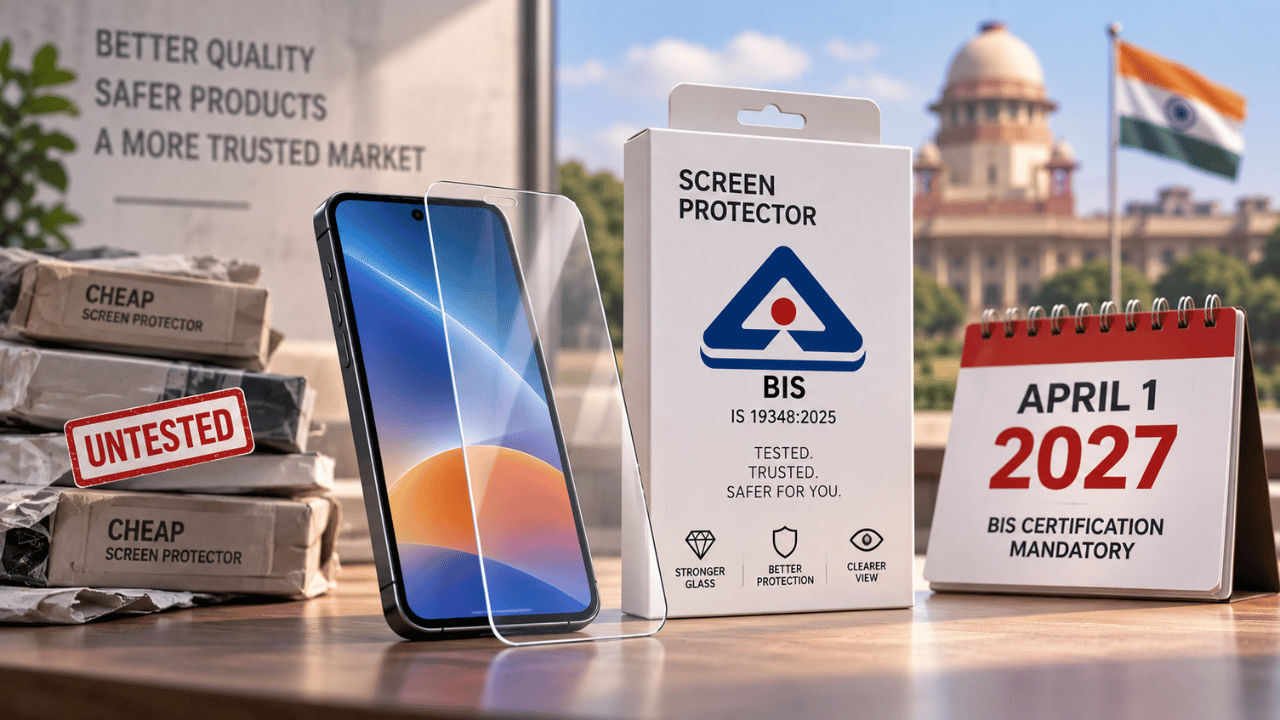
India will introduce mandatory quality standards for smartphone screen protectors from April 2027, covering glass quality, dimensions, strength, coatings, certification and compliance requirements for manufacturers and importers for sale nationwide.
Smartphone accessories have become a large part of the mobile industry, but quality can vary considerably between products. To address this issue, the Indian government is bringing smartphone screen protectors under a specific quality standard.
The revised provisions are scheduled to take effect from April next year. Once the rules become applicable, manufacturers and importers of covered smartphone screen protectors will have to meet the specified requirements before selling their products in the Indian market.
The move is particularly relevant because screen protectors are available in a wide range of materials, designs and price points. While some products focus on basic protection, others offer features such as anti glare coatings, privacy layers and blue light filtering.
The government has added smartphone screen protectors to the list of products covered under its compulsory registration requirements. The Ministry of Electronics and Information Technology made the change through an amendment dated September 21.
The applicable standard has been identified as IS 19348:2025. It is titled Glass Screen Protector Specification and sets out requirements intended to bring greater consistency to the products available in the market.
One of the main areas covered by the standard is the quality of the glass used in screen protectors. The provisions also address dimensions and strength, which can influence how effectively a protector performs its intended function.
The standard goes beyond the basic glass material. It also covers components and features used in different types of screen protectors. These include adhesives, anti shatter films, anti glare coatings, blue light filtering layers and privacy layers.
This means manufacturers may have to review their existing products and production processes before the new requirements become mandatory. Products that do not meet the applicable specifications may not be able to continue in the market under the new compliance framework.
Certification will also become an important part of the process. After meeting the required conditions and completing the certification procedure, eligible screen protectors will receive the relevant BIS marking.
For consumers, the registration and certification information could make it easier to identify products that comply with the prescribed standard. At present, shoppers often compare screen protectors mainly on price, material and claims made by sellers.
The new system could provide another reference point when choosing between different products. Compliance information may also give buyers a clearer indication of whether a particular screen protector has gone through the required certification process.
However, the new requirements will also create additional responsibilities for businesses operating in this segment. Manufacturers and importers may have to conduct additional testing and complete certification procedures to meet the standard.
These steps can increase operating expenses for companies. Businesses may need to spend more on testing, certification and compliance before their products can be sold under the new framework.
There could eventually be an effect on product costs, although the notification does not specify that retail prices will increase. The final impact on consumers will depend on how manufacturers and importers absorb or pass on the additional expenses.
Imports are another important part of the issue. A substantial number of smartphone screen protectors sold in India are imported from China. Bringing these products under domestic quality requirements could therefore require importers to ensure that overseas suppliers meet the applicable Indian standards.
For importers, checking product specifications before bringing shipments into the country could become more important. Suppliers may also need to provide the necessary documentation and meet testing requirements linked to the Indian standard.
The changes are part of a broader effort to bring greater quality control to consumer products and accessories. Smartphone screen protectors may be small products compared with the phones themselves, but they are widely used by smartphone owners.
A standardised approach could also affect the variety of products available in the market. Manufacturers offering specialised protectors with privacy, blue light filtering or anti glare features may need to ensure that those products satisfy the relevant provisions.
The new requirements are not scheduled to take effect immediately. Businesses in the smartphone accessory sector have time to understand the standard, assess their products and prepare for certification before the April 2027 implementation date.
For consumers, the immediate impact is likely to be limited until the rules become operational. Once the new framework takes effect, however, BIS marking and compliance information could become more important when purchasing a screen protector.
The success of the new system will ultimately depend on how effectively manufacturers, importers and certification authorities implement the requirements. For an industry dominated by a large number of products and suppliers, consistent enforcement will be important to ensure that the new quality standards have a meaningful impact.