
Why Sitting On The Floor While Eating Still Matters In Modern Life
Sitting on the floor while eating may support mindful meals, natural movement and better flexibility, making this old tradition worth a closer look today.
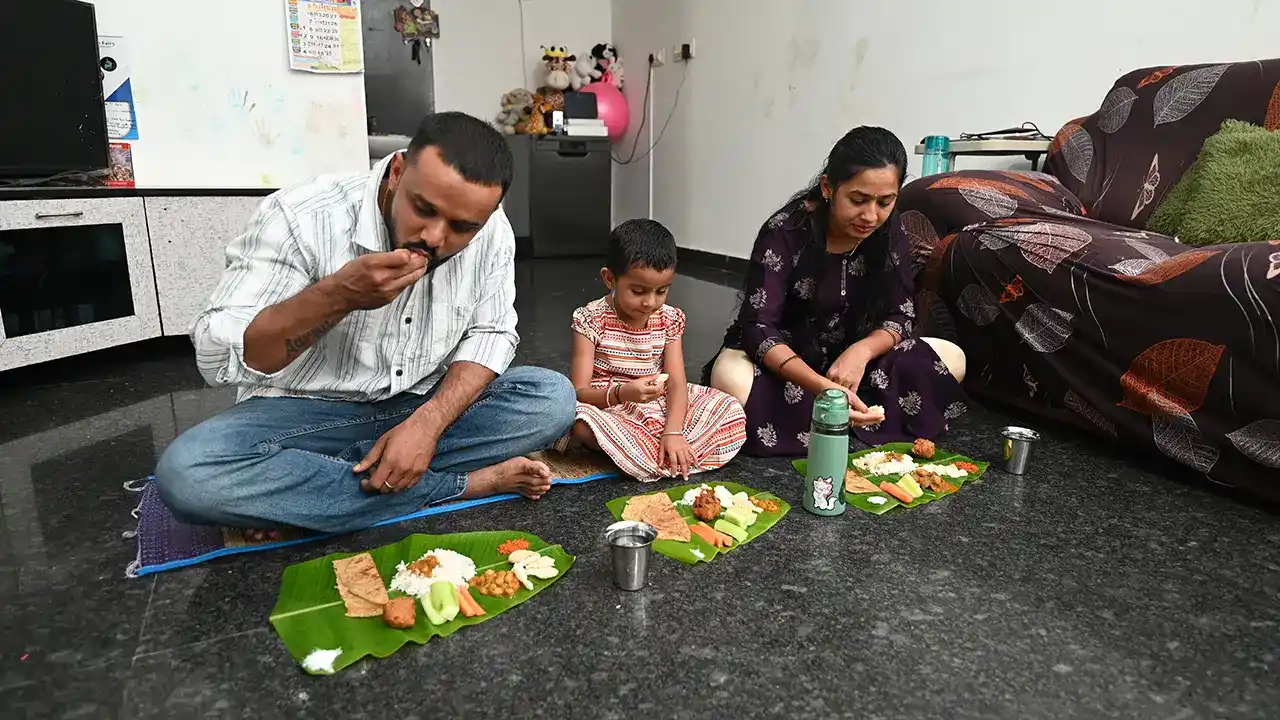
For generations, eating while seated on the floor has been a familiar practice in many Indian households. With modern homes increasingly relying on dining tables and chairs, the habit has gradually become less common. Yet the traditional posture continues to attract attention because it combines eating with a simple form of movement and encourages people to slow down during meals.
One of the noticeable differences is the way the body moves while eating on the floor. A person sitting with their legs folded naturally bends forward slightly to reach the food. This repeated movement involves the hips, knees, ankles and core muscles. Getting up after the meal also requires additional movement, making the overall routine more active than simply remaining seated in a chair.
The posture may also encourage people to eat more slowly. When meals are eaten while sitting comfortably on the floor, particularly in a traditional family setting, people may naturally spend more time chewing and paying attention to their food. Eating slowly can support mindful eating and may help people recognize feelings of fullness rather than continuing to eat automatically.
Another commonly discussed benefit is flexibility. Sitting on the floor with the legs folded requires a certain degree of mobility in the hips, knees and ankles. For people who are already comfortable with the posture, regularly getting down to the floor and standing back up can provide a small amount of everyday movement.
However, this does not mean floor sitting can prevent arthritis or completely eliminate joint problems. People with knee, hip or back conditions may actually find the position uncomfortable or difficult. For them, a supportive chair or another comfortable seating arrangement may be more appropriate.
Posture is another factor worth considering. Sitting upright while eating can help a person maintain a stable position and remain aware of how they are eating. The traditional cross legged position is sometimes compared with comfortable seated yoga postures, although simply sitting on the floor should not be considered a substitute for yoga or a medical treatment for stress.
The idea that floor sitting significantly improves blood circulation to the heart and digestive organs is often repeated as a traditional health claim, but there is limited evidence to support such a specific effect. Blood circulation is controlled by a complex cardiovascular system, and there is no established rule that sitting on the floor automatically directs more blood toward the stomach or heart.
Digestion is also influenced by several factors, including the type and quantity of food, eating habits, physical activity, sleep and overall health. While the relaxed setting and slower pace associated with floor dining may support better eating habits for some people, the seating position itself should not be described as a guaranteed way to improve digestion.
There can be a social benefit as well. In many families, sitting together on the floor for a meal creates an opportunity to talk, spend time together and focus on the meal rather than constantly looking at phones or moving between activities. That relaxed environment can make eating feel less rushed.
The practice can also encourage people to become more aware of their bodies. Moving from standing to sitting on the floor and then getting back up requires coordination, balance and lower body mobility. Maintaining these abilities can be useful in everyday life, particularly as people get older.
At the same time, there is no need to view dining tables and chairs as unhealthy simply because floor eating is traditional. The most suitable position depends on a person’s comfort, mobility and physical condition. A comfortable chair can also support good posture and mindful eating when used properly.
The real value of the traditional practice may therefore lie less in extraordinary health benefits and more in the habits that can accompany it. Sitting comfortably, eating slowly, chewing properly and sharing an uninterrupted meal with family can all contribute to a healthier relationship with food.
For people who can comfortably sit on the floor, including the practice occasionally can be a simple way to add movement to their daily routine. But anyone with significant joint or mobility problems should avoid forcing the posture and should choose a position that does not cause pain.
An old household habit does not always need to be labelled as a miracle health remedy to remain useful. Floor dining can still have a place in modern life when it is comfortable, practical and suited to the individual. Its biggest advantage may simply be the opportunity to slow down, sit mindfully and enjoy a meal without rushing.