
Coconut Opening Tricks: Easy Ways To Open A Coconut Without A Hammer
Opening a hard coconut does not always require a hammer. A few simple household methods can help crack the shell, provided basic safety steps are followed.
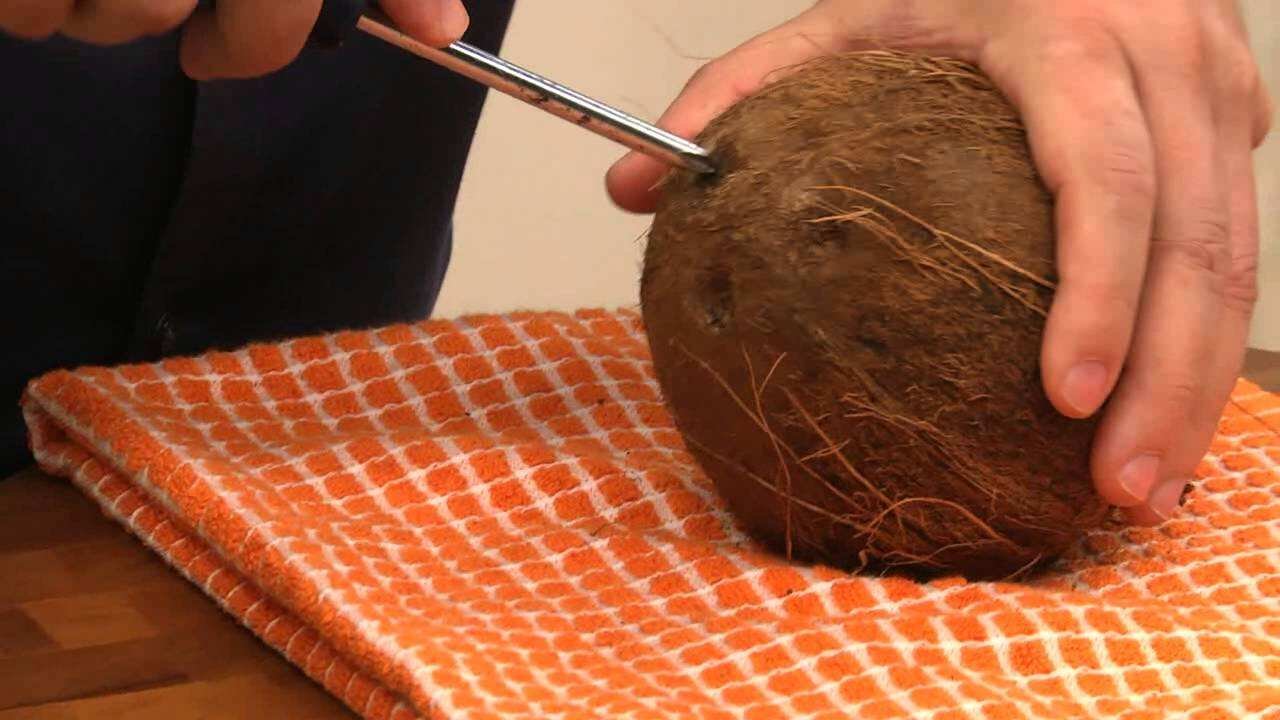
Coconut opening tricks can make kitchen preparation easier.
A rolling pin can help crack the coconut shell.
Oven heat can loosen the hard coconut shell.
Opening a coconut can feel like a small kitchen challenge, especially when there is no hammer around. The shell is tough, but there are several practical ways to open it using common household items.
Before trying any method, drain the coconut water completely. Look for the softer spot among the three eyes on the coconut and make a small opening to release the water. This step is particularly important if heat will be used later.
Heavy Rolling Pin Method
Place the coconut inside a folded kitchen towel so it stays steady. Use a sturdy rolling pin to gently tap around the middle of the shell. Turn the coconut as you work so the pressure is spread across different sections.
After several gentle taps, small cracks may begin to appear. Once the shell starts opening, stop hitting it and carefully separate the two halves by hand. A solid wooden or metal rolling pin is preferable to a lightweight one.
Using The Back Of A Kitchen Knife
The sharp edge of a knife should never be used for this method. Instead, the blunt back portion of a strong kitchen knife can be used to tap around the centre of the coconut.
Keep the coconut firmly positioned on a stable cutting board and keep your fingers away from the area being struck. Rotate the coconut gradually while tapping. If the knife slips or the coconut becomes difficult to control, stop and choose another method.
Heating The Coconut In An Oven
Heat can sometimes make the coconut shell easier to crack. First, make sure all the coconut water has been drained. Place the coconut on a baking tray and heat it for around 10 to 15 minutes.
Use heat resistant gloves when removing it from the oven. Allow the coconut to cool before gently tapping it against a sturdy surface. A coconut containing water should not be placed in an oven because pressure can build up inside.
Using A Hard Surface
Another simple option is to wrap the coconut in a thick kitchen towel and gently tap it against a strong floor or other suitable hard surface. The towel helps contain loose shell pieces and provides some control.
Check the coconut after every attempt. Once a crack appears, stop and carefully open the shell. Avoid throwing the coconut from a height or using excessive force.
Rock Or Concrete Edge Method
A solid rock or concrete step can also be used carefully. Keep the coconut wrapped in a thick towel and gently tap different sections against the hard surface while rotating it.
The idea is to weaken the shell gradually rather than break it with one powerful impact. Avoid using glass, thin tiles or fragile surfaces, as they can crack or become damaged.
Safety Matters When Opening A Coconut
Whichever technique you choose, control is more important than force. Keep the coconut stable, protect your hands with a towel when appropriate and keep your fingers away from the area receiving impact.
Sharp shell edges can appear after the coconut breaks, so handle the pieces carefully. Once the shell is open, the white coconut flesh can be loosened with a strong spoon and removed for cooking or eating.