Supreme Court Questions Use of Force Against Student Protesters Calls for Uniform Police Guidelines
The Supreme Court observed that peaceful protests are a constitutional right and said police action including lathi charges should not be justified solely because citizens participate in lawful demonstrations.
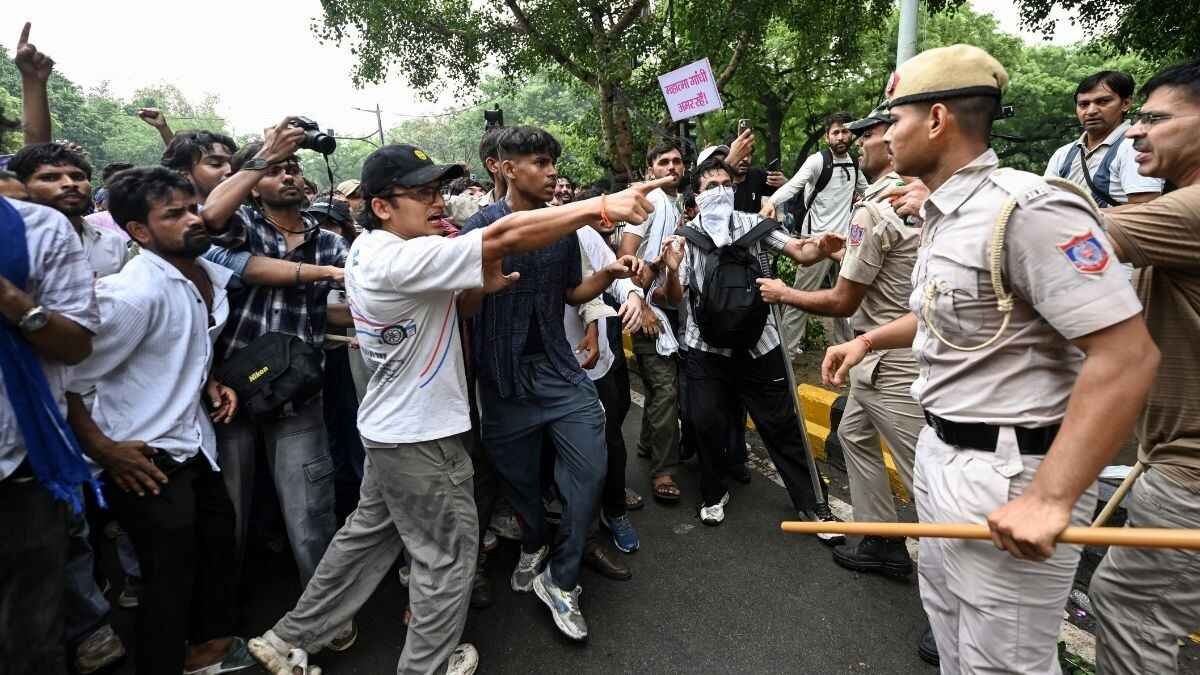
The Supreme Court has observed that police cannot justify the use of lathi charges simply because people are participating in a protest. Hearing petitions related to alleged police action during demonstrations over the NEET 2026 question paper leak, the court emphasized that peaceful and lawful protests are protected under the Constitution.
A bench comprising Chief Justice Surya Kant along with Justices Joymalya Bagchi and V Mohan heard the petitions and made it clear that the right to stage peaceful demonstrations is a constitutional guarantee. The bench remarked that the use of force against protesters merely for assembling and expressing their views cannot be considered acceptable.
The petitions before the court raised concerns over police action during the Parliament Chalo protest organized against the alleged NEET 2026 paper leak. According to the pleas, students participating in the demonstration were subjected to lathi charges, pellet guns and tear gas. Similar allegations of force against student protesters in different parts of the country were also brought before the court.
During the hearing, the bench stressed that maintaining law and order is important, but any response from law enforcement must remain proportionate and within the boundaries of the law. The judges noted that peaceful protests should be distinguished from situations involving violence or threats to public safety.
The Supreme Court also observed that allegations of excessive police force deserve independent scrutiny. It said that complaints regarding coercive action by law enforcement should be examined through a fair and impartial process to ensure accountability and public confidence.
Another significant observation made by the bench was the need for standardized policing practices across the country. The court suggested that India should have uniform guidelines for handling public demonstrations so that police responses remain consistent, balanced and in line with constitutional principles.
Legal experts believe such guidelines could help reduce confusion during large public gatherings while ensuring that both public order and the fundamental rights of citizens are protected. The court’s observations highlight the importance of balancing security concerns with democratic freedoms.
The matter remains under judicial consideration, and further hearings are expected. The case is likely to shape future discussions on police procedures during public protests and the constitutional safeguards available to citizens exercising their right to peaceful assembly.