India LNG Train: India’s First LNG Train Flagged Off by Amit Shah in Gujarat
India has introduced its first LNG diesel dual fuel train from Sabarmati, aiming to reduce diesel use, fuel costs and emissions through cleaner railway technology.
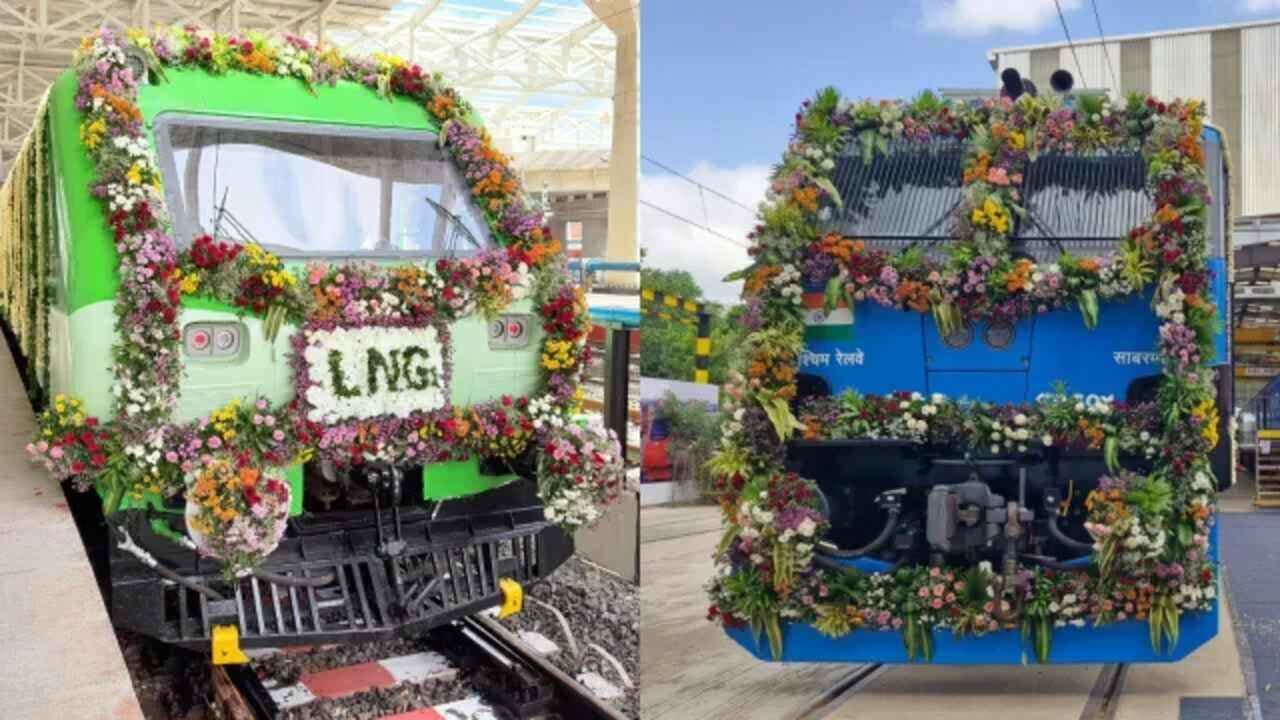
India LNG Train: India has taken another step towards using alternative fuels in railway operations with the launch of its first LNG diesel dual fuel train. Union Home and Cooperation Minister Amit Shah flagged off the train from Sabarmati Railway Station in Ahmedabad on Sunday.
The train is not powered entirely by LNG. Instead, its engines have been converted to a dual fuel system that allows them to operate on both liquefied natural gas and diesel. This gives the railway system the flexibility to switch fuels depending on availability.
Under the project, two 1,400 horsepower Driving Power Cars at the Sabarmati Integrated Coaching Depot were modified for LNG diesel operation. The converted units have already completed more than 2,000 kilometres of field trials to check their performance and reliability.
The new system is designed to replace up to around 40 percent of diesel consumption with LNG. Apart from reducing dependence on diesel, the initiative is expected to bring down fuel expenses and emissions, including carbon dioxide, nitrogen oxides and particulate matter.
The inaugural service is an eight coach non AC DEMU train. It is operating between Sabarmati and Mahesana Junction for the initial run, while details of its regular route are expected to be finalised later.
Railway estimates based on the trials indicate that each converted power car could save around ₹11.9 lakh in fuel expenses annually. For an eight coach train using two such power cars, the estimated annual saving is around ₹23.9 lakh.
The LNG project was part of a wider set of railway initiatives launched in Gujarat. During the programme, several projects related to railway infrastructure, signalling, safety and locomotive maintenance were also inaugurated or launched. The combined value of the projects was reported to be more than ₹1,500 crore.
Speaking at the event, Amit Shah highlighted the changes taking place in Indian Railways over the past 12 years. He pointed to the expansion of dedicated freight corridors, modern railway infrastructure and newer technologies such as hydrogen powered trains and the indigenous Kavach safety system.
Shah also cited a reduction in railway diesel consumption. According to figures shared at the event, annual diesel use fell from 293 crore litres in 2015 to 108 crore litres in 2024 25. He said the government is working towards eliminating diesel use in railway operations by 2030.
Railway electrification has also expanded sharply, according to the figures presented by the minister. Annual electrification increased from about 75 kilometres in 2010 11 to around 7,188 kilometres in 2023 24, with 99.6 percent of the railway network reported as electrified.
The LNG train adds another alternative fuel technology to Indian Railways after the introduction of hydrogen powered trains. Unlike hydrogen fuel cell technology, the new LNG system works by modifying an existing diesel engine so it can use both LNG and diesel.
The project is being viewed as a way to test cleaner fuel technology while retaining the operational flexibility of conventional diesel powered trains. Its performance in regular service will provide further data on the practicality of LNG use across the railway network.