Supreme Court Questions Police Action Against Student Protesters During Parliament March
The Supreme Court questioned the use of force against student protesters, ordered preservation of evidence, and signaled that uniform national guidelines for handling peaceful demonstrations may be considered.
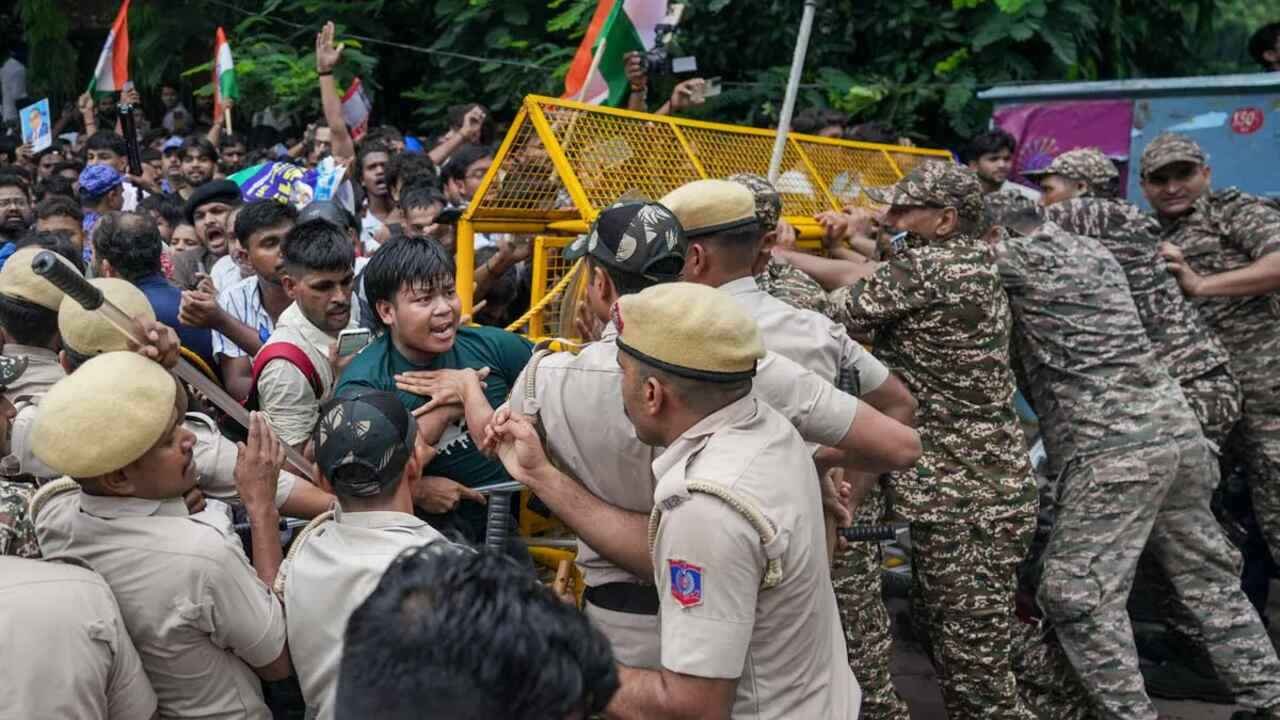
The Supreme Court on Monday raised serious concerns over the police response to student demonstrators during the Parliament march held on July 20, observing that the constitutional right to peaceful protest cannot be ignored simply because people gather to express their demands. The court remarked that the use of force against protesters requires careful legal scrutiny and cannot become a routine response.
The observations came while hearing petitions seeking an independent investigation into the police action during the Sansad Chalo demonstration near Jantar Mantar in New Delhi. Petitioners alleged that law enforcement personnel used baton charges and tear gas against students attempting to stage a peaceful protest, prompting demands for judicial intervention.
During the proceedings, the bench indicated that allegations of excessive police action deserve a proper inquiry. It also stated that it would examine the possibility of framing uniform national guidelines to regulate how police handle public demonstrations, with the aim of balancing public order and citizens’ constitutional freedoms.
Those who approached the court requested directions to preserve all available evidence linked to the incident. They sought protection of CCTV recordings, body worn camera footage, and other electronic material that could help establish the sequence of events. The petitions also asked for compensation for protesters who allegedly suffered serious injuries during the confrontation.
While expressing concern over the rights of demonstrators, the Supreme Court also acknowledged the safety of police personnel deployed during such situations. The bench asked why adequate protective equipment had not been provided to officers who faced violent conditions while carrying out their duties. It agreed to hear a separate petition relating to injuries sustained by police officials during the clashes.
The incident triggered widespread political debate across the country. Leader of the Opposition Rahul Gandhi, after visiting injured students in hospital, alleged that pellet guns had been used against peaceful protesters. He later repeated the allegation while criticizing the government’s approach toward student movements in different states. Delhi Police, however, denied using pellet guns during the operation.
The protests had been organized over allegations surrounding the NEET examination paper leak and continued for nearly 36 days under the leadership of the Cockroach Janta Party. Demonstrators eventually called off their agitation after the government accepted several of their key demands and Union Education Minister Dharmendra Pradhan resigned, accepting moral responsibility for the developments.
Although the protests have ended, the legal questions surrounding police conduct remain active before the Supreme Court. The outcome of the case could influence future policing standards for public demonstrations and strengthen legal safeguards governing the right to peaceful assembly in India.