Police Diary Reveals DCP Approved Pellet Gun Use During Delhi Student Protest
A police diary entry has reportedly confirmed official approval for pellet gun deployment during the Delhi student protest raising fresh concerns over crowd control methods and police accountability.
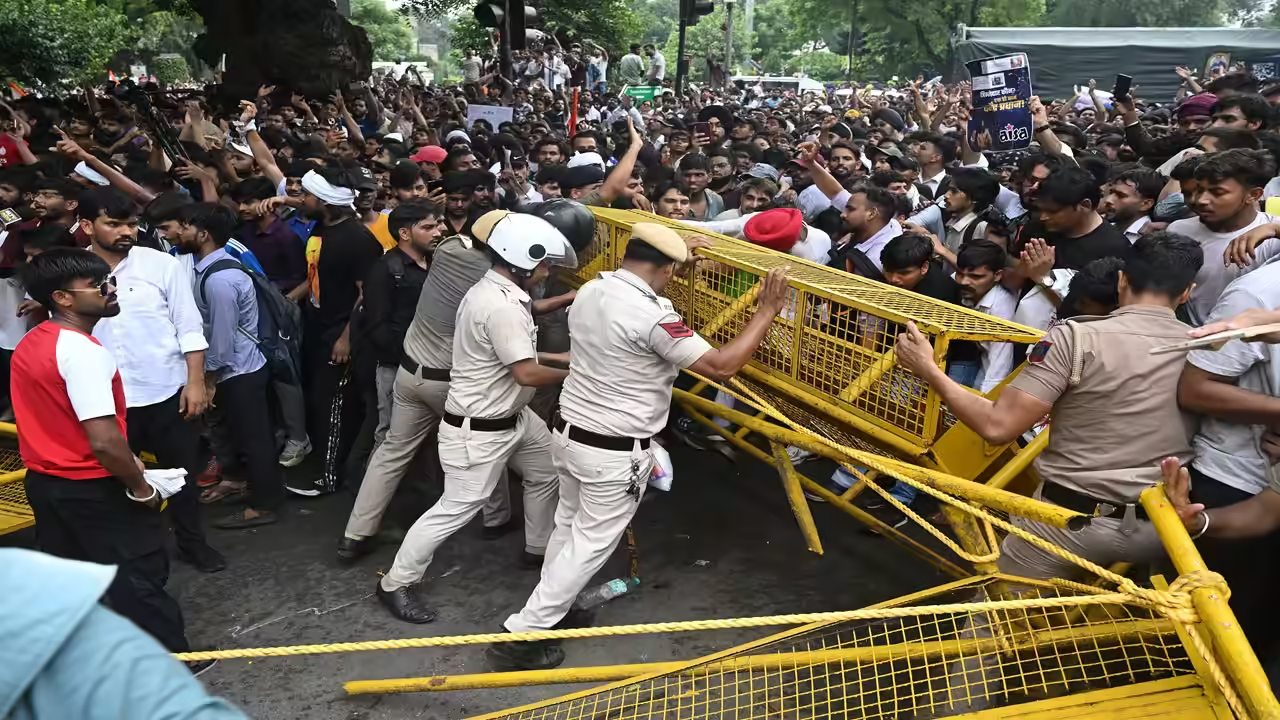
Fresh details have emerged regarding the police response to the protests in Delhi over the alleged NEET question paper leak. A police station diary entry has reportedly revealed that the Deputy Commissioner of Police authorized the use of pellet guns during the demonstration, a development that has intensified scrutiny of the handling of the protest.
According to reports, the entry recorded at Parliament Street Police Station states that the order was issued to control the gathering as tensions escalated. The disclosure comes after earlier official claims that pellet guns had not been used against protesters, creating questions over the accuracy of previous statements.
The diary entry dated July 20 reportedly mentions that security personnel deployed multiple crowd control measures under the DCP’s directions. These included the use of 55 non electrical shells, 15 electrical shells, five tear gas grenades, and two rounds of plastic pellets aimed at dispersing the crowd.
Earlier findings from an inquiry conducted by the Central Reserve Police Force indicated that a Rapid Action Force personnel had fired a pellet gun during the protest. The investigation reportedly concluded that pellets were discharged while peaceful demonstrators were present at the protest site, contradicting earlier official denials.
The reported use of pellet guns resulted in serious injuries to several protesters. Among the most widely discussed cases was that of a 19 year old Delhi University student who suffered a severe eye injury. The incident drew widespread public attention and sparked criticism from political leaders and civil society groups.
Congress leader Rahul Gandhi was among those who strongly condemned the reported use of force against demonstrators. Several opposition leaders questioned whether such measures were justified during a protest that largely began as a peaceful student movement seeking accountability over the examination controversy.
The issue also reached the Supreme Court, where the bench expressed concern over the treatment of protesters. The court observed that police cannot resort to lathi charge or excessive force merely because people are participating in a protest. It stressed that such actions cannot be considered acceptable in a democratic society.
The latest revelations have renewed demands for greater transparency in policing public demonstrations. Legal experts and rights advocates have called for a detailed investigation into the decision making process behind the deployment of pellet guns and other crowd control measures.
As the controversy continues, the reported police diary entry is expected to become an important piece of evidence in ongoing legal proceedings. The case has once again brought the debate over the balance between maintaining public order and protecting the constitutional right to peaceful protest into the national spotlight.