
Owaisi Opposes Hijab Ruling: Owaisi Criticises Allahabad High Court Hijab Ruling
AIMIM chief Asaduddin Owaisi criticised the Allahabad High Court ruling on hijab in schools, arguing that judges should not determine which religious practices are essential within Islam.
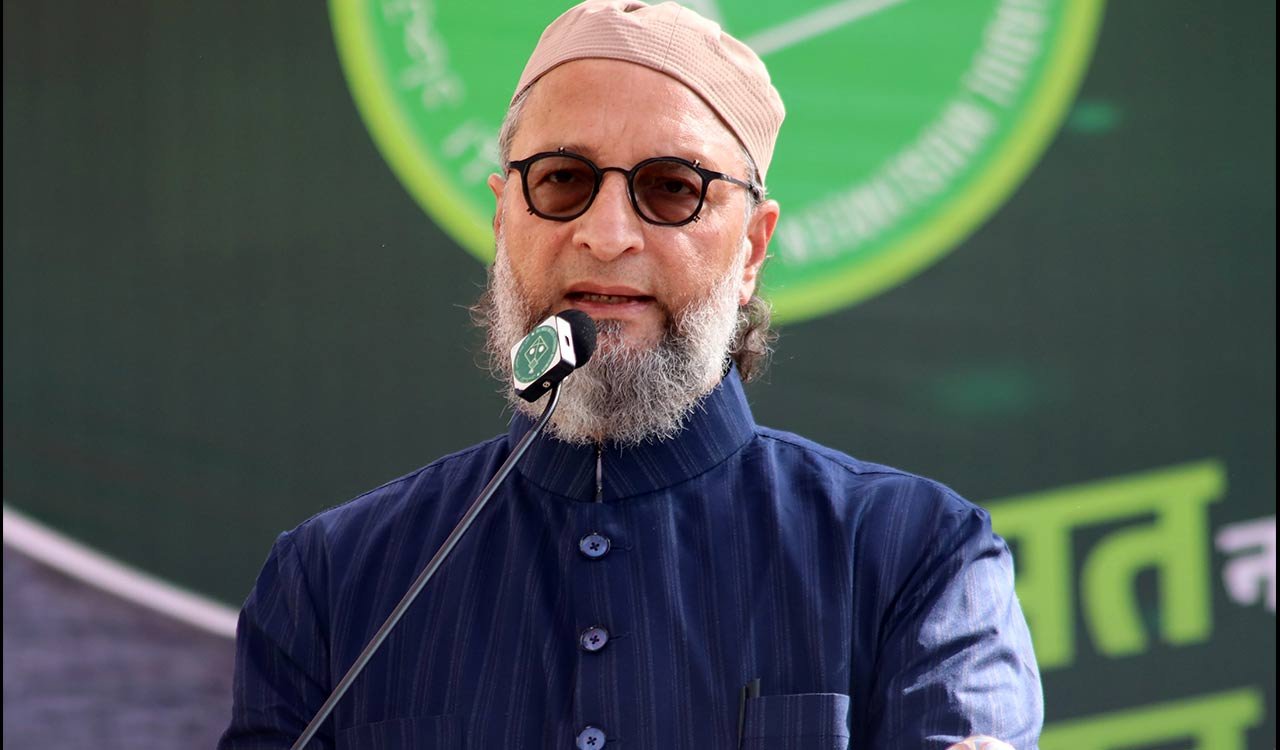
Owaisi Opposes Hijab Ruling: AIMIM chief and Hyderabad MP Asaduddin Owaisi has strongly criticised the Allahabad High Court’s recent ruling on wearing the hijab with a prescribed school uniform.
Reacting to the judgment, Owaisi argued that courts should not decide which practices are important within a religion. He described the ruling as an attack on Islam and questioned the authority of judges to determine what should be considered an essential religious practice.
The case involved a Class 10 student from Prayagraj who wanted to continue wearing a hijab along with the uniform after entering Class 11. The student, along with her mother, approached the Allahabad High Court seeking directions allowing her to wear the hijab at her private school.
A division bench of Justices J J Munir and Indrajit Shukla dismissed the petition on August 21. The court held that students cannot insist on changing an institution’s prescribed dress code according to their individual preferences. It also observed that schools can enforce their uniform rules when those regulations are intended to maintain discipline and equality.
The court further held that wearing a hijab is not an essential religious practice in Islam, referring to observations made by various High Courts on the issue.
Owaisi has challenged the reasoning behind the judgment, arguing that it affects constitutional protections relating to religious freedom and individual liberty. He also referred to Articles 19 and 25 of the Constitution while expressing his disagreement with the ruling.
The AIMIM leader further warned that such decisions could discourage Muslim girls from pursuing education. He argued that schools should maintain uniformity without creating barriers for students who wish to follow their religious practices.
The issue is likely to remain a subject of wider legal and public debate as questions surrounding religious freedom, school dress codes and constitutional rights continue to draw attention.