
Jharkhand Students Protest: Jharkhand Students Rally Towards Assembly Over Exam Irregularities
Students in Jharkhand marched towards the state Assembly demanding reforms in recruitment examinations, leading to clashes with police and the use of water cannons.
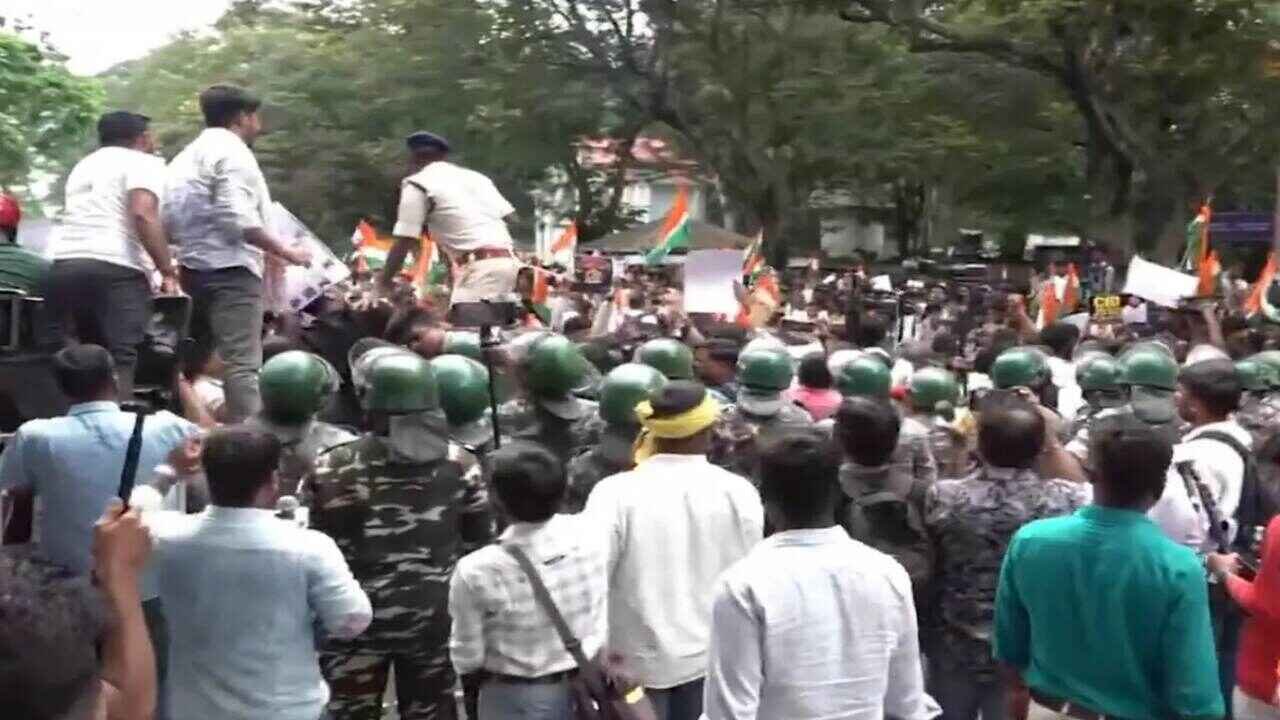
Jharkhand Students Protest: Tension rose in Jharkhand after a large group of students marched towards the state Assembly to protest alleged irregularities in recruitment examinations. The students were demanding changes in the examination system and stronger measures to ensure transparency in government recruitment.
The latest protest is linked to concerns surrounding the Jharkhand Public Service Commission preliminary examination. Students have been raising questions over alleged irregularities in the examination process and have been demanding corrective measures from the state government.
The protesters decided to take their campaign directly to the state Assembly. A large number of students joined the rally and moved towards the Assembly premises. As the march progressed, police forces were deployed to prevent the protesters from entering restricted areas.
The situation became tense when some students attempted to move past the barricades placed along the route. Protesters pushed against the barricades and continued moving forward despite attempts by security personnel to stop them.
Police eventually used water cannons to disperse the gathering. The action led to further tension at the protest location as students continued to raise their demands and press for reforms in the recruitment examination system.
The students have been particularly focused on the functioning of competitive examinations conducted for government jobs. They want the authorities to ensure that examinations are conducted fairly and that candidates do not face uncertainty because of alleged irregularities.
The JPSC preliminary examination issue has become an important point of concern among students preparing for government recruitment. Candidates spend months preparing for competitive examinations, and any allegation of irregularity can create uncertainty over the future of those who appear for them.
The latest demonstration comes after students had already been protesting over the issue. Their decision to march towards the Assembly reflects the growing pressure being placed on the government to respond to their concerns.
The protesters are seeking reforms that would improve the recruitment examination process. Their demands include greater transparency and stronger safeguards to prevent irregularities during examinations. They believe that recruitment tests should be conducted in a manner that gives every candidate an equal opportunity.
The movement also highlights the wider frustration among students who depend on government recruitment examinations for employment opportunities. For many candidates, these examinations are an important route towards securing stable jobs, making the credibility of the examination system particularly significant.
As the rally approached the Assembly, the police faced the challenge of controlling the crowd while preventing protesters from entering areas where public movement was restricted. Barricades were placed to control the route, but the students continued their march and attempted to push through them.
The use of water cannons eventually brought the movement to a halt at the location. The incident created an atmosphere of tension, although the main focus of the protest remained the students’ demand for changes in the recruitment examination process.
The Jharkhand government now faces pressure to address the concerns raised by the protesting students. A clear response from the authorities could play an important role in easing the situation and restoring confidence among candidates preparing for future examinations.
The students, meanwhile, have indicated through their protest that they want their concerns to be taken seriously. Their movement has brought the issue of examination transparency back into public discussion and increased attention on the functioning of recruitment examinations in the state.
The situation in Jharkhand comes at a time when examination related protests have been reported in different parts of the country. Students have increasingly demanded greater accountability from authorities whenever questions are raised over the conduct of competitive examinations.
For the students in Jharkhand, the immediate issue remains the alleged irregularities surrounding the JPSC preliminary examination and the demand for reforms. Their march towards the Assembly has now added a political dimension to the issue.
The authorities are expected to assess the concerns raised by the students and consider measures to strengthen the recruitment examination system. Further discussions between student representatives and officials could determine the next course of action.
For now, the Assembly march and the police response have intensified the situation in Jharkhand. The students continue to seek a transparent recruitment process, while the government will have to address their concerns and work towards restoring confidence in the examination system.