
Easy Ways To Clean Blackened Gas Burners And Bring Back A Clean Flame
Grease, food spills and soot can clog gas burner openings over time, but simple cleaning methods and proper drying can help restore an even flame safely.
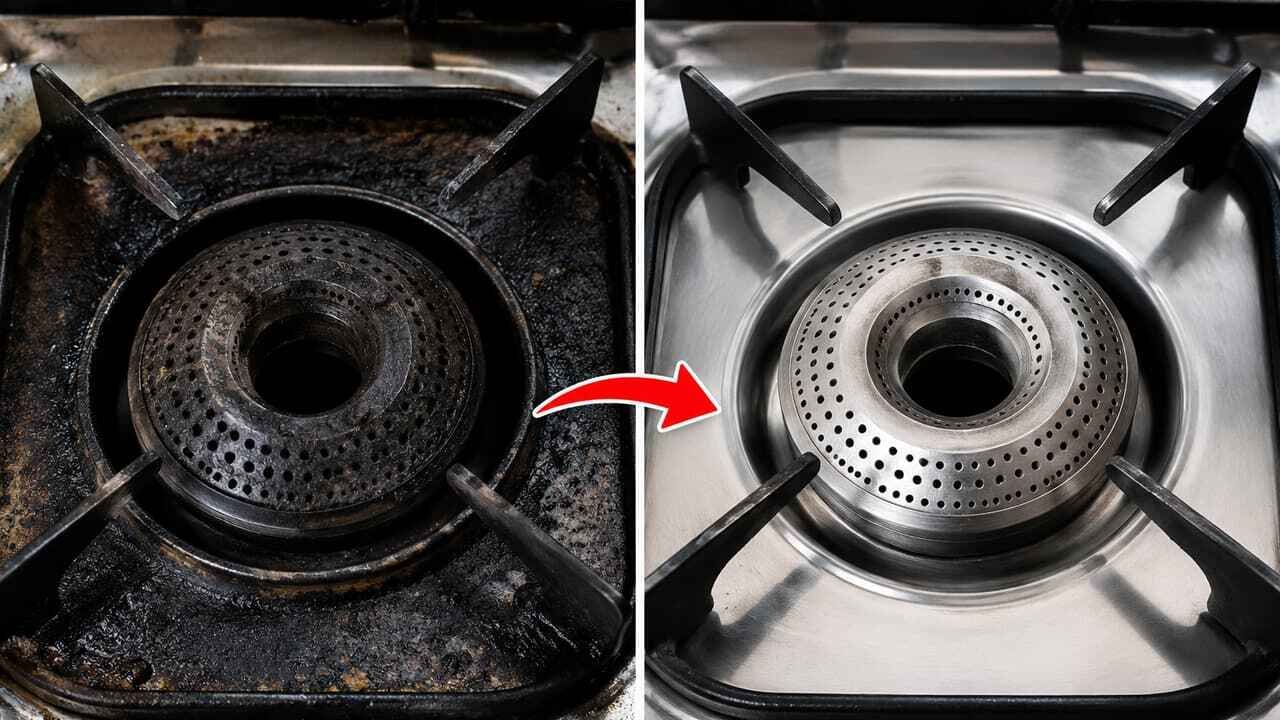
Gas burners deal with food spills, oil splashes and overflowing milk almost every day, so it is common for them to become dark and greasy. When residue builds up around the burner openings, the flame may become uneven or weaker, which can affect cooking performance.
Cleaning the burners regularly can make everyday cooking easier, but there is no need to spend hours scrubbing stubborn stains. Soaking the removable burner parts in warm water can loosen accumulated grease and food residue, making the remaining dirt much easier to remove.
One commonly used home cleaning method involves lemon juice and a mild abrasive such as baking soda. The burner can be placed in warm water with a small amount of baking soda and lemon juice and left to soak for around 15 to 20 minutes. The loosened residue can then be cleaned with a soft brush before the burner is rinsed thoroughly.
Another option is to use diluted vinegar for removing greasy deposits. Removable burner parts can be soaked in warm water containing vinegar and then cleaned gently with an old toothbrush or soft brush. This approach is more useful for loosening residue than relying on aggressive scrubbing.
Lemon and salt can also be used for light surface cleaning. A small amount of salt on a lemon half can provide mild abrasion while the lemon juice helps loosen grease. However, this method should be used gently because excessive rubbing can damage some burner surfaces.
It is important to remember that household cleaning mixtures do not always need to be combined. For example, mixing vinegar and baking soda creates a chemical reaction that produces carbon dioxide and reduces the acidity of the vinegar. While the bubbling may look powerful, using the two together does not necessarily make a stronger cleaning solution.
The burner openings also require special attention. Food particles and grease can block the small holes through which gas and air mix to produce the flame. These openings should be cleaned carefully without enlarging or damaging them. Sharp metal objects should not be forced into the burner ports because changing their size or shape can affect how the burner operates.
A clean burner can help maintain a more consistent flame when the burner is in good working condition. If the flame remains yellow, produces excessive soot or continues burning unevenly after cleaning, the issue may not simply be dirt. In such cases, the burner, gas supply or air mixture may need to be checked by a qualified technician.
Safety is particularly important while cleaning any gas stove. The gas supply should be turned off and the burner should be completely cool before it is removed. Water or cleaning liquid should never be allowed to enter areas that are not designed to get wet.
After washing the burner, it should be dried completely before being placed back on the stove. Moisture left inside the burner openings can interfere with ignition and flame quality. A dry cloth can be used first, followed by sufficient air drying before reassembly.
Regular cleaning is generally easier than waiting until thick grease and burnt food deposits accumulate. Wiping spills after the stove has cooled and periodically cleaning removable burner components can prevent heavy buildup and reduce the effort required later.
Home cleaning methods can be useful for ordinary grease and surface dirt, but manufacturers may recommend specific cleaning procedures for different burner materials. Following the stove manufacturer’s instructions is the safest approach, especially when dealing with removable components or persistent burner problems.
Keeping gas burners clean is therefore not only about making the stove look better. Regular maintenance can help prevent residue from interfering with normal flame operation and can make cooking more convenient. When cleaning is combined with proper drying and safe handling, a simple maintenance routine can keep the burners in better condition for longer.