No Electricity Connection Needed: How Solar Panels And Batteries Can Power Your Entire Home
A fully solar powered home is possible without a government electricity connection, but the right panel capacity, battery storage, inverter and careful energy planning are essential for reliable daily use.
A home can operate without a conventional electricity connection by using a properly designed solar power system. However, installing solar panels alone is not enough to keep a household running throughout the day and night. The biggest challenge comes after sunset, during cloudy weather and through periods of heavy rain when solar generation can fall significantly.
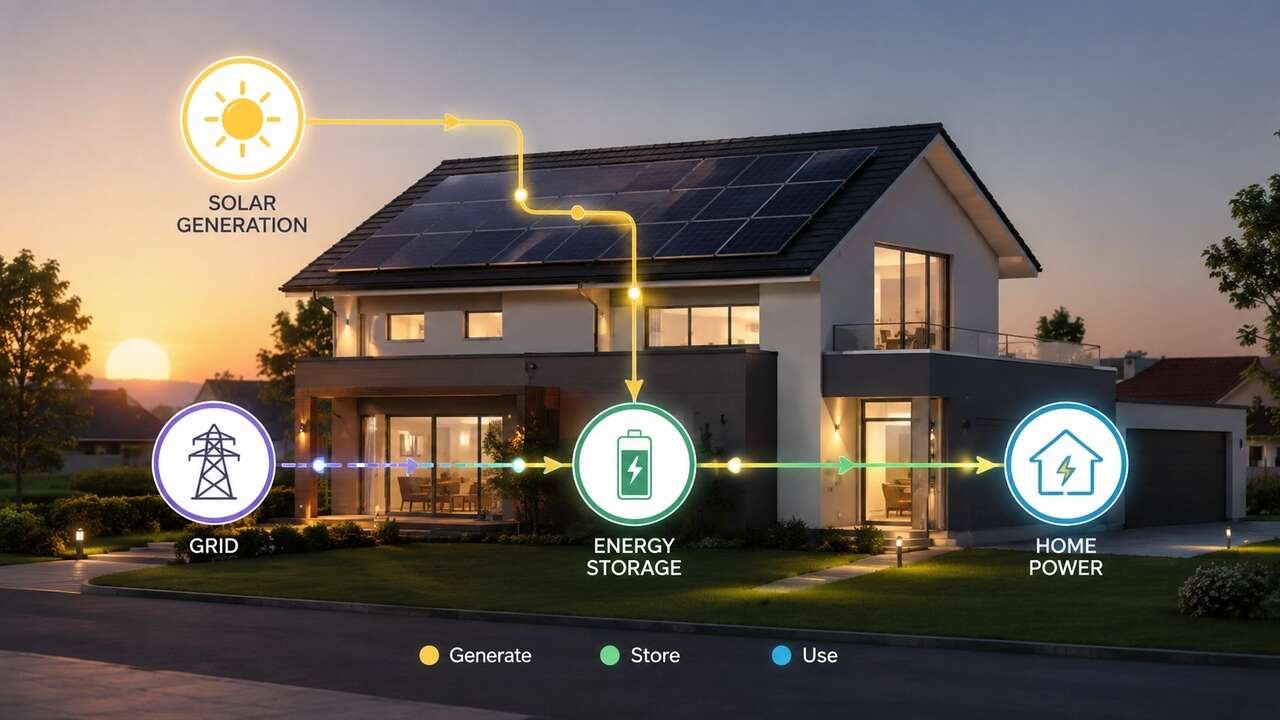
For such homes, an off grid solar system is generally used. Solar panels generate electricity during daylight hours, while excess power can be stored in batteries for use when sunlight is unavailable. This setup allows a house to operate independently of the main electricity grid, provided the system has been sized according to the household’s actual energy requirements.
The way a completely solar powered home operates is fairly straightforward. During the day, solar panels convert sunlight into electricity for household appliances and other electrical needs. If the panels produce more power than the home is consuming, the surplus can be directed into the battery storage system. Once sunlight disappears, the stored electricity becomes the main source of power for the house.
Battery capacity is therefore one of the most important parts of an off grid setup. At night, the solar panels cannot generate electricity, so the battery has to provide enough stored energy to keep essential appliances operating. A home using only a few lights and fans will require considerably less storage than one running a refrigerator, television, water pump, washing machine, cooler and other high consumption appliances.
Lithium ion batteries are becoming increasingly popular for residential solar systems because they can store substantial amounts of energy and handle repeated charging and discharging cycles. The right battery size, however, depends on how much electricity the household uses and how many hours of backup are expected each day.
There is no single solar panel or battery size that will work for every house. Before installing an independent solar system, homeowners need to calculate their daily electricity consumption and understand when most of that power is being used. Daytime consumption, nighttime demand, required backup hours and the amount of sunlight available in the local area all play an important role in determining the system size.
Seasonal changes also need to be considered. Electricity consumption can increase during summer because of cooling appliances, while solar generation can vary with weather conditions. Designing a system based only on average daily usage could therefore leave a household short of power during periods of higher demand or weaker sunlight.
Cloudy weather and rain are among the biggest challenges for a home that depends entirely on solar energy. Solar panels can continue producing some electricity under cloudy conditions, but their output is generally lower than on bright sunny days. If the battery has enough stored energy, the household can continue using electricity without immediate problems.
The situation becomes more difficult when cloudy or rainy conditions continue for several days. Solar generation may remain low while household consumption continues, gradually draining the battery. A larger battery bank can provide additional backup, but it also increases the overall cost and space requirements of the system.
High power appliances require even more careful planning. A refrigerator may run throughout the day, while a water pump, microwave, washing machine or air conditioner can draw substantial power during operation. Running an air conditioner for several hours every day using only solar energy can require a significantly larger panel capacity and battery bank than a basic household system.
The inverter is another important component because it converts the electricity generated and stored by the system into a form that household appliances can use. Its capacity needs to match the expected load, particularly when several appliances may start operating at the same time.
A completely solar powered home can therefore work without a government electricity connection, but it requires more planning than simply installing a few panels on the roof. The system needs sufficient solar generation, suitable battery storage, an appropriately sized inverter and a realistic understanding of household electricity consumption.
For homeowners considering this approach, reducing unnecessary power consumption can also make the system more practical. Energy efficient lighting and appliances can reduce the amount of solar capacity and battery storage required. Careful planning becomes especially important for homes that want reliable power throughout the night or during extended periods of poor weather.
Solar power can provide genuine energy independence when the system is designed correctly. The key is to consider the entire setup rather than focusing only on the number of panels. A well planned combination of solar generation, battery storage and efficient electricity use can allow a home to operate independently while reducing reliance on the conventional power grid.