
White Garlic vs Black Garlic What Makes Them Different
White garlic and black garlic differ mainly because black garlic is aged under controlled heat and humidity, changing its colour, flavour and chemical composition while creating several antioxidant compounds.
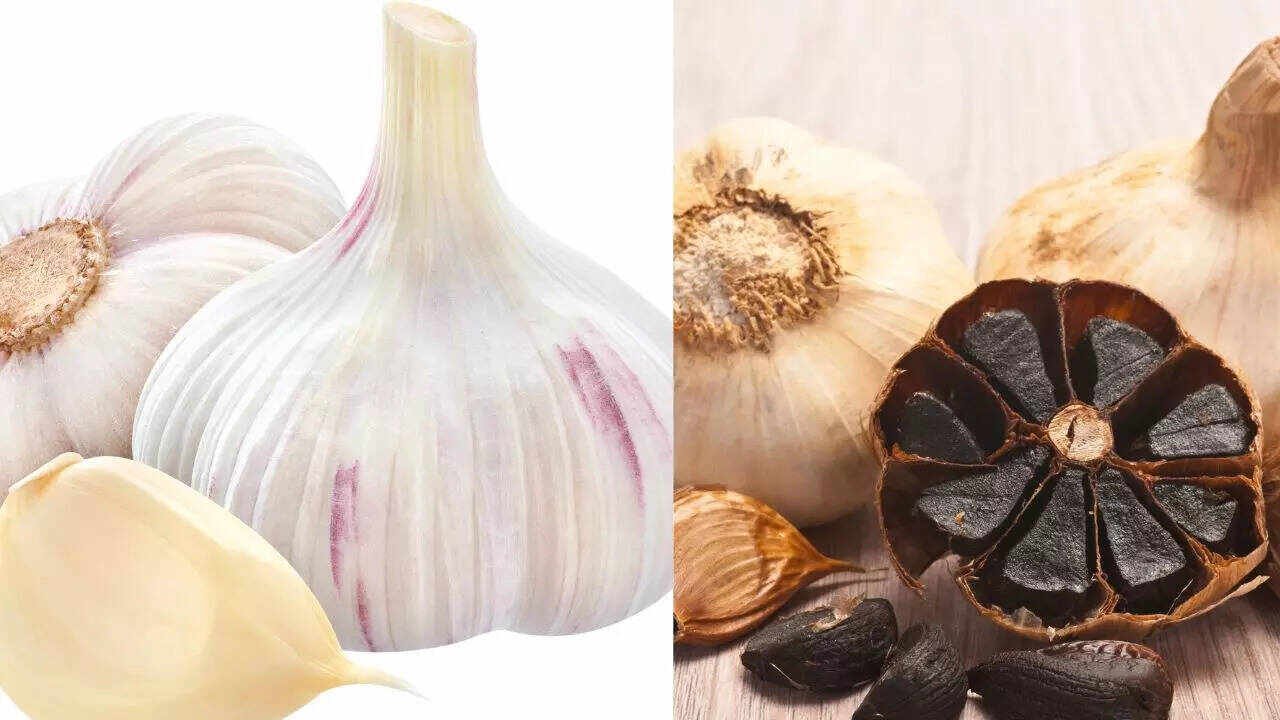
Garlic is a familiar ingredient in Indian kitchens, but black garlic has recently attracted attention for its different taste, appearance and nutritional profile. Despite looking completely different, black garlic is not a separate variety of garlic.
Black garlic is produced by ageing ordinary garlic under controlled temperature and humidity for an extended period. During this process, chemical reactions change the cloves from their familiar white colour into a dark brown or black form. The sharp flavour also becomes much milder and sweeter.
The biggest difference between the two comes from processing. Fresh garlic contains sulfur compounds that contribute to its characteristic flavour and aroma. When garlic is aged, its chemical composition changes and compounds such as S allyl cysteine become more prominent. Research reviews have identified these compounds as important components of black garlic.
Fresh white garlic is known for its strong aroma and pungent taste, particularly after the cloves are crushed or chopped. Black garlic, in comparison, has a softer texture and a sweet and slightly tangy flavour, which makes it easier to use in different dishes.
The antioxidant profile also changes during ageing. Research has found that black garlic can contain increased levels of certain water soluble compounds and other antioxidant substances compared with fresh garlic. However, laboratory findings should not automatically be treated as proof that eating black garlic prevents or treats diseases.
This distinction is important because claims about garlic often go beyond what human studies have actually established. Research on garlic supplements suggests they may have modest effects on cholesterol, blood pressure and blood sugar in some groups, but the evidence varies and the effects are not comparable to prescribed medical treatment.
There is also no strong evidence that eating raw or black garlic on an empty stomach for exactly seven days causes dramatic changes in the body. The idea has become popular through health and social media discussions, but a fixed seven day period has not been established as a special health routine by clinical evidence.
Garlic can still be part of a balanced diet. Adding it to regular meals provides flavour while contributing naturally occurring plant compounds. Black garlic can similarly be used in cooking when people prefer its milder and sweeter taste.
Some people may find raw garlic uncomfortable, particularly when consumed in larger amounts. Garlic can cause heartburn, stomach discomfort, breath odour and body odour in some individuals. These effects may be more noticeable with raw garlic.
People taking medicines that affect blood clotting should also be cautious about consuming garlic supplements or large amounts of garlic without medical advice, because garlic can increase bleeding risk. Garlic should not be considered a replacement for prescribed treatment.
Another commonly repeated claim is that garlic removes toxins from the body. There is no good evidence that eating garlic acts as a special detox treatment. The body already has organs such as the liver and kidneys that handle waste and metabolic processes, so garlic should not be promoted as a substitute for normal health care.
The choice between white and black garlic can therefore come down largely to taste, cooking preferences and the type of compounds produced during processing. White garlic has the familiar strong flavour used in curries, chutneys and other dishes, while black garlic offers a softer texture and naturally sweeter taste.
Black garlic can be eaten directly or added to foods such as sauces, spreads and cooked dishes. Its mild flavour makes it suitable for people who find the sharp taste of fresh garlic difficult to tolerate.
For anyone considering garlic specifically for a health condition, the important point is to keep expectations realistic. Research suggests some possible benefits, but the effects are generally modest and vary according to the preparation, amount and health status of the person consuming it.
White garlic and black garlic are therefore not competing varieties in the usual sense. Black garlic begins as regular garlic and develops its distinctive appearance and flavour through controlled ageing. The process changes its chemical composition and creates a different food with its own characteristics.
Including either form in normal meals can be part of a varied diet. However, claims that seven days of eating garlic on an empty stomach will dramatically transform the body should be treated cautiously because those claims are not supported by strong clinical evidence.