Maruti Suzuki Unveils India’s First Production Ready Flex Fuel Hatchback
Maruti Suzuki has introduced the production version of Wagon R Flex Fuel, a hatchback capable of running on multiple ethanol petrol blends, marking a significant step toward cleaner mobility.
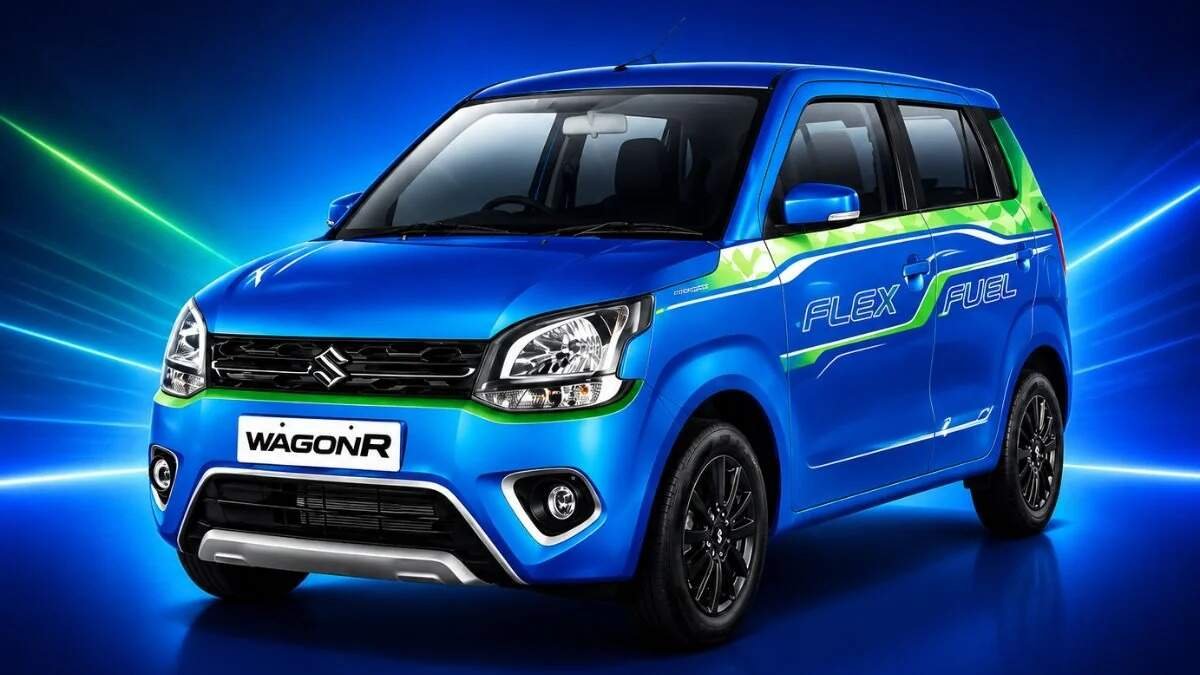
Maruti Suzuki has taken a major step in India’s alternative fuel journey by unveiling the production ready Wagon R Flex Fuel. The model becomes the country’s first mass production flex fuel passenger vehicle and is designed to operate on a wide range of ethanol blended fuels. The launch comes as India continues to push for reduced dependence on imported crude oil and greater adoption of cleaner fuel technologies.
The newly introduced Wagon R Flex Fuel has been engineered to support fuel blends ranging from E20 to E100. While the vehicle is homologated for E85 fuel, it can adapt to varying ethanol concentrations, offering greater flexibility to drivers as fuel infrastructure evolves across the country. For now, the vehicle is being made available for commercial applications, while pricing and retail availability details are yet to be announced.
Although Maruti Suzuki had previously showcased prototype versions of the flex fuel hatchback at industry events, this marks the first time the company has revealed a production specification model. The vehicle had initially drawn attention when it was displayed in 2022 and later reappeared at the Bharat Mobility Show, signaling the company’s long term commitment to ethanol based mobility solutions.
At the heart of the Wagon R Flex Fuel is Maruti Suzuki’s familiar 1.2 litre K12N four cylinder petrol engine. However, the powertrain has undergone several modifications to make it compatible with higher ethanol blends. Engineers have equipped the vehicle with upgraded fuel injectors, revised fuel lines, a new fuel pump, a recalibrated engine control unit and a dedicated ethanol sensor. The sensor continuously monitors the ethanol content in the fuel and helps the engine adjust performance accordingly.
The company has not yet disclosed official figures related to power output, torque or fuel efficiency. However, the extensive changes made to the engine suggest a strong focus on ensuring smooth operation across different ethanol concentrations without compromising reliability.
The introduction of this model also places Maruti Suzuki ahead of competitors in the flex fuel segment. While other automakers have displayed concept and demonstration vehicles in recent years, no manufacturer had brought a flex fuel passenger vehicle to production before this launch. Earlier, Toyota showcased flex fuel versions of the Corolla and Innova Hycross, while Tata Motors displayed a flex fuel variant of the Punch. However, those vehicles remained demonstration models.
Despite the technological achievement, one major challenge remains the availability of E85 fuel. Currently, ethanol rich fuel is not widely accessible across India and requires dedicated dispensing systems and storage infrastructure. Most fuel stations presently offer E20 petrol, which has become the standard blend in many regions.
The government, however, is actively working to expand the ethanol fuel ecosystem. Union Petroleum and Natural Gas Minister Hardeep Singh Puri recently outlined plans to establish dedicated E85 dispensing stations in key transportation corridors. Initial rollout efforts are expected to focus on Delhi NCR and the Mumbai Pune Nagpur route, where dozens of stations may begin operations in the first phase.
Officials aim to increase the number of E85 dispensing outlets significantly over the next few years. By the end of this year, the target is to have hundreds of stations operational, with plans to expand the network to around 5000 dispensing points across major Indian cities by 2027. There are also discussions about keeping E85 fuel competitively priced compared to conventional petrol blends, which could encourage wider adoption among consumers.
Industry observers view the Wagon R Flex Fuel as an important milestone in India’s transition toward sustainable transportation. By offering a vehicle capable of running on multiple ethanol blends, Maruti Suzuki is helping prepare the market for future fuel alternatives while supporting national goals related to energy security and environmental sustainability.
As ethanol infrastructure expands and fuel availability improves, flex fuel vehicles could emerge as a practical bridge between traditional internal combustion engines and fully electric mobility, giving consumers more choices in the years ahead.