iPhone Duo vs Pixel 11 Pro Fold vs Galaxy Z Fold 8 Ultra
Apple has entered the foldable smartphone market with iPhone Duo, challenging Google Pixel 11 Pro Fold and Samsung Galaxy Z Fold 8 Ultra with premium hardware, cameras, displays and software.
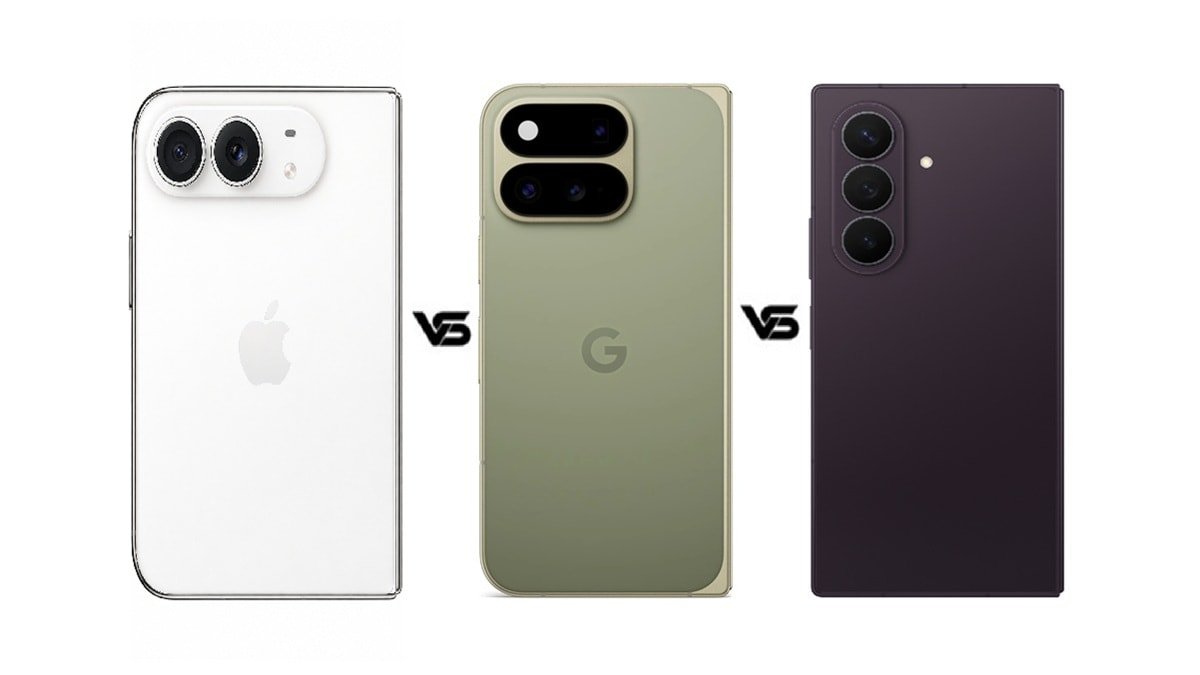
The foldable smartphone market is becoming increasingly competitive, and Apple’s entry has added another major name to the segment. The newly launched iPhone Duo is positioned against premium foldable models such as the Google Pixel 11 Pro Fold and Samsung Galaxy Z Fold 8 Ultra.
All three smartphones focus on large foldable screens, powerful processors and premium camera hardware, but their specifications and pricing are quite different. For buyers considering a high end foldable phone, the choice largely depends on what matters most, whether that is performance, photography, display quality or overall ecosystem.
Price is one of the biggest differences between these three devices. The iPhone Duo starts at ₹2,99,900 for the 256GB model. Its 512GB version costs ₹3,24,900, while the 1TB model is priced at ₹3,74,900. The top 2TB variant carries a price tag of ₹4,49,900.
Google takes a different approach with the Pixel 11 Pro Fold. Its 16GB RAM and 512GB storage configuration is priced at ₹1,86,999. Samsung Galaxy Z Fold 8 Ultra starts at ₹1,99,999 for the 12GB RAM and 256GB storage version. The 12GB RAM and 512GB storage model is priced at ₹2,19,999.
The display experience is another area where the three phones take different approaches. iPhone Duo features a 7.6 inch primary Super Retina XDR folding display with Nano Texture, along with a 5.4 inch Super Retina XDR outer display.
Google Pixel 11 Pro Fold comes with an 8 inch OLED Super Actua Flex internal display. It offers a 2076 by 2152 pixel resolution, 120Hz refresh rate, 372 pixels per inch and peak brightness of up to 3,600 nits. The phone also has a 6.5 inch OLED Super Actua cover display with a 1080 by 2342 pixel resolution, 19.5 to 9 aspect ratio, 120Hz refresh rate and peak brightness of up to 3,600 nits.
Samsung Galaxy Z Fold 8 Ultra also features an 8 inch AMOLED internal screen and a 6.5 inch AMOLED cover display. Its displays support a variable 120Hz refresh rate, while the primary screen can reach up to 3,000 nits of peak brightness.
Performance is handled by different chipsets across the three models. Apple has equipped iPhone Duo with the A20 Pro processor, featuring a 6 core CPU, 7 core GPU and neural accelerators. This hardware is paired with iOS 27.
Google Pixel 11 Pro Fold runs on the Google Tensor G6 processor. Samsung Galaxy Z Fold 8 Ultra uses the Qualcomm Snapdragon 8 Elite Gen 5 chipset and runs on Android 17 with One UI 9.
Camera hardware gives Samsung a clear advantage on paper. Galaxy Z Fold 8 Ultra features a 200 megapixel wide angle primary camera, supported by a 50 megapixel ultra wide camera and a 10 megapixel telephoto camera.
Google Pixel 11 Pro Fold has a triple rear camera setup. It includes a 48 megapixel main camera with an f/1.7 aperture, a 10.5 megapixel camera with an f/2.2 aperture and a 10.8 megapixel telephoto camera with an f/3.1 aperture.
The iPhone Duo comes with a dual camera arrangement at the back. It includes a 48 megapixel Fusion primary camera and a 48 megapixel ultra wide camera. While the three phones use different camera strategies, buyers interested in photography will likely look closely at the combination of sensors and software processing before making a decision.
For selfies and video calls, iPhone Duo has a 12 megapixel front camera. Pixel 11 Pro Fold features two 10 megapixel front cameras with an f/2.2 aperture. Samsung Galaxy Z Fold 8 Ultra gets a 10 megapixel front camera for selfies and video calling.
Connectivity is also well covered across the three foldable phones. iPhone Duo supports 5G, GPS, WiFi and a USB Type C port. Pixel 11 Pro Fold adds 4G LTE, WiFi 7, Bluetooth 6, NFC, USB Type C and GPS alongside 5G support.
Samsung Galaxy Z Fold 8 Ultra includes 5G, WiFi 7, Bluetooth and USB Type C connectivity. The Pixel model therefore offers the broader list of connectivity features among the three based on the supplied specifications.
The operating systems reflect the different ecosystems behind these devices. iPhone Duo uses Apple’s iOS 27, while Google Pixel 11 Pro Fold runs Android 17. Samsung’s foldable is also based on Android 17 but uses the company’s One UI 9 interface.
Looking at the overall specifications, there is no single winner in every category. iPhone Duo enters the market with Apple’s latest processor and software platform but carries a substantially higher starting price. Google Pixel 11 Pro Fold offers a large high brightness display, 16GB RAM and 512GB storage at a lower price than the entry level iPhone Duo.
Samsung Galaxy Z Fold 8 Ultra sits between the two on starting price and brings particularly strong camera specifications, including its 200 megapixel main sensor. Its combination of a large AMOLED foldable screen, Snapdragon processor and One UI software could make it an attractive choice for users already comfortable with Samsung’s ecosystem.
For buyers, the final decision may come down to priorities rather than specifications alone. Apple users looking for a foldable experience may prefer iPhone Duo, while those wanting Google’s software approach can consider Pixel 11 Pro Fold. Samsung’s model could appeal to users who want a powerful foldable with a strong camera setup and a familiar Android interface.