
Tea Stain On Sofa? Know When To Use Water And Powder
A fresh tea stain on the sofa needs quick attention, gentle blotting, and the right cleaner. Learn simple ways to remove marks without damaging upholstery or causing moisture problems inside.
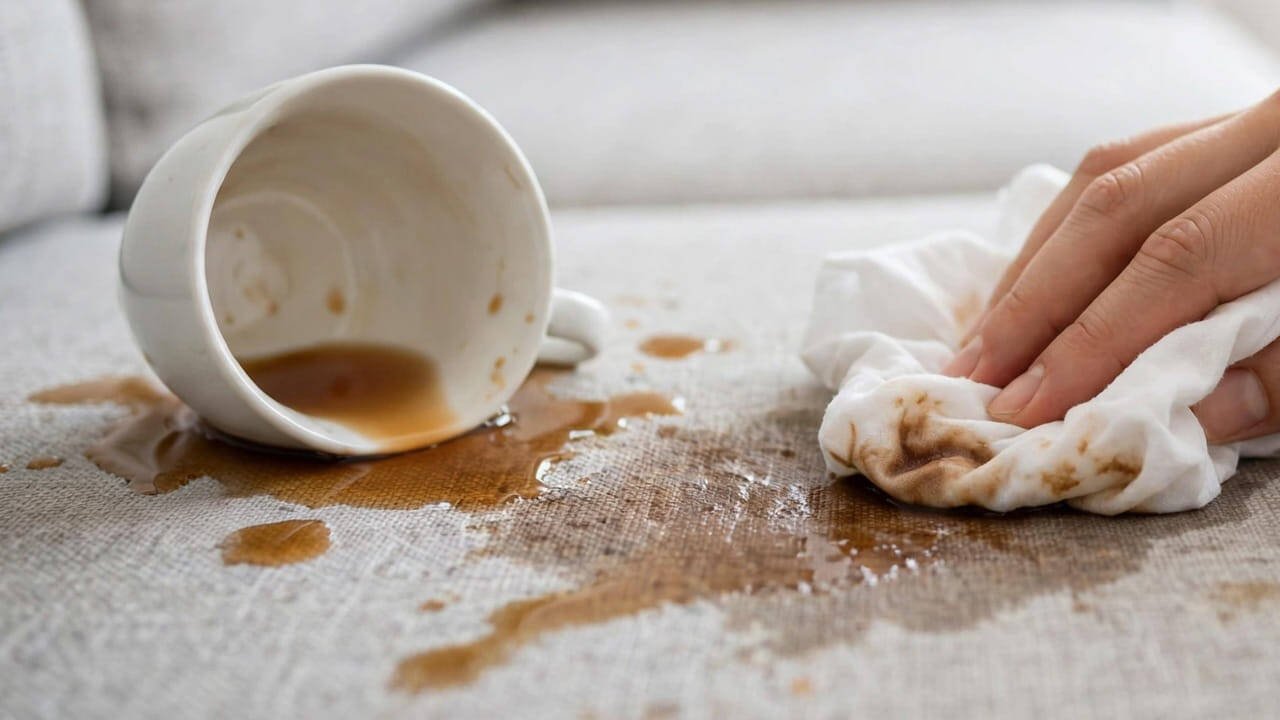
Tea spilling on the sofa is one of those small household accidents that can quickly become frustrating. The first reaction is often to scrub the stain or sprinkle some powder over it. However, both approaches can make the situation worse if used at the wrong time.
The safest way to deal with a fresh tea stain is to act quickly. Take a clean, dry cloth and gently press it over the affected area. The idea is to absorb as much tea as possible without spreading it further into the fabric.
Rubbing should be avoided. Strong rubbing can push the liquid deeper into the upholstery fibres and may also make the stained area larger.
Water Or Powder For A Tea Stain
For an ordinary tea stain, cold water and a mild liquid detergent are generally more useful than powder. Mix about two cups of cold water with one teaspoon of mild liquid detergent.
Dip a soft cloth into the mixture and squeeze out the excess liquid. Gently dab the stained portion rather than soaking the sofa. Cleaning from the outer edge towards the centre can help prevent the stain from spreading.
Once the mark has been treated, use another clean cloth lightly dampened with cold water to remove any remaining detergent. A dry towel can then be pressed against the area to absorb moisture. Allow the sofa to dry properly before using it again.
Check The Sofa Cleaning Label First
Before applying any cleaning solution, check the care label attached to the sofa or cushion. The cleaning code can tell you which method is suitable for the upholstery.
A W code generally means a water based cleaner can be used.
An S code indicates that a solvent based cleaner is required and water based cleaning should be avoided.
A WS code means either water based or solvent based cleaning may be suitable.
An X code means liquid cleaners should not be used and methods such as vacuuming are recommended.
If there is no care label, testing the cleaning solution on a small hidden section is a sensible precaution. This can help identify whether the fabric reacts badly before the cleaner is applied to a visible area.
What About An Old Tea Stain
A dried tea stain can take more effort to remove because the mark has already settled into the fabric. For some upholstery materials, a mild mixture of white vinegar and water may help.
A commonly used mixture is one part vinegar with two parts water. It should not be poured directly onto the sofa. Instead, apply a small amount to a cloth and gently dab the affected area.
Extra care is needed with delicate materials such as velvet and silk. Vinegar or other household cleaners should not be used on these fabrics unless the manufacturers care instructions allow it. A hidden area should also be tested first.
When Powder Can Actually Help
Powder is not normally the first choice for removing a tea stain. It can be more useful when the problem involves oil or grease.
Talcum powder, cornstarch or baking soda may help absorb some oily residue when used appropriately. The type of upholstery should still be considered before applying any powder or cleaning product.
Avoid These Common Cleaning Mistakes
Pouring a large amount of water directly onto a sofa is not a good idea. Excess moisture can move into the foam and may eventually contribute to unpleasant smells or mould problems.
Aggressive scrubbing should also be avoided, particularly on delicate upholstery. Another important step is testing any cleaning product on an inconspicuous section before treating the main stain.
The key is to deal with a tea spill while it is still fresh. Absorb the liquid first, use a suitable cleaning method for the fabric and avoid excessive moisture. A little patience and the right technique can often save the sofa from a stubborn stain.