Curry Leaves or Rosemary for Stronger Hair Growth
Curry leaves and rosemary are popular natural hair care choices, but their potential benefits differ, with rosemary receiving more attention for hair growth and curry leaves for nourishment.
Hair fall and thinning have become common concerns, with busy routines, environmental pollution and poor eating habits often blamed for worsening hair health. As a result, many people are turning toward traditional ingredients and plant based hair care methods.
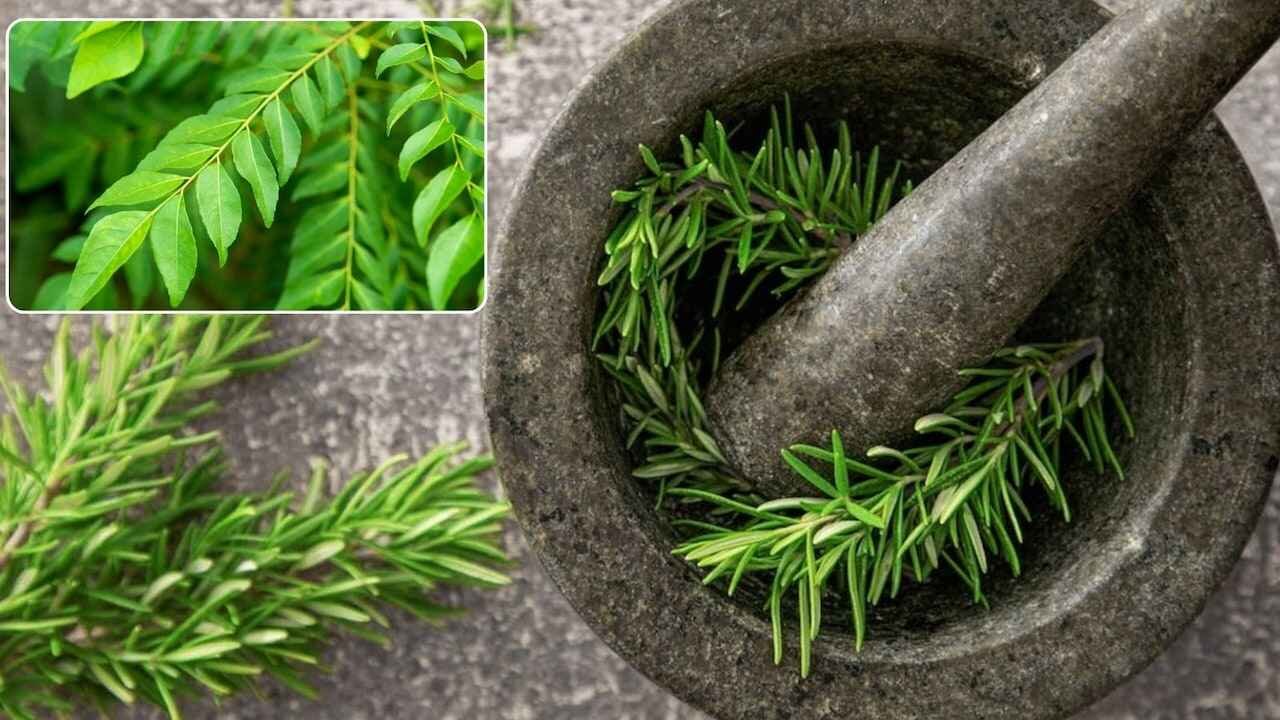
Among the ingredients frequently discussed for hair care are curry leaves and rosemary. Both have become popular, but they are often used for different reasons. Rosemary is mainly associated with supporting hair growth, while curry leaves are traditionally valued for nourishing the scalp and maintaining healthy looking hair.
Rosemary has attracted considerable attention in recent years, particularly in the form of rosemary oil. Some research has explored its potential role in supporting hair growth and reducing hair thinning. Its use is linked to scalp care and improved circulation around the hair follicles, although results can vary from person to person.
A commonly discussed option is rosemary essential oil diluted with a carrier oil. Essential oils should not generally be applied directly to the scalp because they can cause irritation. A properly diluted preparation can be massaged gently onto the scalp as part of a hair care routine.
Rosemary leaves are also used in homemade hair rinses. Some people prepare a rosemary water rinse and apply it to the scalp and hair. However, homemade preparations do not have the same standardisation as tested commercial products, so expectations should remain realistic.
Curry leaves, meanwhile, have a long history in Indian food and traditional personal care practices. The leaves contain various plant compounds, including antioxidants and other nutrients, which have contributed to their popularity in traditional hair care.
Curry leaves are commonly included in homemade hair oils. One traditional method involves gently heating curry leaves with coconut oil and allowing the mixture to cool before use. The oil can then be applied to the scalp and hair.
The traditional use of curry leaves is often associated with stronger roots, healthier looking hair and maintaining natural hair colour. However, claims that curry leaves can prevent or reverse premature greying are not strongly established by clinical evidence. Hair colour changes can have several causes, including genetics, age and nutritional factors.
This difference is important when choosing between the two ingredients. Rosemary has some scientific research behind its potential role in hair growth, while curry leaves have stronger roots in traditional Indian hair care practices.
For someone mainly concerned about hair thinning or growth, rosemary may be the ingredient that attracts more interest because of the available research. That does not mean it will work equally well for everyone, and hair loss can have many underlying causes.
For general scalp and hair nourishment, curry leaves can be considered as part of a broader hair care routine. Using curry leaf oil may help keep the hair conditioned, but it should not be treated as a guaranteed solution for hair loss or greying.
There is also no need to view the two ingredients as competing choices. Their traditional uses are different, and people may choose one depending on what they want from their hair care routine.
Anyone experiencing sudden, heavy or persistent hair loss should look beyond home remedies. Hair fall can sometimes be linked to nutritional deficiencies, hormonal changes, scalp conditions, stress or other health related factors. Finding the underlying reason is more important than simply changing hair oils.
It is also worth remembering that natural does not automatically mean suitable for everyone. Rosemary oil and other essential oils can irritate sensitive skin when used incorrectly. A small skin test and proper dilution are sensible precautions before regular use.
Overall, rosemary has received more attention for its potential connection with hair growth, while curry leaves remain a popular traditional choice for scalp nourishment and hair care. Neither should be considered a guaranteed treatment for hair loss.
The better choice ultimately depends on the purpose of the routine and the individuals scalp and hair condition. A balanced diet, gentle hair care and appropriate medical advice when hair loss is persistent remain important alongside any natural hair care method.