
Arecanut Farming in India Gives Farmers a Long Term Income Opportunity
Arecanut farming remains an important commercial crop in India, with Karnataka leading production while favourable climate and intercropping help farmers build steady agricultural income.
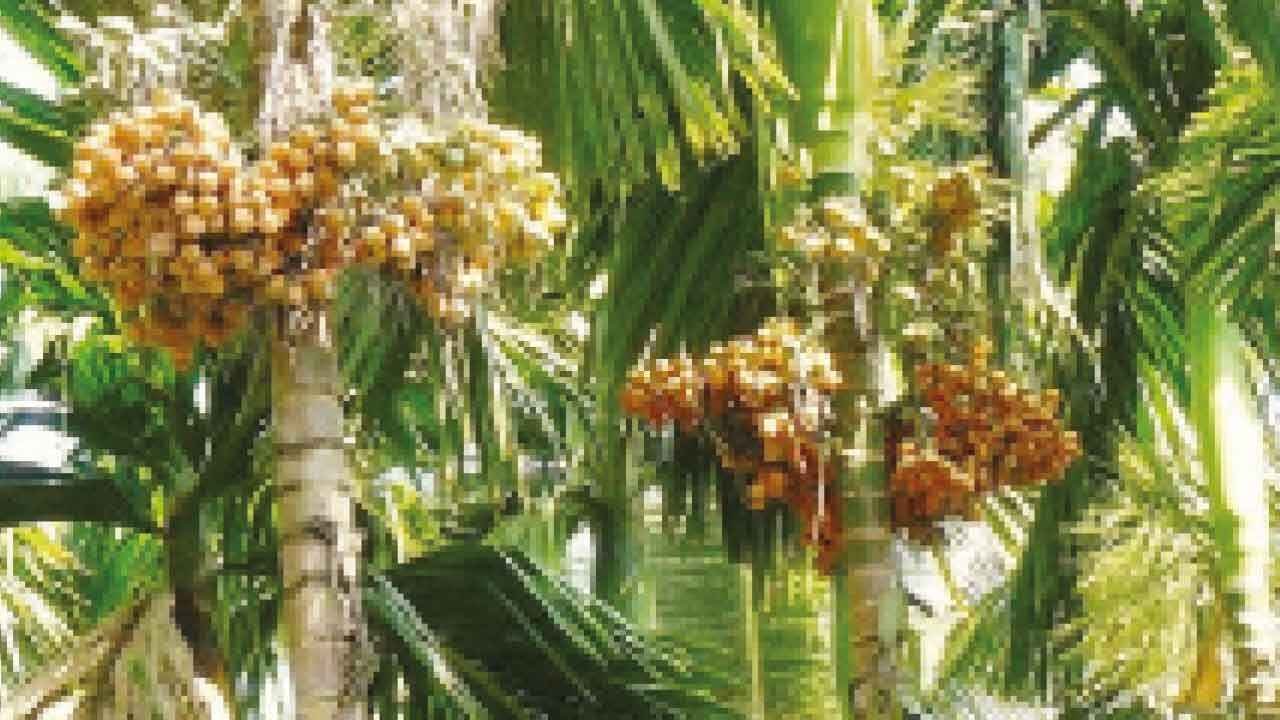
Arecanut has a strong place in Indian traditions, religious practices and the preparation of betel leaf offerings. Beyond its cultural importance, the crop has also become an important source of income for farmers in several parts of the country.
Karnataka remains the leading state for arecanut production in India. Large plantations are found across districts such as Shivamogga, Uttara Kannada, Udupi, Dakshina Kannada and Chitradurga. The crop is also cultivated extensively in Kerala and Assam, while Meghalaya, Mizoram, West Bengal, Tamil Nadu and Tripura contribute to production on a smaller scale.
Karnataka has around 6.76 lakh hectares under arecanut cultivation, with annual production reported at around 10 lakh tonnes. The crop has gained popularity among farmers because the region offers suitable growing conditions along with established markets.
The plant does require patience before it starts generating a meaningful harvest. Arecanut trees generally begin producing between the fourth and eighth year after planting. Once a plantation becomes established, the trees can continue producing for several decades, often around 50 to 60 years with proper care.
The initial years involve considerable spending on irrigation, fertilizers, plant maintenance and other farm requirements. Once the plantation reaches maturity, farmers can obtain an average dried arecanut yield of around 8 to 12 quintals per acre, although actual production varies depending on the variety, climate, management and soil conditions.
Income also depends heavily on market prices. Under favourable conditions, the source material suggests that farmers may earn a net annual return of around Rs 2.5 lakh to Rs 4 lakh per acre. These figures should be viewed as indicative rather than guaranteed, as cultivation costs and market rates can change significantly.
Many growers also use the space between arecanut trees to cultivate additional crops. Pepper, cardamom, banana and cocoa are among the crops that can be grown as intercrops in suitable plantations. This approach can provide another source of revenue while the main plantation develops.
Good irrigation management is particularly important for maintaining plantation health. Farmers who combine suitable varieties with proper nutrient management, water availability and modern cultivation practices can improve productivity over time.
With its long productive life and established demand, arecanut farming continues to attract farmers looking for a commercial crop with the potential to generate income over many years. However, growers need to consider local climate, investment requirements, labour costs and changing market prices before making a plantation decision.