ISRO Eyes 200 Day Moon Lander: ISRO Targets 200 Day Lunar Lander Life with Nuclear Heating Technology
ISRO Eyes 200 Day Moon Lander: ISRO has partnered with the Department of Atomic Energy to develop an advanced nuclear heating system that could keep future lunar landers operational for up to 200 days.
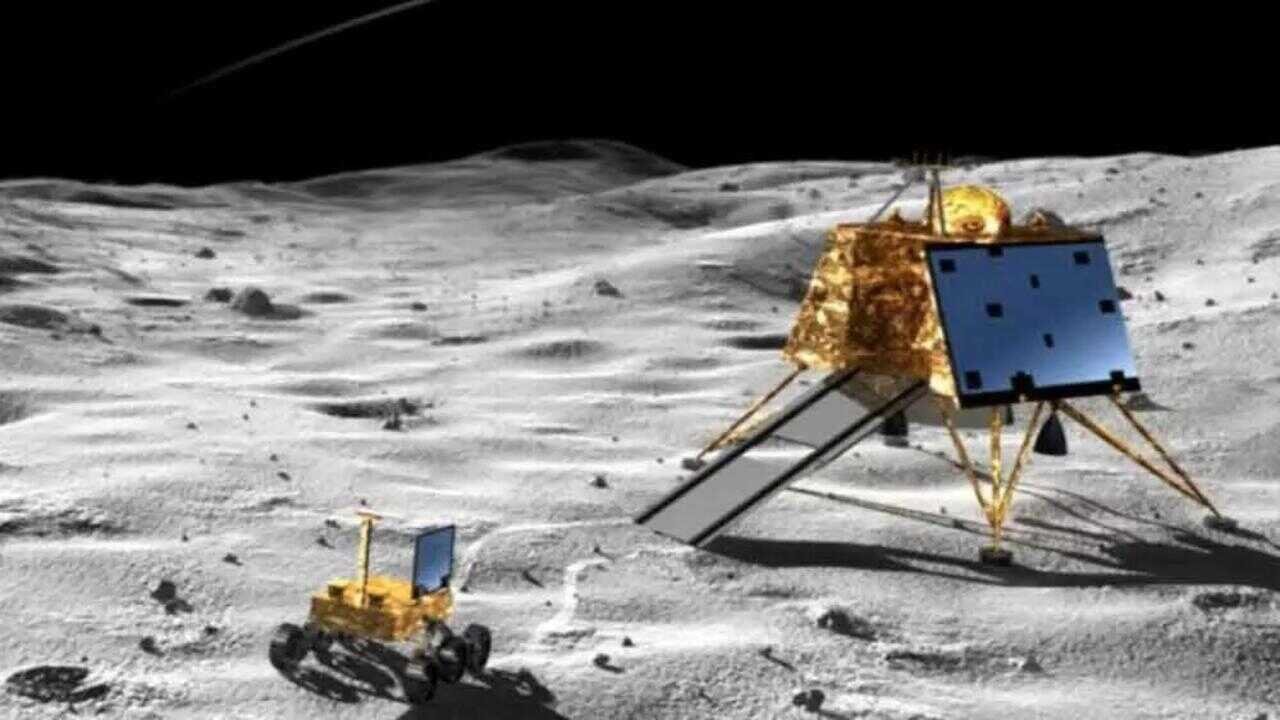
ISRO Eyes 200 Day Moon Lander: ISRO is preparing for the next phase of lunar exploration with an ambitious plan to significantly extend the lifespan of its future moon landers. The space agency has joined hands with the Department of Atomic Energy to develop an advanced nuclear heating system designed to help a lunar lander survive the Moon’s extreme temperatures for nearly 200 days.
The new technology is expected to play a key role in the Chandrayaan 4 mission. Scientists believe the artificial heating system will keep onboard batteries and scientific instruments warm even during the harsh lunar night, allowing the spacecraft to continue functioning far longer than previous missions.
The Moon presents one of the toughest environments for space exploration. Daytime temperatures can climb above 120 degrees Celsius, while nighttime temperatures can fall to nearly minus 180 degrees Celsius. These dramatic changes make long term survival extremely difficult for both equipment and future human missions.
ISRO Chairman V Narayanan recently confirmed that the agency is working closely with the Department of Atomic Energy to build this advanced thermal protection system. The collaboration aims to ensure that future lunar landers remain operational despite the freezing conditions experienced during the two week long lunar night.
The need for this technology became clear after the Chandrayaan 3 mission. Although the Vikram lander achieved a historic soft landing near the Moon’s south pole, it operated for only one lunar day, equivalent to about 14 Earth days. Later attempts to reactivate the lander after the lunar night were unsuccessful because of the extremely low temperatures.
The proposed system is expected to use radioisotope heating technology, where heat generated from Plutonium 238 helps maintain safe operating temperatures inside the lander. Combined with advanced insulation and intelligent thermal control systems, the technology can protect sensitive electronics without affecting other onboard instruments.
A single day on the Moon lasts nearly 28 Earth days, with daylight and darkness each continuing for around 14 days. During daylight, solar panels can generate power efficiently, but surviving the long freezing night remains the biggest engineering challenge. ISRO believes the new heating system will overcome this obstacle and support future long duration scientific missions on the lunar surface.