How Rising Tensions in the Hormuz Strait Could Increase Everyday Expenses in India
Escalating tensions in the Hormuz Strait could push global crude oil prices higher, increasing fuel transportation cooking gas and household expenses while placing additional pressure on monthly budgets across India.
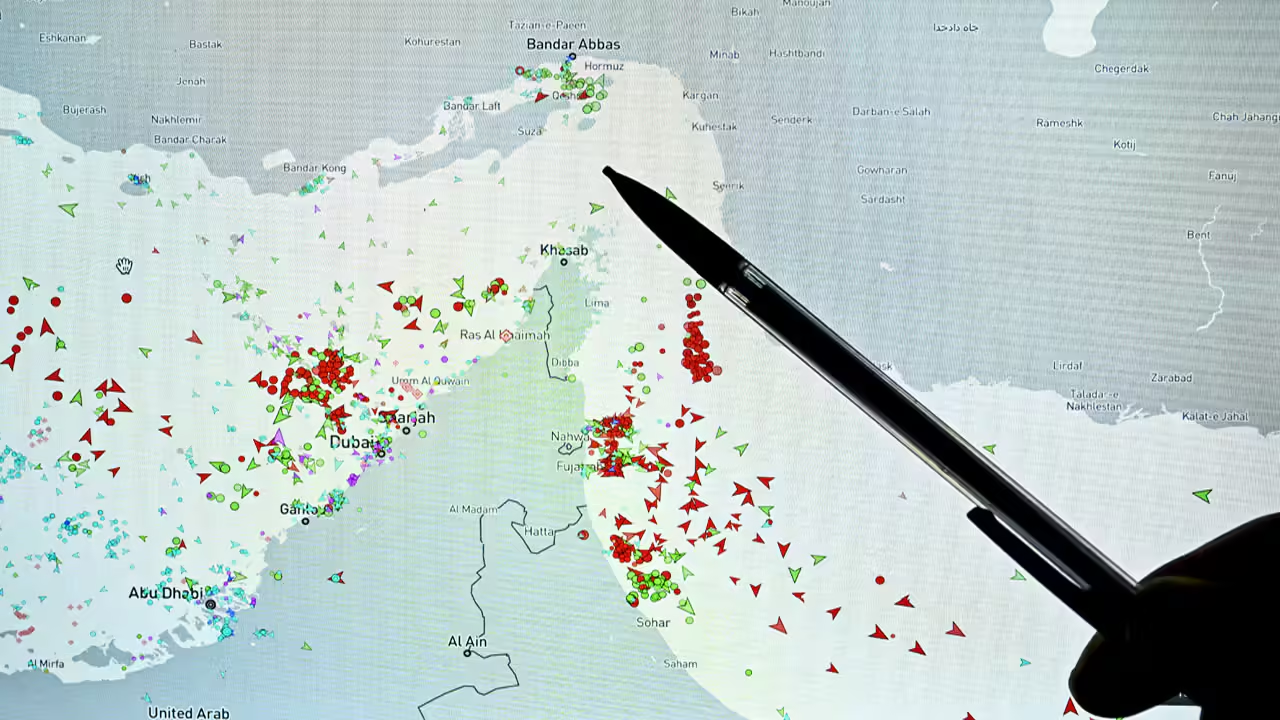
A geopolitical flashpoint located thousands of kilometers away may soon influence the monthly expenses of millions of Indian families. The Hormuz Strait, though relatively narrow in size, plays a critical role in global energy trade. Any disruption in this vital shipping route has the potential to affect crude oil prices worldwide, eventually impacting fuel costs and the prices of everyday essentials in India.
India depends heavily on imported crude oil, with more than 85 percent of its requirement coming from overseas. A significant share of these imports arrives from Gulf nations such as Saudi Arabia, Iraq, the UAE, Kuwait, and Qatar through the Hormuz Strait. Because of this dependence, developments in the region are closely watched by governments, businesses, and consumers alike.
The Hormuz Strait lies between Iran and Oman and is only about 33 kilometers wide at its narrowest point. Despite its size, nearly one fifth of the world’s seaborne crude oil passes through this route every day. Around 20 million barrels of crude oil and petroleum products, along with a substantial portion of global liquefied natural gas exports, move through the strait, making it one of the world’s most strategically important waterways.
When uncertainty rises in the region, international oil markets react almost immediately. Even the possibility of disruptions caused by military tensions, attacks on oil tankers, or geopolitical warnings can drive crude oil prices upward. Markets often respond to uncertainty before any actual supply interruption occurs.
Current market trends already reflect these concerns. Brent crude is trading close to 88 dollars per barrel after recently approaching the 90 dollar mark. On the domestic market, crude oil futures remain firm, while petrol prices in several Indian cities continue to stay above previous levels. Rising global crude prices do not automatically lead to an immediate increase in retail fuel prices, but they certainly create upward pressure on costs.
The impact goes far beyond petrol pumps. Higher fuel prices increase transportation expenses across the country. Trucks carrying vegetables, fruits, grains, milk, and other daily essentials face higher operating costs, which are eventually passed on to consumers. As a result, grocery bills may rise even if agricultural production remains stable.
Farmers are among the first to feel the impact of expensive fuel. Diesel powers tractors, irrigation pumps, harvesters, and machinery used throughout the farming process. Transporting fertilizers, pesticides, and harvested crops also becomes more expensive. These additional costs eventually influence food prices in local markets.
Natural gas prices can also be affected during periods of global energy market volatility. Since natural gas is a key raw material in producing fertilizers such as urea, rising gas prices may increase fertilizer production costs. This creates another indirect burden on the agricultural sector and food supply chain.
For households, the effect can spread across several areas of monthly spending. Cooking gas prices, school transportation charges, auto fares, courier services, online deliveries, and other services linked to fuel costs may all become more expensive. Even a small increase in fuel prices can gradually add noticeable pressure to a family’s monthly budget.
For example, if petrol becomes two rupees costlier per litre and a household consumes around 20 litres every month, the direct additional expense may be only 40 rupees. However, when higher transportation costs are reflected in groceries, LPG, public transport, delivery charges, and other services, the total indirect impact could range from 300 to 1000 rupees per month, depending on consumption patterns and local market conditions.
If crude oil prices rise by around 10 dollars per barrel, India’s import bill may increase significantly. Such a rise can also put pressure on the Indian rupee, contribute to inflation, and increase logistics costs across multiple sectors. However, the final retail prices of petrol and diesel also depend on government taxes, pricing policies, and decisions made by oil marketing companies.
The biggest challenge for global energy markets is often uncertainty rather than conflict itself. Investors and traders closely monitor every development in the Gulf region because even a single security incident or political warning can trigger sharp movements in crude oil prices.
Although the Hormuz Strait is located far from India, its economic influence reaches Indian households through higher fuel costs and increased prices for everyday goods and services. In today’s interconnected economy, events unfolding in one strategic maritime corridor can eventually shape the financial planning of families thousands of kilometers away.