
Four Historic Stepwells to Get a New Lease of Life as Restoration Work Begins
Restoration begins on four historic stepwells in the Walled City, with two projects expected to finish by December 2026.
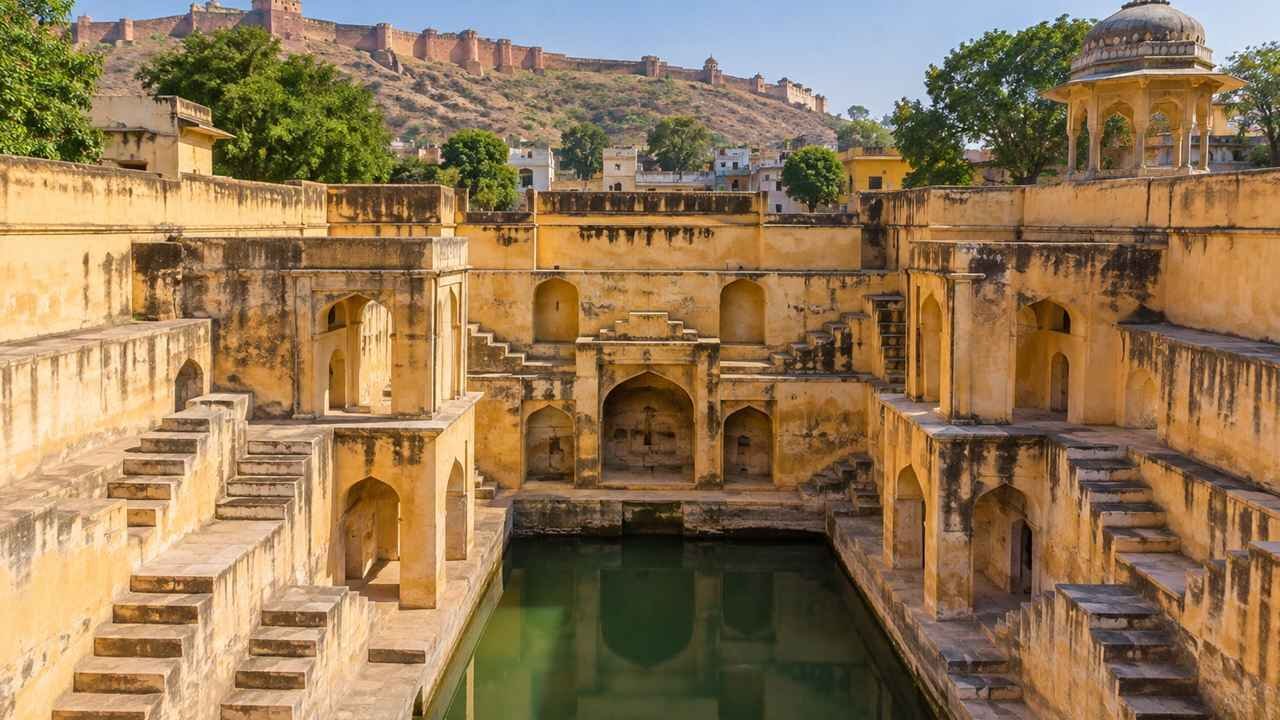
Jaipur : Jaipur is taking another step towards preserving its historic water heritage, with restoration work beginning on four traditional stepwells in the city’s Walled City area. The initiative aims to protect these centuries-old structures while restoring their potential as water sources, community spaces and cultural attractions.
The Jaipur Municipal Corporation (JMC), in collaboration with the World Monuments Fund India (WMFI), has started work on Bangali Baba Baori, Gaitore Baori, Kale Hanumanji Ki Baori and Parshuram Baori. These historic structures are located within Jaipur’s UNESCO World Heritage Site, making their conservation important for both the city’s heritage and its identity.
Two Stepwells Expected to Be Ready by December
According to the reported project timeline, restoration work at Bangali Baba Baori and Gaitore Baori is expected to be completed by December 15, 2026. Work on Kale Hanumanji Ki Baori and Parshuram Baori is expected to finish by February 13, 2027.
The project focuses on conserving the original structures, improving their physical condition and reviving traditional water systems. Officials are also working towards arrangements for the long-term maintenance of these heritage sites after the restoration work is completed.
Why Jaipur’s Historic Stepwells Matter
Stepwells have played an important role in Rajasthan’s traditional water management system. Designed to store and provide access to water, these structures also reflect the architectural skills and community traditions of earlier generations.
In a city known for its forts, palaces and historic architecture, the restoration of stepwells could add another dimension to Jaipur’s heritage tourism. If properly maintained and made accessible where appropriate, these sites could attract visitors interested in the city’s lesser-known historical landmarks.
The project also highlights the importance of protecting traditional water infrastructure at a time when water conservation remains a significant concern across Rajasthan.
Restoration Delays and Long-Term Maintenance
The conservation initiative has faced delays linked to pending clearances and the appointment of specialist consultants. Heritage conservation requires careful planning because repairs must protect the original architectural features rather than simply modernise the structures.
The World Monuments Fund India’s involvement is expected to support the conservation process. However, completing the physical work is only one part of the challenge. Regular maintenance, protection from damage and community participation will be essential to preserve these structures over the long term.
The restoration has also drawn attention to heritage protection requirements. UNESCO previously sought clarification regarding conservation work and heritage impact assessments associated with the stepwells. These concerns underline the need to balance restoration with the protection of the historic Walled City.
What This Means for Jaipur
The restoration of the four stepwells is an important development for Jaipur’s cultural heritage. Beyond improving the appearance of historic structures, the initiative seeks to reconnect the city with its traditional water systems and public spaces.
For readers following Jaipur News, the project is a reminder that the city’s heritage extends beyond its most famous tourist destinations. The successful completion and continued upkeep of these stepwells could help preserve valuable historical assets for future generations.
Stay connected for more Hindi News, Rajasthan updates and developments from Jaipur covering heritage, civic affairs, tourism and public infrastructure.