
Smart Kitchen Hack Makes Four Soft Chapatis at Once Saving Time in Busy Mornings
A simple layered rolling technique is helping home cooks prepare multiple chapatis together, reducing effort in the kitchen while ensuring soft and fluffy rotis for the entire family.
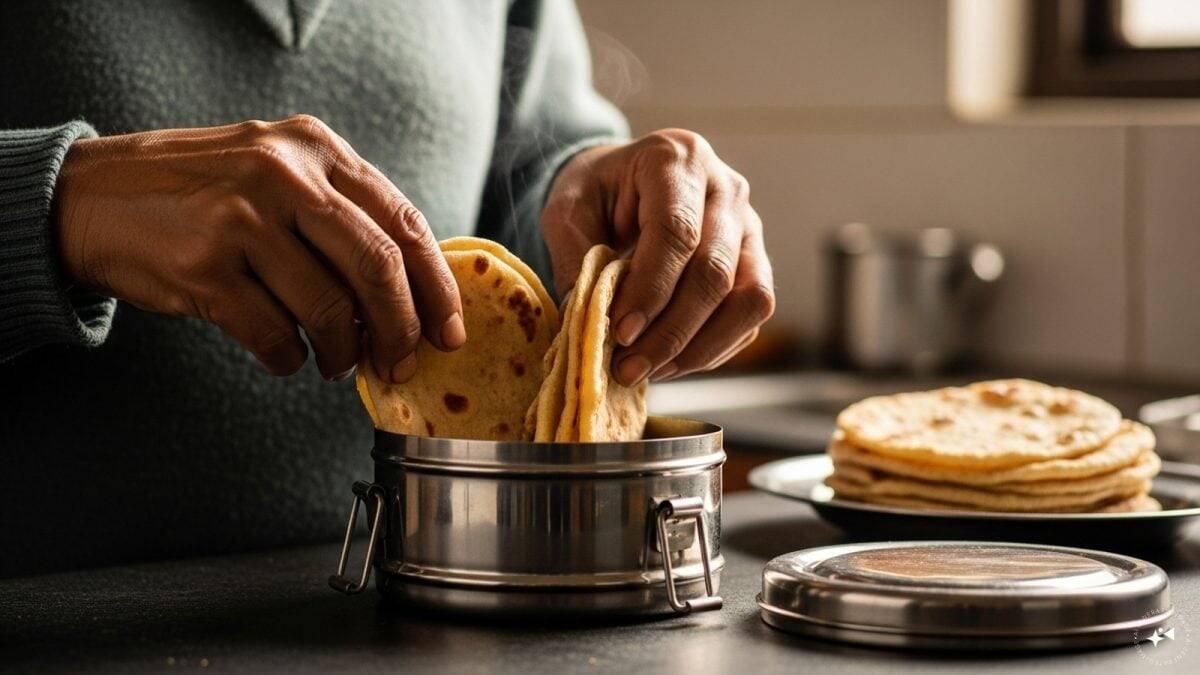
For many households, mornings are the busiest part of the day. Between getting ready for work, packing lunches, and managing household tasks, preparing chapatis one by one often feels time consuming and tiring. But a simple kitchen trick is now making this routine task much faster and easier, especially for those who cook daily.
The idea begins with preparing a soft and smooth dough, just like in regular chapati making. The texture of the dough plays a key role, and a well kneaded mixture ensures softer rotis. Once the dough is ready, it is left to rest for a short while so it becomes more flexible and easy to work with.
After resting, the dough is divided into four equal portions. Each portion is shaped into a small ball and rolled out individually into thin, small round discs similar in size to puris. This is where the method starts to differ from traditional chapati preparation.
One of the rolled discs is lightly brushed with oil or ghee and sprinkled with a small amount of dry wheat flour. This step prevents sticking and helps in creating layers. The second disc is placed on top of the first, followed by repeating the same process for the third and fourth discs, stacking them neatly one over the other.
Once all four discs are layered, the stacked dough is gently rolled again using a rolling pin. The goal is to flatten them into one large circle while keeping the layers intact. Care is taken not to press too hard, as the layering is what allows the chapatis to separate later.
The stacked and rolled dough is then placed on a hot pan. As it begins to cook, light bubbles form and the surface starts to change color. When one side is partially cooked, it is flipped to ensure even heating on both sides. During this stage, something interesting begins to happen inside the layered dough.
The heat causes the layers to slowly separate from one another. Steam builds up between the thin sheets of dough, naturally helping them puff and divide. This is the key moment that turns one rolled piece into multiple chapatis.
Once fully cooked, the flatbread is removed from the pan and gently separated by hand. What was once a single rolled piece transforms into four separate, soft chapatis that are light, fluffy, and ready to serve.
This method is proving especially useful for people with busy lifestyles. Working professionals, students, and homemakers can all benefit from the time saving approach. Instead of rolling and cooking each chapati individually, this technique allows multiple rotis to be prepared in one go, cutting kitchen time nearly in half.
Another advantage of this method is that the chapatis remain soft for a longer period. The layering technique helps retain moisture, ensuring they do not turn dry quickly. This makes them ideal for lunch boxes and packed meals as well.
In everyday cooking, small techniques like this can make a big difference. What once felt like a repetitive task becomes quicker and more efficient, allowing more time for other morning activities. With just a slight change in preparation style, the entire cooking experience becomes smoother and less stressful.
For anyone looking to simplify their kitchen routine, this four chapati method offers a practical and reliable solution. It is simple to learn, easy to apply, and delivers consistent results every time, making it a helpful addition to modern home cooking.