
Government Temporarily Suspends Cell Broadcast Alert System After Midnight Trigger Raises Concerns
India has temporarily paused its newly launched emergency Cell Broadcast System after operational concerns surfaced, with reports suggesting unexpected late night alerts prompted review of nationwide disaster warning protocols
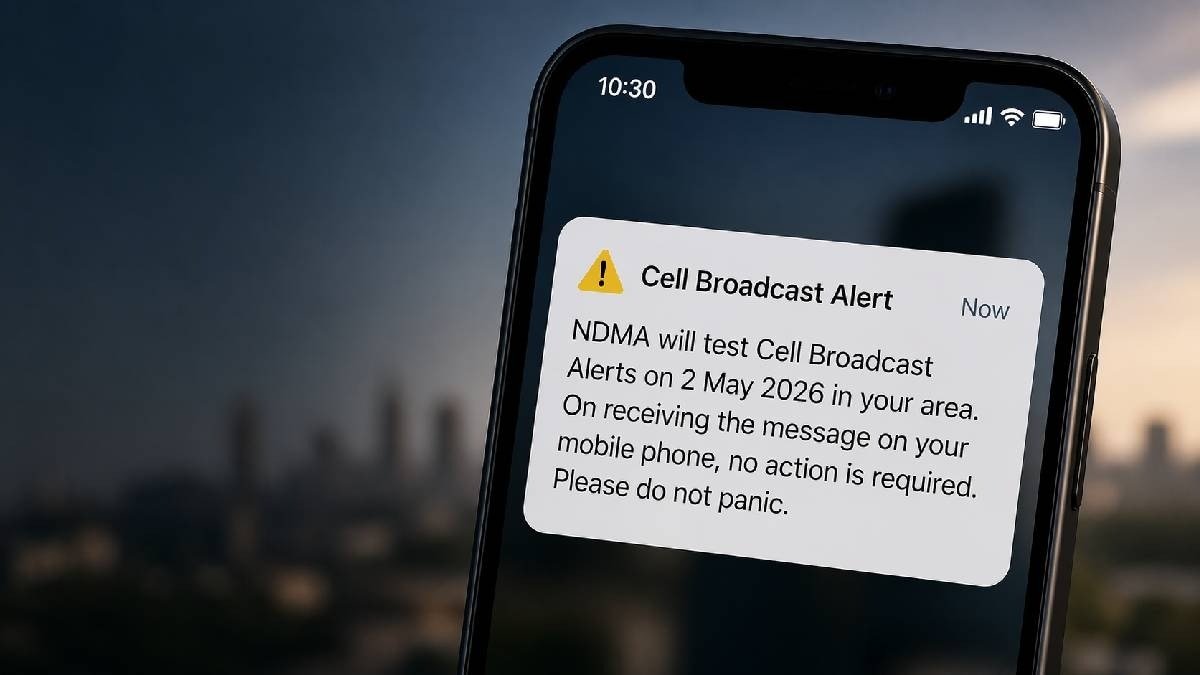
The Indian government has put a temporary halt on the Cell Broadcast System, a recently introduced technology designed to send instant emergency alerts to mobile users during disasters and critical situations. The decision comes barely a month after its nationwide rollout, raising questions about the early stage challenges faced by the system.
According to an official order issued by the National Disaster Management Authority, the service has been suspended from 12 June until further notice. The directive mentions that certain issues flagged by authorities led to the decision, although detailed reasons have not been made public so far.
Interestingly, reports indicate that the suspension may have been triggered after an unusual incident involving emergency alerts sent during late night hours. Some media sources have claimed that a disaster warning reportedly reached the Prime Minister’s mobile phone around midnight, prompting immediate attention from officials. However, this claim has not been officially confirmed.
Around the same period, alerts were also reportedly issued by disaster management units in regions such as Haryana and Uttar Pradesh. These messages led to sudden loud notifications on several mobile phones during the night, causing confusion among users and highlighting concerns about timing and system control.
The Cell Broadcast System was introduced in May 2026 as part of India’s effort to strengthen its emergency communication network. It was designed to deliver real time alerts during natural disasters, security threats, or other urgent situations, ensuring that people receive immediate warnings without delay.
One of the key advantages of this system is that it does not rely on internet connectivity. Unlike traditional SMS alerts, it can function even during network congestion and reach millions of users in a specific area simultaneously. This makes it a powerful tool for disaster response and public safety communication.
When active, the system sends alerts that appear as pop up notifications on mobile screens, often accompanied by a loud sound even if the phone is in silent mode. In some supported devices, the message can also be read aloud to ensure wider accessibility and quicker awareness among users.
While the technology was seen as a major step forward in emergency preparedness, the recent pause suggests that fine tuning and system checks are still needed before full scale implementation continues across the country.