
Jensen Huang: AI Will Not Destroy Humanity by 2030, Says Nvidia CEO
Nvidia CEO Jensen Huang has rejected predictions that artificial intelligence could end humanity by 2030, saying companies should focus on building safer systems while continuing innovation.
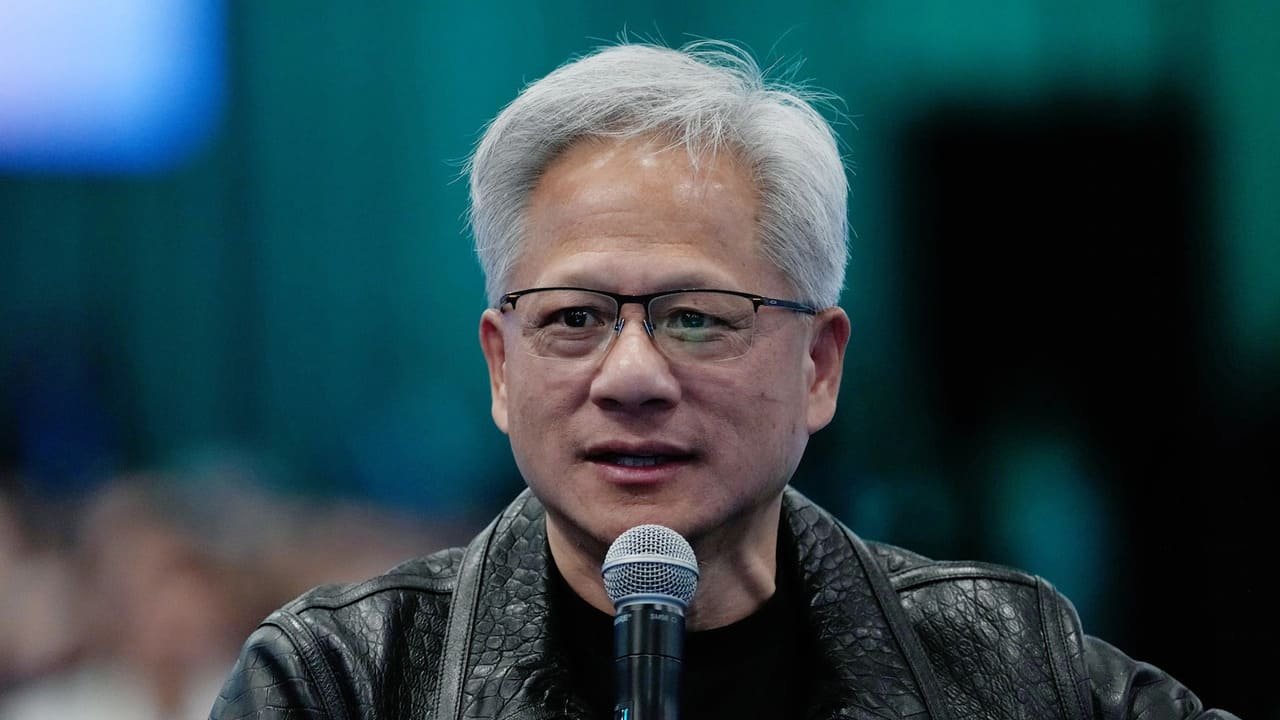
Jensen Huang: Nvidia CEO Jensen Huang has pushed back strongly against recent warnings about artificial intelligence, saying he does not believe AI will destroy humanity by 2030. His comments come as concerns over the rapid development of increasingly capable AI systems have once again moved into the spotlight.
Huang made the remarks during a media interview as debate grows within the technology industry over how quickly AI should advance. He dismissed the idea that humanity is heading toward extinction because of AI within the next few years and described such predictions as lacking a sound basis.
His comments arrived shortly after several researchers and technology leaders publicly raised concerns about the possible consequences of advanced AI. Anthropic researcher Evan Hubinger recently estimated that he personally sees a greater than 10% chance of AI causing human extinction within the next decade. Former Anthropic researcher Jacob Coxon also warned that companies developing increasingly powerful systems may be moving too quickly.
Huang takes a different view of the situation. Rather than slowing AI development because of worst-case predictions, he has argued that companies should continue working on the technology while putting appropriate safeguards in place.
The Nvidia chief has also stressed that companies should not release systems they believe are unsafe. His position is not that AI development should ignore safety, but that concerns about possible risks should be addressed through engineering and stronger protections rather than by abandoning progress.
That distinction has become an important part of the current AI debate. Technology companies are racing to develop more capable models, while researchers are trying to understand whether those systems could eventually behave in ways that are difficult for humans to control.
Recent warnings have added fresh urgency to that discussion. Hubinger, who works on AI alignment at Anthropic, publicly backed Coxon’s concerns and said the industry does not yet have a clear solution for keeping future superintelligent systems aligned with human goals.
Anthropic CEO Dario Amodei has also argued for greater caution. In recent comments, he has called for the industry to slow the pace of frontier AI development so that safety measures can keep up with increasingly powerful systems. OpenAI CEO Sam Altman has also spoken about the need for coordination and caution as AI capabilities develop.
The disagreement is not simply about whether AI is useful or dangerous. Much of the debate concerns how much uncertainty exists around future systems and how governments, researchers and companies should respond to risks that are difficult to measure.
Huang’s position carries particular weight because Nvidia supplies much of the computing hardware used to train and operate advanced AI models. The company has benefited enormously from the rapid expansion of AI infrastructure, making Huang one of the industry’s most prominent voices on the technology’s future.
At the same time, his comments do not remove the concerns raised by AI safety researchers. There is no established scientific method that can reliably calculate the probability of human extinction from future AI systems. Experts continue to disagree sharply over both the likelihood and timing of such an outcome.
The discussion has therefore developed into a broader question about how the industry should balance speed with safety. Some researchers want stronger safeguards and greater coordination before increasingly autonomous systems become more widespread. Others, including Huang, argue that the technology should continue advancing while developers work on solving its risks.
For now, the disagreement remains largely about the future. AI systems are becoming more capable, but predictions about what they might eventually do vary widely. Huang’s latest comments add another prominent voice to a debate that is unlikely to disappear as the technology continues to evolve.