Xiaomi 18 Fold vs iPhone Duo Camera Battery and Price
Xiaomi 18 Fold takes on Apple iPhone Duo with a 200 megapixel Leica camera, large battery, fast charging and dual AMOLED displays, while Apple focuses on its premium foldable design.
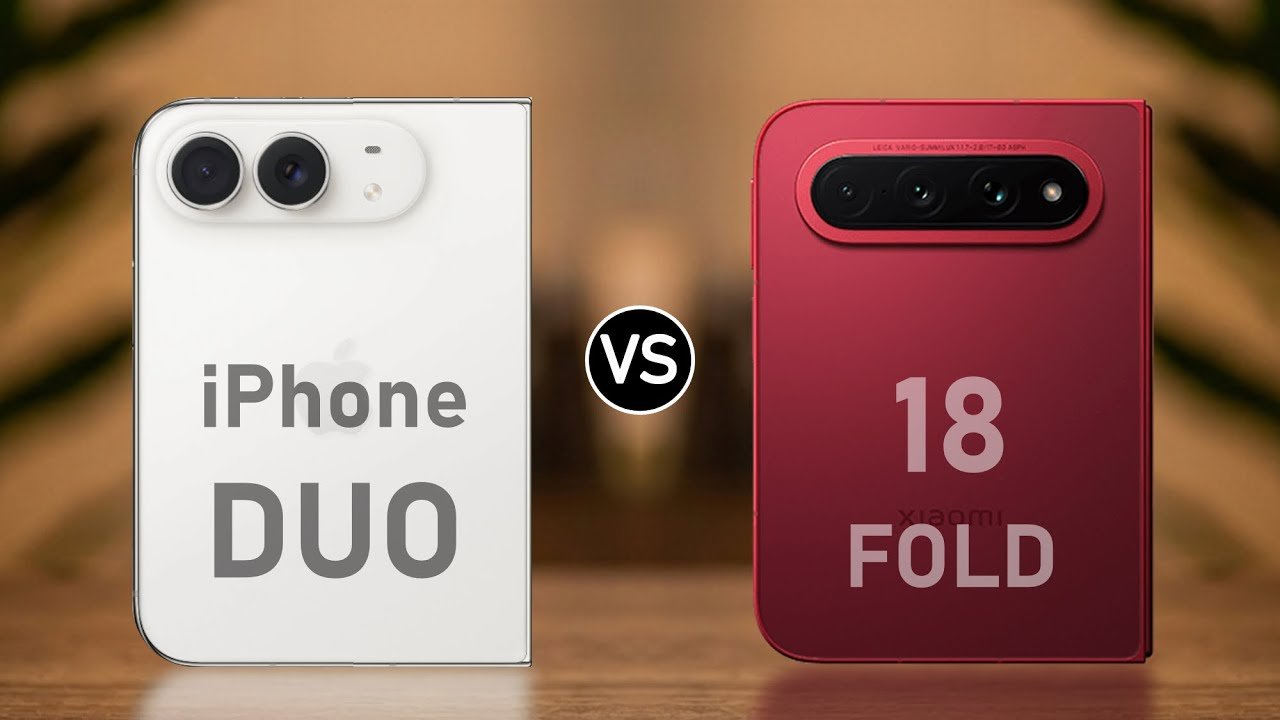
The foldable smartphone market is getting more competitive with Xiaomi 18 Fold emerging as a strong alternative to Apple iPhone Duo. Both phones use a compact foldable design with a smaller outer screen and a larger display inside, but their approach to cameras, batteries, charging and pricing is quite different.
Apple introduced iPhone Duo as its first foldable iPhone, and the device has attracted considerable attention because of its premium positioning. Xiaomi, meanwhile, has already brought the Xiaomi 18 Fold to the Chinese market, where it is positioned as a high end foldable smartphone with a strong focus on photography and battery capacity.
One of the biggest differences between the two devices can be seen in their camera hardware. Xiaomi has equipped the Xiaomi 18 Fold with a Leica supported triple rear camera system. The main camera uses a 200 megapixel sensor with an f/1.7 aperture and optical image stabilisation. It is joined by a 50 megapixel periscope telephoto camera with an f/2.8 aperture, 3.5x optical zoom and optical image stabilisation.
The third rear camera is a 50 megapixel ultrawide sensor with an f/2.4 aperture. Xiaomi has also included 16 megapixel cameras on both the inner and outer screens for selfies and video calls. With Leica branding across the main camera system, the phone is clearly targeting users who place a high value on mobile photography.
Apple takes a different route with the iPhone Duo. It features two rear cameras, including a 48 megapixel Fusion main camera with 2x optical zoom and a 48 megapixel Fusion ultrawide camera. The device also supports video recording up to 4K at 120 frames per second.
The iPhone Duo includes a Center Stage camera on the front, while the foldable display uses an under display FaceTime camera. This gives Apple a different hardware setup compared with Xiaomi, which places front cameras on both its inner and outer screens.
Battery capacity is another area where Xiaomi has a clear specification advantage. The Xiaomi 18 Fold carries a 6000mAh battery and supports 67W wired charging along with 50W wireless charging. This combination gives the device a large power reserve while also offering faster charging options.
Apple does not officially disclose the battery capacity of its iPhones. Instead, the company highlights usage figures for the iPhone Duo. According to Apple, the device can deliver up to 31 hours of video playback when using the inner display, up to 44 hours with the outer display and up to 22 hours when both displays are used. Apple also claims that a five minute charge can provide up to five hours of video playback.
The display experience is also central to both foldable phones. Xiaomi 18 Fold comes with a 5.38 inch AMOLED cover screen supporting a 120Hz refresh rate. Inside, there is a larger 7.58 inch foldable AMOLED display, also supporting 120Hz. Both panels can reach a claimed peak brightness of 4000 nits.
The inner Xiaomi display uses low power Pol less technology, while the outer screen is protected by Xiaomi Dragon Crystal Glass 3.0. The foldable inner panel uses flexible ultra thin glass.
The iPhone Duo features a 7.6 inch Super Retina XDR foldable display. Apple says this screen is substantially larger than the 6.3 inch display used on the iPhone 18 Pro. The inner panel is designed with a custom nano texture finish intended to reduce reflections, while Apple has also focused on making the central crease less noticeable.
For everyday use, the iPhone Duo also has a 5.4 inch Super Retina XDR cover display. Ceramic Shield protection is provided on the outer screen and rear panel.
Pricing creates another major difference between the two smartphones. Xiaomi 18 Fold starts at 10,999 yuan for the 12GB RAM and 256GB storage model. The 12GB and 512GB version costs 11,999 yuan, while the 16GB and 512GB variant is priced at 12,999 yuan.
The top model with 16GB RAM and 1TB storage is priced at 14,999 yuan and uses LPDDR6 memory. Xiaomi also offers a ceramic special edition with 16GB RAM and 1TB storage at 15,999 yuan. The phone is available in black, Nishino Red and Warm Gold White colour options.
The iPhone Duo sits at a much higher price point. Its 256GB model starts at Rs 2,99,900 in India. The 512GB version costs Rs 3,24,900, while the 1TB and 2TB variants are priced at Rs 3,74,900 and Rs 4,49,900 respectively.
Apple offers the iPhone Duo in Star White and Night Sky colour options. The device is scheduled for pre orders from October 16, with sales beginning October 23.
At the moment, Xiaomi 18 Fold is available in China, while its availability outside the country remains limited. This is important for buyers in markets such as India because the Chinese price cannot automatically be treated as the final international price. Import costs, taxes, distribution expenses and local pricing strategies could increase the amount significantly if the device reaches other markets.
The two phones also represent different strategies in the premium foldable segment. Xiaomi is putting considerable emphasis on camera specifications, battery capacity and charging speeds, while Apple is combining its first foldable design with its existing premium smartphone ecosystem.
For buyers comparing the hardware on paper, Xiaomi 18 Fold has a clear advantage in battery capacity, charging and rear camera resolution. The iPhone Duo, however, offers Apple software integration, a premium display approach and the appeal of being the company first foldable iPhone.
Neither phone can be called a direct winner for every user because price, software preference, camera needs and availability will play an important role. Xiaomi 18 Fold looks particularly interesting for photography and battery focused buyers, while iPhone Duo is likely to attract customers who want Apple hardware in a foldable format.
The international availability of Xiaomi 18 Fold will be an important factor going forward. If Xiaomi eventually expands the phone to more markets at competitive pricing, it could become a notable rival to premium foldable models from Apple and other major smartphone brands.