Trump Pulls Back From Iran War as US Missile Stocks Come Under Strain
Reports suggest that concerns over shrinking air defence interceptor stocks may have influenced Washington’s decision to avoid a prolonged conflict with Iran.
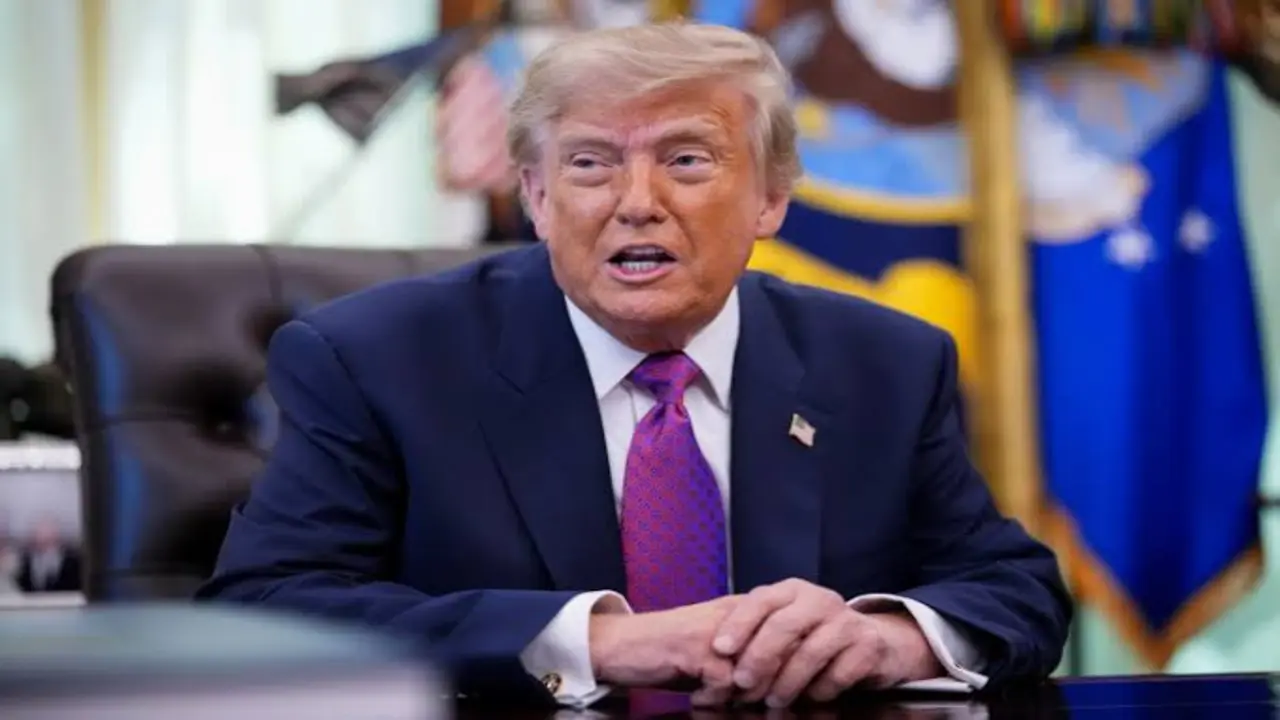
Trump stepped back from extending the Iran war.US missile stocks have come under growing pressure.Patriot and THAAD systems face rising demand.
The United States may have had another difficult calculation to make as the Iran conflict continued. Beyond the battlefield, Washington was reportedly becoming increasingly concerned about how long its air defence systems could sustain the pace of combat.
According to a Wall Street Journal report, US officials were worried about weapons shortages as plans for a larger military operation against Iran were being considered. The possibility of diplomatic talks reportedly gained importance alongside concerns over the declining stockpile of key interceptors.
The pressure is particularly significant for systems such as Patriot and THAAD, which have been heavily relied upon to counter incoming missiles. Analysts have estimated that the US Patriot inventory has fallen below 1,000 interceptors, while THAAD stocks could be around 250.
That situation has raised concerns well beyond the Middle East. Some US defence systems deployed in Europe have reportedly been moved toward the region to strengthen protection against Iranian attacks. While that may improve immediate battlefield coverage, it also creates a difficult strategic problem for Washington.
If a major crisis were to emerge simultaneously in Europe or the Indo Pacific, the United States could find itself having to protect several theatres with fewer available air defence resources.
The Pentagon, however, has pushed back against claims that the US has simply run out of weapons. Officials maintain that the country still has significant military capabilities, even as questions grow about the pace at which critical interceptors are being consumed and replaced.
The situation could also have implications for Taiwan. Any future confrontation involving China would require the US to respond rapidly while maintaining substantial missile defence coverage. A depleted stockpile could make that challenge more complicated, particularly if Washington were already dealing with another major conflict.
At the same time, the United States continues to demonstrate that it is not stepping away from military preparedness. The US, Japan and South Korea are scheduled to conduct the Freedom Edge exercise from September 7 to 11 in waters east and south of Jeju Island. The exercise is intended to strengthen their ability to respond to North Korean nuclear and missile threats.
Washington is also moving ahead with new weapons development. The US Navy has unveiled the LRAAM Malice, a long range air to air missile reportedly designed with a range of around 250 nautical miles, or roughly 463 kilometres. The weapon is being developed for use by fourth, fifth and sixth generation fighter aircraft.
These developments underline a larger problem facing the Pentagon. Having advanced weapons is one thing, but maintaining enough of them for a prolonged high intensity conflict is another.
That may be why the Iran war has raised questions about whether the decision to step back was driven purely by diplomacy and a desire to avoid further escalation, or whether Washington also needed time to rebuild its missile inventories.
There may not be a single answer. But the conflict has exposed a vulnerability that is difficult for the United States to ignore. Military power depends not only on sophisticated aircraft, ships and missiles, but also on the ability to produce replacements quickly when those weapons are used at an extraordinary rate.