Nepal’s disaster : Nearly 400 Dead as Fresh Flood Threat Emerges in Nepal
A new flood threat has raised fears in Nepal after satellite images showed a rapidly growing lake near the Bhotekoshi River, while rescue teams continue searching for hundreds of missing people.
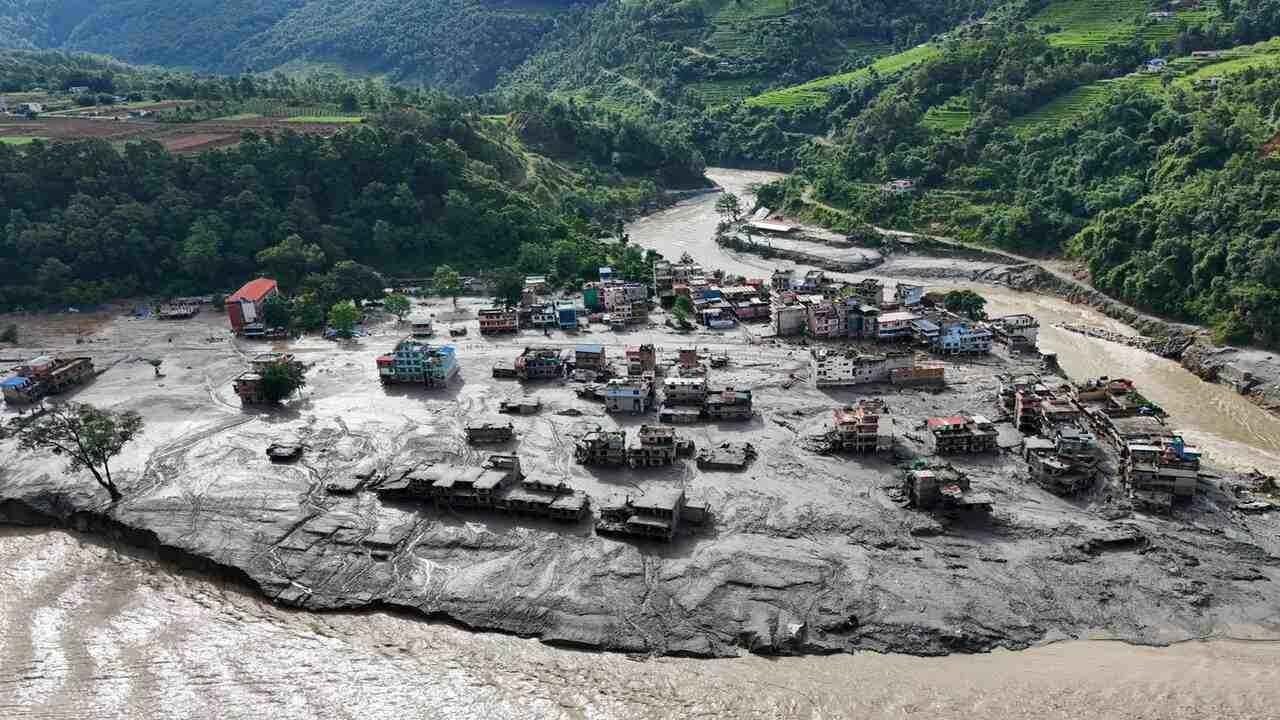
Nepal’s disaster : A danger has emerged in flood-hit Nepal, where authorities are keeping a close watch on a newly formed lake near the Bhotekoshi River. Satellite images show that the lake is filling with water, raising fears that it could suddenly burst and send another wave downstream.
The warning comes as the scale of the disaster continues to grow. At least 392 people have died in the floods and landslides, while more than 1,400 people are still missing in Nepal and Tibet. Rescue teams have been searching for survivors in several affected areas, but difficult terrain and heavy deposits of mud and debris are making the operation harder.
Nepal’s disaster authorities have asked both residents and rescuers to keep away from the riverbanks. The latest warning is particularly worrying because rescue workers are already operating close to areas damaged by the earlier floods.
If the newly formed lake breaks through its natural barrier, water could rush downstream with little warning. Officials are therefore treating the situation cautiously and monitoring developments in the area.
The disaster has also left a large number of Indian nationals unaccounted for. Nepal’s Foreign Minister Shisir Khanal said earlier that nearly 300 Indian tourists were believed to be missing in the flash floods. The Nepal Tourism Board later reported that 178 Indian nationals remained missing.
Search operations are continuing on both sides of the Nepal Tibet border. Among the foreign nationals reported missing are people from Australia, Britain, Malaysia, the Netherlands, Portugal, South Africa, South Korea and the United States.
Rescuers have been facing a difficult situation on the ground. In some places, floodwaters have filled buildings with mud and sludge, while roads and other routes have been damaged. Teams have had to move carefully through the affected areas while looking for people who may have been trapped.
The cause of the disaster was also under discussion after the first reports emerged. Initial information suggested that an earthquake could have triggered an avalanche or caused a glacial lake to rupture. A later assessment by the US Geological Survey offered a different explanation.
According to the agency, the event was linked to a glacier collapse and debris flow. The movement of ice, rock and other material generated seismic activity and then caused severe downstream damage in Nepal and Tibet.
The impact was especially visible along the Trishuli River. Water levels at some monitoring stations rose by as much as nine metres within just 30 minutes. The sudden increase gave communities very little time to react.
A huge amount of mud, ice and rock was swept downstream, affecting several districts. The force of the flow damaged roads, buildings and other infrastructure as it moved through the region.
The situation was not limited to Nepal. Across the border in Tibet, the town of Gyirong was hit by a major mudslide. Chinese state broadcaster CCTV reported that some roads were buried beneath more than two metres of soil.
Now, another concern is developing near the Nepal China border. Chinese rescue teams have reported a barrier lake forming behind rocks and debris. Water is collecting in the area, and officials have warned that further rainfall could increase the pressure on the natural barrier.
That possibility has already changed the way some rescue teams are working. According to reports, rescuers were moved to higher ground after the latest warning. Teams searching for missing people have been told to avoid places that could be affected by another sudden release of water.
India has also stepped in with emergency support. External Affairs Minister S Jaishankar said India had sent 10 tonnes of Humanitarian Assistance and Disaster Relief supplies to Nepal, along with essential medicines.
The situation is being watched closely in northern India as well. Bihar and Uttar Pradesh were placed on high alert after the floods in Nepal raised concerns about water levels in rivers connected to the Gandak basin.
Union Home Minister Amit Shah spoke with Bihar Chief Minister Samrat Choudhary and Uttar Pradesh Chief Minister Yogi Adityanath about the situation. Local authorities have been asked to remain prepared in areas that could face rising water levels.
The National Disaster Response Force has also been kept on alert. Rescue and relief teams in vulnerable border areas are preparing for possible downstream effects if river levels rise further.
The United States has offered emergency assistance to Nepal as well. The US government expressed condolences over the deaths and announced 500,000 dollars in emergency aid.
For families still waiting for news about missing relatives, the rescue operation remains the most important concern. Every passing hour makes the search more difficult, especially in places where mud and debris have covered roads and buildings.
Authorities are also keeping an eye on rainfall forecasts. Another spell of heavy rain could make an already dangerous situation even worse, particularly if it adds pressure to the newly formed lake.
For now, officials are asking people to stay away from rivers and other risky locations. Rescue workers are continuing their search while authorities assess whether the barrier lake poses an immediate threat.
With nearly 400 deaths already reported and hundreds of people still missing, Nepal is facing one of its most serious disasters in recent years. The new warning around the Bhotekoshi River has added another challenge to an operation that was already under immense pressure.