Why Phone Charging Does Not Stop at 100 Percent and Where the Electricity Really Goes
Even after a phone reaches 100 percent charge, smart battery management controls power flow, prevents overcharging, supplies only required energy, and helps improve battery safety, efficiency, and long term lifespan.
Why the Charging Icon Stays After 100 Percent
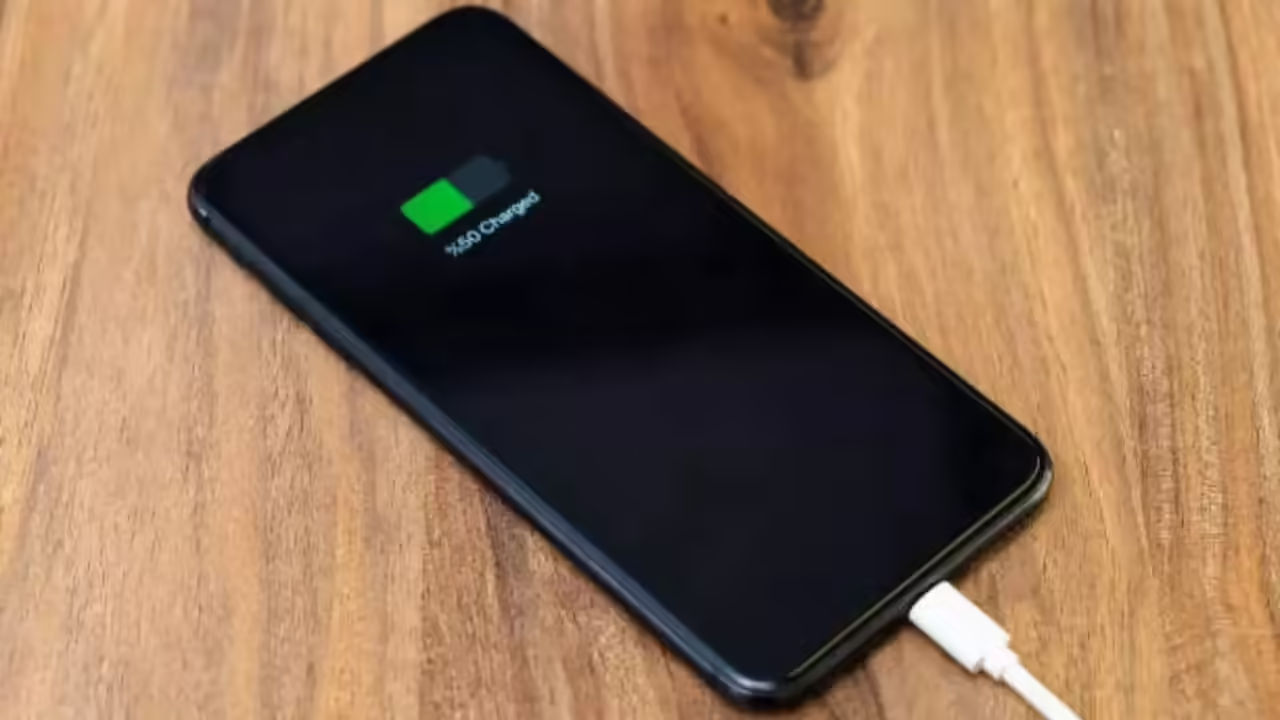
Many smartphone users believe charging completely stops once the battery reaches 100 percent. However, modern smartphones use intelligent battery management systems that continue monitoring the battery instead of constantly pushing electricity into it. This is why the charging symbol may still remain visible even after the battery is fully charged.
The electricity from the charger is not wasted or continuously forced into the battery. Once the battery reaches its safe charging limit, the phone’s charging controller stops the main charging process and only supplies power when necessary.
How Smart Charging Works
Most smartphones today are powered by Lithium ion or Lithium polymer batteries. These batteries include advanced charging controllers designed to improve safety and extend battery life.
Charging happens quickly until the battery reaches around 80 percent. After that, the phone automatically slows the charging speed by entering the constant voltage stage. During this phase, the current gradually decreases, allowing the battery to safely reach full charge without excessive stress.
What Happens After 100 Percent
Even at 100 percent, a smartphone continues consuming small amounts of power. Mobile network connections, background applications, alarms, notifications, and messaging services all require energy while the phone remains switched on.
As the battery level slightly drops from 100 percent to 99 percent or lower, the charging controller briefly restores the lost power. This process is known as trickle charging or top up charging. It keeps the battery near full capacity without continuously charging it.
Why Overcharging Is Rare
Modern smartphones are equipped with built in overcharge protection. Once the battery is full, the charging circuit blocks continuous charging and only provides power when required. This greatly reduces the risk of battery damage caused by overcharging.
Another interesting fact is that the 100 percent displayed on your phone is not always the battery’s true maximum capacity. Manufacturers intentionally leave a small safety buffer to reduce battery stress and improve its overall lifespan.
Tips for Better Battery Health
Many battery experts recommend keeping the battery between 20 percent and 80 percent whenever possible for better long term performance. Although frequently charging to 100 percent may add some stress over time, today’s smart charging technology minimizes the impact.
Leaving your phone plugged in overnight is generally considered safe because intelligent charging systems automatically manage power flow and prevent unnecessary charging.
Final Takeaway
A phone does not keep charging endlessly after reaching 100 percent. Instead, its smart charging controller carefully manages the incoming electricity, supplying only the small amount of power needed to replace normal battery usage. This intelligent system improves safety, protects the battery from overcharging, and helps extend its lifespan.