
Thousands of Satellites Orbit Earth Every Day Why They Rarely Collide
More than 16000 satellites orbit Earth every day under constant monitoring. Even a single collision could create dangerous space debris and disrupt essential services worldwide.
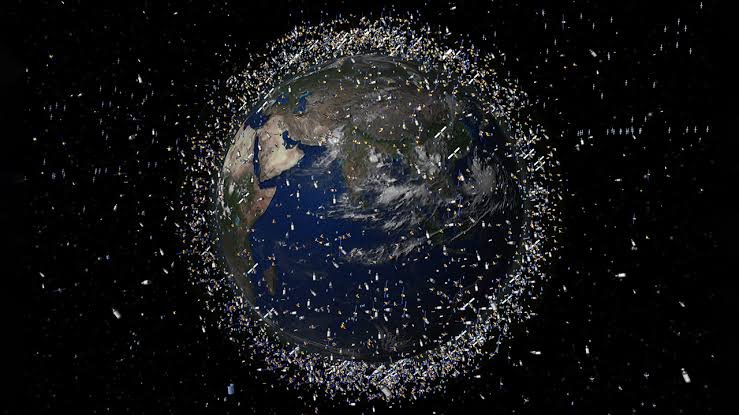
The number of satellites orbiting Earth has increased rapidly over the past decade as governments and private companies continue expanding communication, internet, navigation, and scientific missions. With thousands of spacecraft moving through space at incredible speeds, many people wonder why these satellites do not constantly crash into one another and what could happen if they did.
Today, more than 16000 active satellites are operating in Earth’s orbit. They support a wide range of services including weather forecasting, GPS navigation, television broadcasting, internet connectivity, scientific research, defense operations, and disaster monitoring. Large satellite constellations launched by companies providing global internet access have significantly increased the number of objects circling the planet. Alongside active satellites, space is also filled with retired spacecraft, discarded rocket stages, and countless pieces of space debris.
Despite the crowded environment, satellite collisions remain uncommon because these spacecraft are not all traveling along the same path. They operate at different altitudes, orbital planes, and speeds depending on their missions. Every satellite follows a carefully calculated orbit, reducing the chances of crossing paths with others.
Space agencies and tracking organizations continuously monitor millions of objects orbiting Earth. Advanced tracking systems can predict when two satellites may come dangerously close. If there is a potential risk, operators receive alerts and can make small adjustments to a satellite’s orbit to safely avoid a collision. These preventive maneuvers have become a routine part of satellite operations.
However, when a collision does occur, the consequences can be severe. Satellites travel at speeds approaching 28000 kilometers per hour. At such extreme velocities, even a small impact releases enormous energy. A direct collision can completely destroy both spacecraft, scattering thousands of metal fragments across orbit. These fragments become dangerous projectiles capable of damaging other satellites and even threatening crewed space missions.
One of the biggest concerns for scientists is a phenomenon known as the Kessler Syndrome. This theory suggests that one collision can trigger a chain reaction. The debris created from an initial crash may strike additional satellites, producing even more fragments. If this process continues, Earth’s orbit could become increasingly crowded with hazardous debris, making future satellite launches and space missions far more difficult.
Although the idea of satellites falling toward Earth may sound alarming, the risk to people on the ground remains very low. Most satellites burn up due to intense heat and friction as they reenter Earth’s atmosphere. Only in rare cases do larger pieces survive the descent and reach the surface. When such events are expected, authorities closely monitor the object’s path and issue warnings if necessary.
The impact of losing important satellites can be felt far beyond the space industry. Communication networks, television broadcasts, GPS navigation, aviation, maritime transport, banking systems, weather forecasting, and emergency response services all rely heavily on satellites. Damage to key spacecraft could temporarily disrupt these essential services, affecting millions of people around the world.
As satellite launches continue to rise, managing space debris has become a global priority. Engineers are designing modern satellites that can safely leave orbit after completing their missions, reducing the amount of abandoned hardware in space. At the same time, several countries and space organizations are developing technologies and specialized missions aimed at removing existing debris from orbit.
The future of space exploration depends not only on launching new satellites but also on keeping Earth’s orbital environment safe. Strong international cooperation, improved tracking technology, and responsible satellite management will play a crucial role in protecting the space infrastructure that modern life increasingly depends upon.