
India Cracks Indigenous GaN Chip Technology After France Declined Transfer
India achieved a major defence technology milestone in 2023 after DRDO scientists successfully developed indigenous Gallium Nitride chip technology, strengthening self reliance and reducing dependence on foreign suppliers for critical systems.
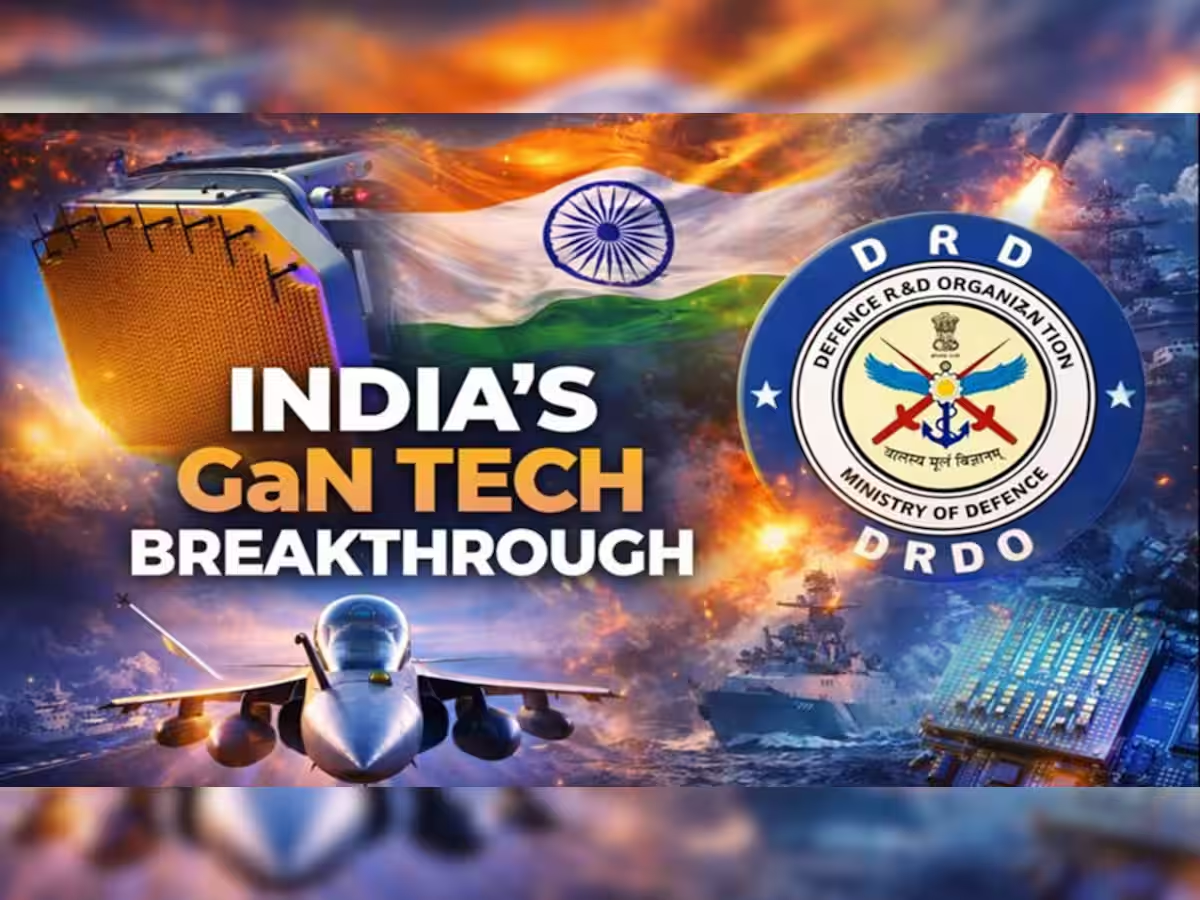
India’s successful development of Gallium Nitride GaN semiconductor technology has become one of the country’s most significant achievements in defence research. The breakthrough has placed India among a small group of nations capable of designing and producing this advanced technology for strategic applications.
The journey gained momentum after an important setback during the 2016 Rafale fighter jet agreement with France. While India requested the transfer of GaN chip technology along with the aircraft deal, France declined to share the manufacturing know how. Instead, it offered to supply the chips without transferring the core technology. That decision encouraged Indian scientists to pursue a fully indigenous solution.
A dedicated team of scientists from the Defence Research and Development Organisation worked relentlessly under the leadership of Dr Meena Mishra. Their years of research and experimentation at the Solid State Physics Laboratory finally paid off in 2023, when they successfully mastered the technology required to produce Gallium Nitride semiconductor chips.
Gallium Nitride is a high performance semiconductor material known for handling higher temperatures and greater electrical power than conventional silicon. These qualities make GaN chips essential for advanced defence equipment such as radars, missiles, satellites, electronic warfare systems and high precision sensors. The technology also plays a key role in enhancing the performance of modern fighter aircraft.
Before India’s achievement, only a handful of countries including the United States, China, Russia, France, Germany and South Korea possessed this advanced capability. By joining this exclusive group, India has significantly strengthened its technological independence and reduced reliance on overseas suppliers for critical defence components.
The success reflects how determination, long term investment in research and a focus on self reliance can help overcome technological barriers. It is widely viewed as an important milestone in India’s mission to build advanced indigenous defence technologies and secure strategic capabilities for the future.