
AI Takes Over Weather Forecasting in India with Hyper Local Rain Predictions for Every Region
New artificial intelligence system by India Meteorological Department aims to deliver highly accurate rainfall updates helping farmers and citizens plan daily activities with better weather clarity and advanced forecasting precision
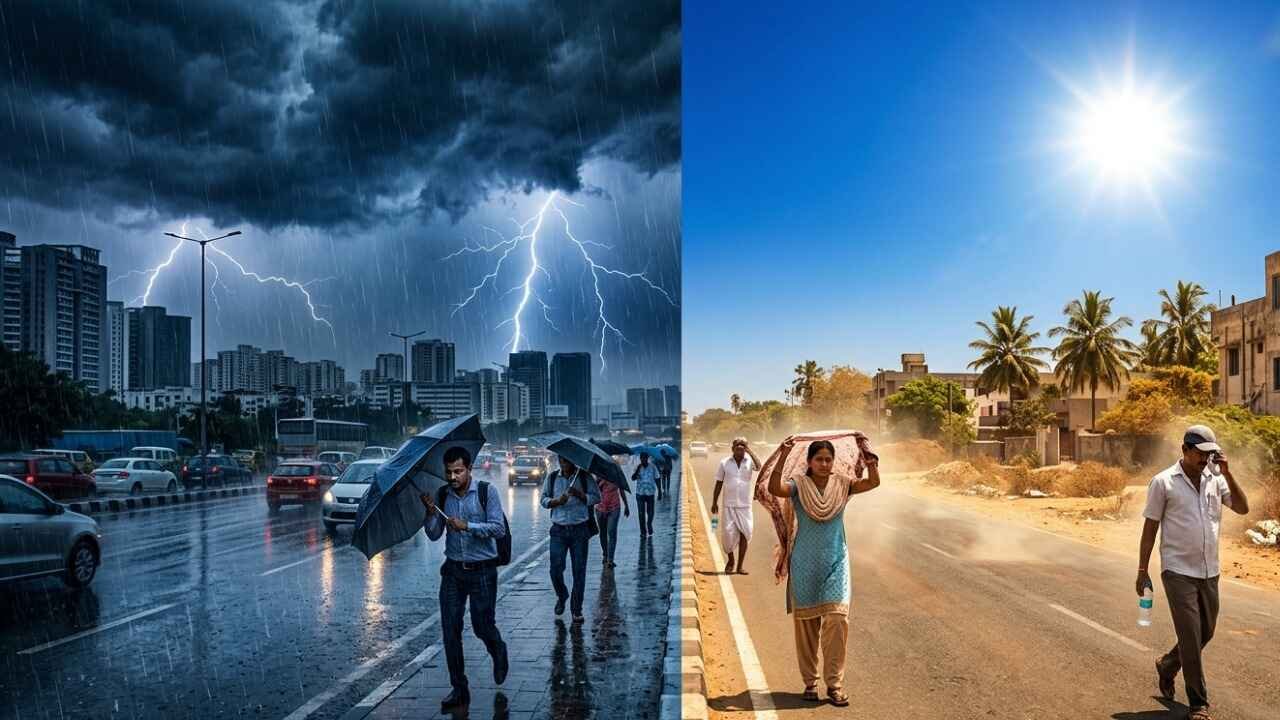
India is stepping into a new era of weather prediction as the India Meteorological Department has launched an advanced artificial intelligence based forecasting system designed to improve rainfall accuracy across the country. This move marks a major shift in how weather information is delivered, especially during the monsoon season when conditions change rapidly.
The new system is developed by the National Centre for Medium Range Weather Forecasting and is currently being tested in Uttar Pradesh as a pilot project. What makes it significant is its ability to predict rainfall at a very local level, covering areas as small as one kilometer. This means people will now get more precise updates about rain in their immediate surroundings instead of broad regional forecasts.
At the core of this technology is a powerful data driven model that combines multiple sources of information. It collects inputs from automatic rain gauges, weather stations, satellites and Doppler radars. The artificial intelligence then processes all this data to generate forecasts that can extend up to ten days in advance, making predictions more reliable and location specific.
According to officials from the Ministry of Earth Sciences, this system will make forecasting more accurate and locally relevant than ever before. The aim is to ensure that even small villages and farming regions receive timely weather alerts that can support better decision making.
Farmers are expected to benefit the most from this innovation. With better rainfall predictions, they will be able to plan sowing, irrigation and crop protection more effectively. Union Minister Jitendra Singh highlighted that increasing climate variability and extreme weather events make such technology essential for agricultural resilience. He also mentioned that the pilot will later expand to other states across India.
In another development, the Indian Institute of Tropical Meteorology in Pune has also created an AI based system that tracks the movement of the monsoon at a district level. Earlier forecasts were limited to larger regions, but this new model provides more precise updates about when the monsoon will reach specific districts.
This upgraded tracking system is already active in 16 states and covers more than 3000 administrative blocks and districts. These regions were selected due to their high dependence on rainfall for agriculture. Experts believe that such detailed forecasting can significantly improve agriculture planning, water resource management and disaster preparedness.
The impact of this technology is not limited to farming alone. Ordinary citizens are also likely to benefit from more accurate weather updates. Daily decisions such as travel planning, school schedules or office commutes will become easier with reliable short term forecasts. If successful, this AI powered system could completely transform how India understands and responds to weather conditions in the future.