
Floating Iron Giant in the Sea to Power 24000 Homes China Builds Record Breaking Wind Turbine
China has installed a massive floating offshore wind turbine called Three Gorges Pilot marking a major leap in renewable energy technology with the capacity to generate enough electricity for thousands of homes every year
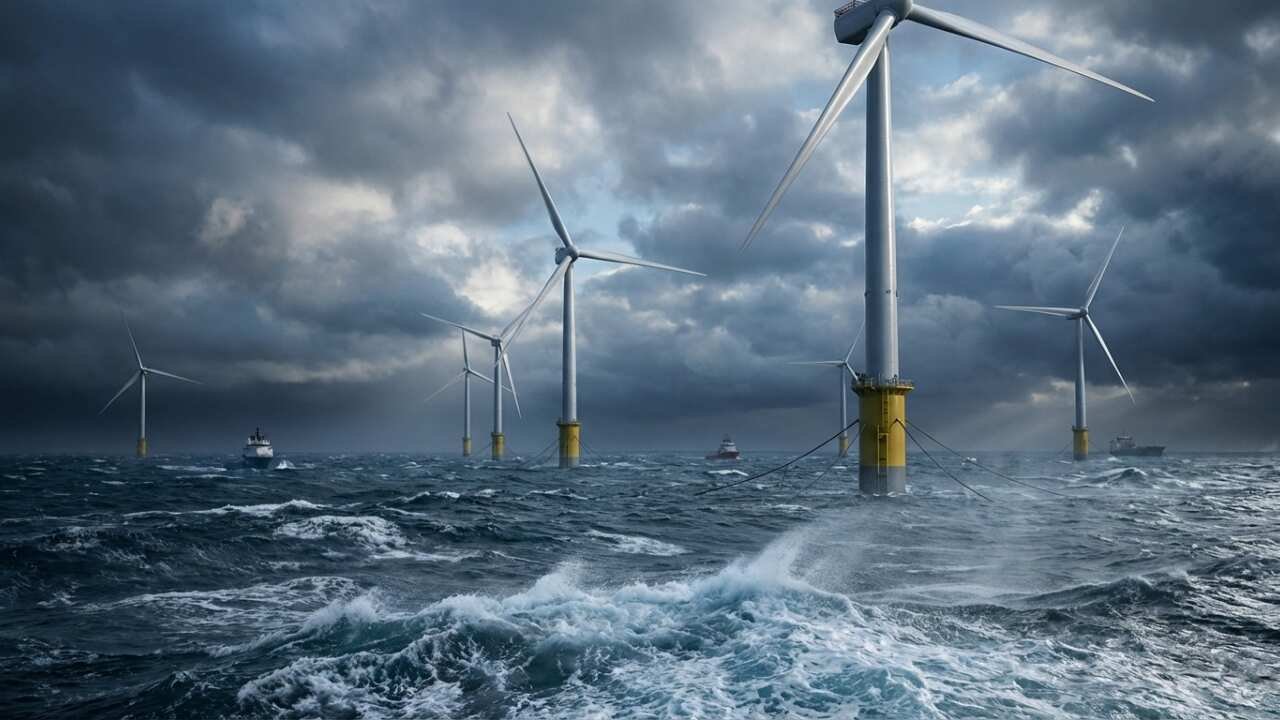
China has taken a significant step forward in clean energy innovation by deploying the world’s largest floating offshore wind turbine. Named Three Gorges Pilot, this enormous structure stands tall in the sea near Yangjiang coast and represents a new direction in how wind energy can be harvested from deeper waters. The project highlights how renewable power is moving beyond traditional coastal limits into the open ocean where wind conditions are stronger and more consistent.
Unlike conventional wind turbines that are fixed to the seabed, this one is mounted on a floating platform. This allows it to operate in deep sea areas where installation was previously not possible. The turbine has a capacity of 16 megawatts and has been placed nearly 70 kilometers offshore, making it one of the most advanced installations in offshore wind development.
What makes this structure even more impressive is its sheer size. The turbine rises to about 270 meters which is roughly 885 feet high, while its blades stretch across a massive 252 meters. When in motion, it can cover an area comparable to seven football fields. Engineers believe this scale allows it to capture far more wind energy compared to smaller turbines, significantly improving electricity output.
The floating base supporting the turbine is equally remarkable. It is built on a semi submersible platform measuring about 80 meters in length and 91 meters in width, with a total weight of nearly 24100 tons. Instead of being anchored to the seabed, it is held in place using nine suction anchors and strong cable systems. This design helps it remain stable even in rough sea conditions while still allowing flexibility to adjust with waves and currents.
Advanced engineering systems have been integrated into the structure to ensure durability and performance. These include a dynamic monitoring system, an active ballast system, and a specially designed mooring setup. The mooring system combines traditional chains with polyester cables that act like a spring, reducing stress caused by strong winds and waves. This improves stability and extends the operational life of the turbine.
Before being deployed offshore, the turbine was assembled at a port in Beihai and then transported to its final location at sea. Once fully operational, it is expected to generate around 44.65 million kilowatt hours of electricity every year. This output is sufficient to supply power to nearly 24000 households, making it a significant contributor to clean energy production.
This ambitious project reflects China’s growing focus on expanding renewable energy infrastructure in deep sea environments. By using floating turbine technology, energy generation is no longer limited to shallow coastal waters. Projects like Three Gorges Pilot are expected to play an important role in reducing dependence on fossil fuels and accelerating the global shift toward sustainable energy solutions.