Hyderabad Groundwater Crisis Deepens as Most Mandals Enter Danger Zone
A new groundwater assessment has raised serious concerns over Hyderabad's water future with most mandals facing critical depletion despite receiving substantial annual rainfall.
Hyderabad’s rapid urban growth and expanding infrastructure have helped transform the city into a major economic hub, but a new assessment suggests that an equally significant challenge is developing beneath the surface. Groundwater reserves across much of the city are shrinking at an alarming rate, raising concerns about future water security.
According to the Dynamic Groundwater Resource Assessment Report 2025 released by the Union Ministry of Jal Shakti, fifteen of Hyderabad’s sixteen mandals have been classified under critical or over exploited categories. The findings place the city among some of the most water stressed regions in the country despite its reputation as a thriving metropolitan center.
Experts say the situation has become so severe that Hyderabad’s groundwater conditions are now being compared with some of the driest districts in Rajasthan and other regions known for chronic water scarcity. Several important urban areas, including Secunderabad, Khairatabad, Ameerpet, Himayatnagar, Musheerabad, Nampally, Shaikpet and Saidabad, are among the locations identified as being under significant stress.
The report also highlights that the problem extends beyond Hyderabad. Several mandals in neighboring Ranga Reddy, Medchal Malkajgiri and Yadadri Bhuvanagiri districts are experiencing similar groundwater depletion, indicating that the issue is spreading across the wider urban region.
Water resource specialists attribute the crisis primarily to excessive extraction through borewells and the lack of effective groundwater recharge systems. While groundwater is being pumped out continuously for domestic and commercial use, very little water is being allowed to return naturally to underground aquifers.
Retired water resources experts note that borewells drilled to depths of 1,200 to 1,500 feet are increasingly failing to yield sufficient water. In many locations, drilling operations are encountering only hard rock formations, making groundwater access more difficult and expensive.
Ironically, Hyderabad receives between 900 and 1,000 millimeters of rainfall annually. However, a large portion of this rainwater is lost through drainage systems and runoff instead of being captured and redirected into the ground. Specialists argue that the city is failing to convert its seasonal rainfall into long term water security.
Urban planning and disaster management experts have urged both authorities and residents to take immediate corrective measures. They recommend widespread installation of rainwater harvesting systems in apartment complexes, commercial buildings and residential communities to improve groundwater recharge.
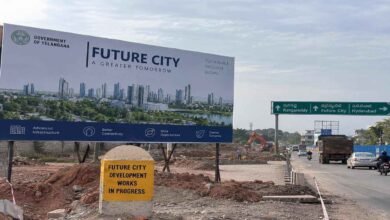
They also stress the need for tighter regulation of borewell usage and better management of urban construction activities. As Hyderabad continues to expand through new residential and information technology corridors, protecting underground water reserves has become just as important as developing infrastructure above ground.
Experts warn that unless large scale conservation and recharge efforts begin soon, Hyderabad could face a far more serious water crisis in the coming years. They believe the city’s future growth and sustainability will depend heavily on how effectively it manages and replenishes its groundwater resources today.