How El Nino Can Push Up Food Prices and Increase Household Expenses in India
El Nino may reduce monsoon rainfall, affect farm production, tighten food supplies, and increase the prices of milk, vegetables, pulses, and other daily essentials, putting additional pressure on household budgets.
How El Nino Impacts More Than Just Rainfall
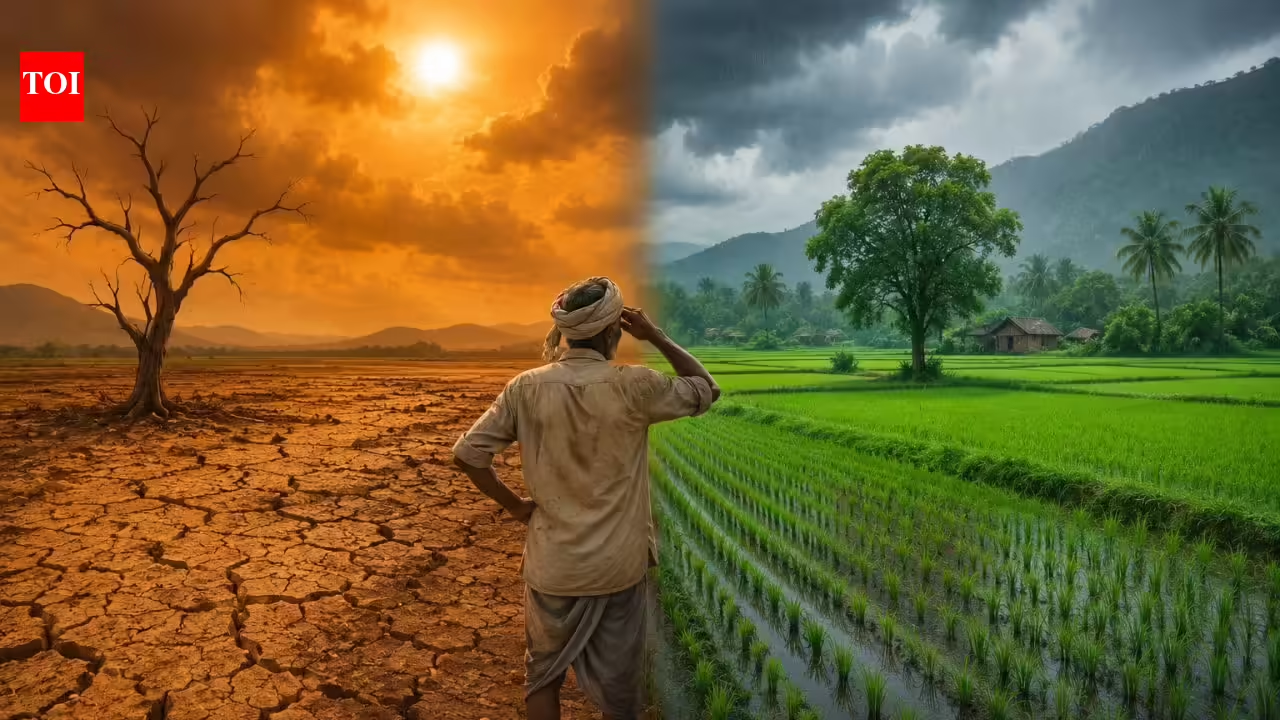
El Nino is widely known for disrupting weather patterns, but its impact extends far beyond rainfall. When monsoon rains weaken, agriculture suffers, food production slows, and the prices of several everyday essentials can rise. Experts say the weather phenomenon can influence the economy by affecting crop output, water availability,and household spending.
Although El Nino does not automatically trigger inflation every time it appears, a prolonged shortage of rainfall can put pressure on food supplies, making groceries more expensive for consumers across the country.
What Is El Nino
El Nino is a naturally occurring climate pattern that develops when sea surface temperatures in the central and eastern Pacific Ocean become warmer than usual. The phenomenon typically appears every two to seven years and is closely linked to changes in global weather.
The term El Nino originated from the coast of Peru, where the warming waters usually become noticeable around December. In Spanish, El Nino means Little Boy or Child Jesus.
How El Nino Develops
Under normal conditions, strong trade winds push warm Pacific Ocean waters from the Americas toward Asia and Australia. This movement helps support healthy monsoon rainfall over countries such as India.
During an El Nino event, these winds weaken. As a result, warm water shifts back toward the eastern Pacific near South America instead of moving west. This change alters global weather patterns, often reducing rainfall over India while bringing heavier rain to parts of South America.
Why India Watches El Nino Closely
India depends heavily on the southwest monsoon for agriculture. A weaker monsoon can reduce reservoir levels, limit irrigation, and lower agricultural production. Crops that rely mainly on rainfall become especially vulnerable during such periods.
While countries like India, Indonesia, and Australia often experience drier conditions during El Nino, Peru and Ecuador may receive unusually heavy rainfall, sometimes leading to floods.
How Food Prices Can Rise
A weak monsoon can reduce the supply of agricultural products, causing prices to increase. Vegetables, pulses, edible oils, and dairy products are among the items most likely to be affected if rainfall remains below normal.
Lower rainfall also means less water and green fodder for livestock. Reduced milk production can push up the prices of milk as well as dairy products such as curd, paneer, butter, and ghee.
Pulses such as tur dal may see lower production, while reduced soybean output could increase edible oil prices. Fresh vegetables, including tomatoes, may become costlier if supply declines. Higher animal feed costs can also increase the prices of poultry and eggs.
Rice and Wheat May Remain Stable
Experts believe rice and wheat prices are less likely to rise immediately because India has sufficient government food stocks and relatively strong irrigation facilities for these crops. These reserves can help stabilize the market even if rainfall remains below normal for some time.
Should Consumers Be Worried
Economists say there is no reason for immediate panic. The performance of the monsoon during July and August will play a crucial role in determining agricultural output and food prices.
If rainfall improves during these months, the pressure on food prices could ease naturally. India is also better prepared than in previous years, with improved irrigation infrastructure and stronger food buffer stocks to manage temporary supply disruptions.
However, if El Nino strengthens and rainfall continues to remain significantly below normal, households may face higher grocery bills in the second half of the year. The extent of price increases will depend not only on rainfall but also on reservoir water levels, crop production, government food reserves, irrigation support, and import policies.
Historically, years with severe rainfall shortages have often been associated with higher food inflation. Even so, every El Nino event does not necessarily lead to a major spike in prices, as several economic and agricultural factors determine the final impact.