
Donkey Route Warning: Punjab Man Warns Indians Against Risky Donkey Routes to the US
A Punjab man who reportedly travelled to Mexico through an illegal route has warned others against trusting agents, describing the violence and hardship he allegedly faced abroad.
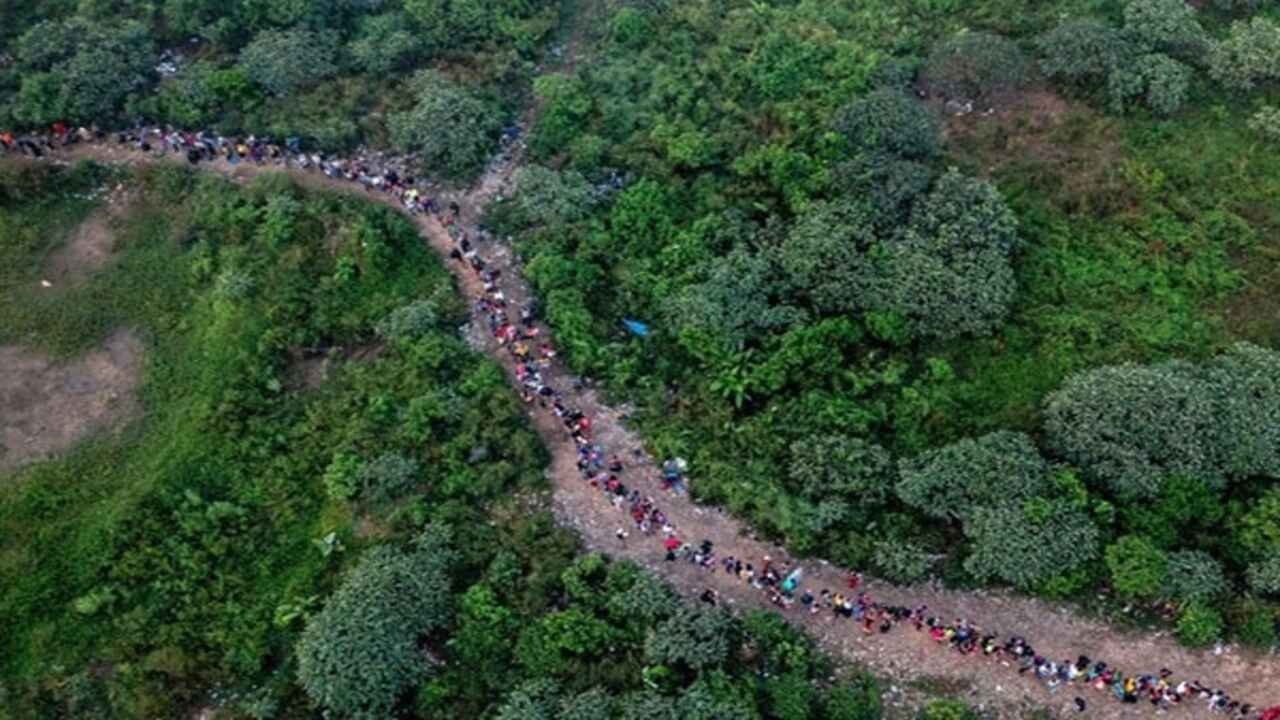
Donkey Route Warning: A Punjab man has urged Indians not to use illegal migration routes after claiming that he was deceived by agents who promised to take him safely abroad.
A video of the man has been circulating on social media. In the recording, he appears to appeal to others with folded hands, asking them not to trust agents who offer to arrange overseas travel through what is commonly known as the donkey route.
According to his account, agents took him to Mexico after promising a safe journey. He alleged that he was later held against his will and physically assaulted when he tried to escape.
The man said he eventually managed to get away with help from another person. He also claimed that his injuries were so serious that he was unable to walk properly.
While speaking about his experience, he said he had made a mistake by trusting the agents and warned other Indians against making the same choice. The video was posted on Thursday, but details such as his name and address were not disclosed.
The account has drawn attention because illegal migration routes can expose people to serious dangers far beyond the financial loss involved. Those travelling through unofficial channels may face exploitation, detention, violence and uncertain legal status.
The term donkey route is commonly used to describe irregular migration journeys in which people travel through multiple countries in an attempt to reach their final destination without following the normal immigration process.
The phrase is associated with Punjabi usage and broadly refers to moving from one place to another through a difficult or indirect path. In practice, such journeys can involve several stages and may depend heavily on intermediaries or agents.
People attempting these routes may be promised employment, permanent settlement or a quick way to enter countries such as the United States, Canada or the United Kingdom. Once money has been paid, however, the promised arrangements may change, leaving travellers in vulnerable situations.
Some irregular migration networks have also been linked to forged documents and concealed travel arrangements. Travellers can be moved across borders using different forms of transport, sometimes without knowing where they will be taken next.
The route can involve long journeys through unfamiliar regions and difficult living conditions. People may also have little control over their movements once they are placed in the hands of intermediaries.
The Punjab man’s warning highlights another concern. Even when an agent claims to have arranged everything, there may be no guarantee that the journey will remain safe or that the promised destination will be reached.
The financial burden can also be substantial. Agents involved in illegal migration may demand large amounts of money from families, sometimes promising a secure route that does not exist.
In some cases, families may sell property or borrow heavily to finance such journeys. If the arrangement fails, they can be left with significant debt in addition to the emotional stress caused by the situation.
The risks do not end after crossing a border. A person who enters another country without the required permission can face detention, deportation or other legal consequences.
Indian authorities have repeatedly advised people to use legal immigration channels and verify overseas employment or travel offers before handing money to agents. Proper visas and authorised procedures provide considerably greater protection than informal arrangements.
The video circulating online has once again brought attention to the dangers associated with irregular migration. While the claims made by the man have not been independently verified, his account serves as a warning about the risks that can arise when people place their trust in unknown intermediaries.
For anyone planning to travel abroad, checking visa requirements, using authorised agencies and verifying documents before departure can help avoid serious problems.
The promise of reaching a foreign country quickly may appear attractive, especially when an agent claims to have an easy solution. But as the Punjab man’s alleged experience shows, the consequences of choosing an illegal route can be far more serious than expected.