Why SIM Cards Have a Cut Corner and Why It Still Matters
The small cut corner on every SIM card is a smart engineering solution that prevents incorrect insertion protects devices reduces damage and makes smartphone use easier for millions worldwide.
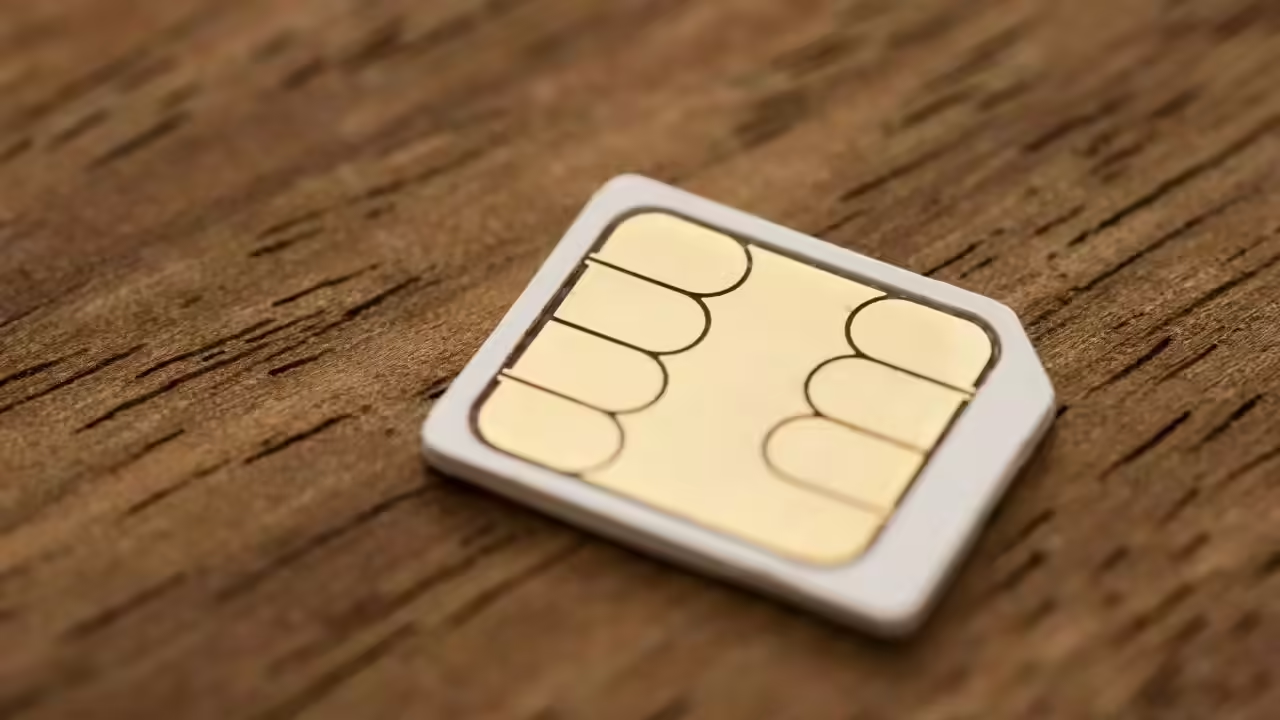
Most smartphone users have noticed that every SIM card has one corner cut at an angle. While it may look like a simple design choice, it actually serves an important technical purpose. This small feature was introduced to help users insert SIM cards correctly and to prevent damage to both the card and the phone.
In the early days of mobile phones, SIM cards had a perfectly rectangular shape with identical corners. Many users accidentally inserted them in the wrong direction, often resulting in damaged SIM slots or scratched contact chips. To solve this common problem, engineers introduced the angled corner, creating a simple but highly effective design improvement.
This concept is known as mistake proofing or fool proofing. The cut corner acts as a built in guide, allowing the SIM card to fit into the slot in only one correct orientation. The matching design of SIM trays further reduces the chances of incorrect insertion. Even children or people with limited vision can easily identify the correct position by touch.
The evolution of SIM cards has also been remarkable. When the first SIM cards were introduced in 1991, they were about the size of a credit card. As mobile phones became smaller and more advanced, SIM cards evolved into mini SIM micro SIM and finally the nano SIM used in most smartphones today. Despite these size changes, the angled corner has remained a standard feature because of its practical value.
Although many modern smartphones are gradually shifting to eSIM technology and reducing the need for physical SIM cards, the iconic cut corner continues to represent one of the simplest yet most successful engineering solutions in mobile technology. It is a small design detail that has made smartphone usage safer easier and more convenient for millions of users around the world.