Ghost Font Claims to Hide Text from AI While Remaining Readable to Humans
A developer has introduced Ghost Font, an experimental visual text system that reportedly prevents AI models from reading hidden messages while allowing human viewers to recognize them through motion.
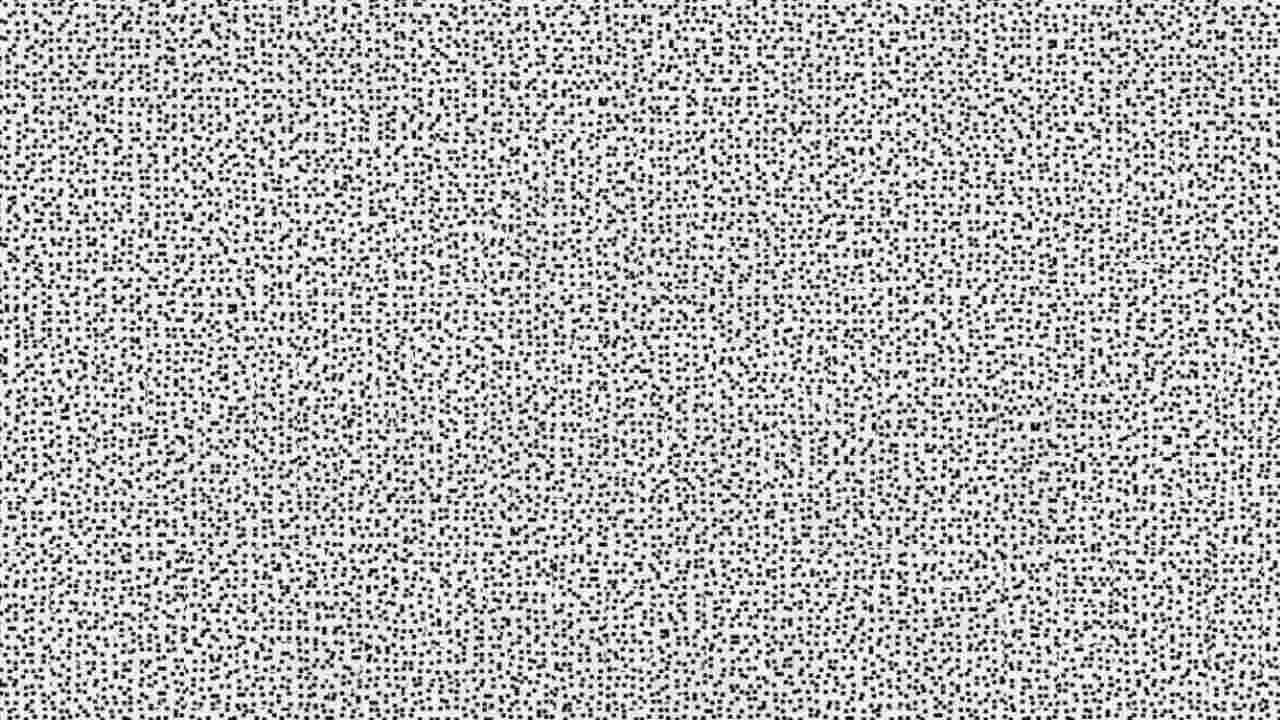
A software developer has introduced an experimental communication system called Ghost Font, claiming it can conceal text from artificial intelligence while remaining understandable to human viewers. The project has drawn attention for exploring a different approach to digital privacy in the age of AI.
Developed by Eric Lu, Ghost Font is not a traditional typeface that installs on a computer. Instead, it relies on animated visuals made up of thousands of tiny moving dots. As these dots shift continuously, the hidden message becomes visible to the human eye, while AI systems reportedly struggle to interpret the content.
According to its creator, the text only appears clearly when the animation is playing. Once the video is paused or captured as a still image, the letters disappear into a field of random looking dots, making the message almost impossible to distinguish visually.
Lu says he tested the system with several advanced AI models and found that they were unable to accurately identify the hidden text, even after extended analysis. He believes the project demonstrates that humans and AI process visual information differently.
The developer also suggests Ghost Font could eventually inspire new verification methods similar to CAPTCHA. As existing CAPTCHA systems become easier for AI to solve, he believes motion based visual communication may offer an alternative for distinguishing human users from automated systems.
Beyond security applications, Ghost Font is also intended as a research tool. Its creator hopes the project will help measure future improvements in AI vision capabilities while encouraging new forms of human centered visual creativity.
Although the technology is still experimental and has not been widely adopted, Ghost Font has generated interest among developers and researchers looking for innovative ways to balance artificial intelligence with digital privacy and secure communication.