Direct to Device Technology Explained: The Satellite Network That Could Work Without SIM or Towers, and Why Apple and Google Are Raising Concerns
India is exploring Direct to Device satellite connectivity to reach remote areas without mobile towers, but Apple and Google warn of technical limits, battery strain, and network challenges before rollout.
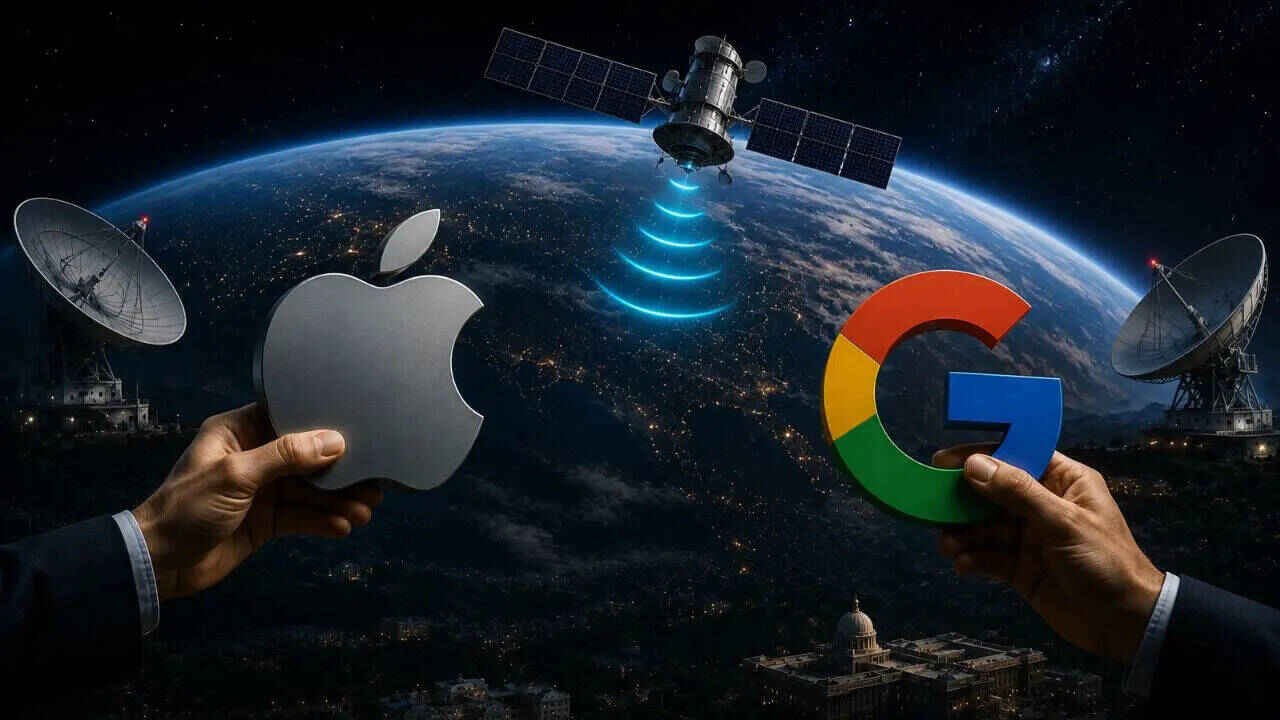
A major shift may be on the horizon for mobile connectivity as India explores Direct to Device technology, commonly called D2D, which could allow smartphones to connect directly to satellites without relying on SIM cards or cellular towers. The idea is simple in concept but revolutionary in impact, especially for regions where traditional mobile networks struggle to reach.
While the technology promises to reshape communication in remote, hilly, and disaster prone regions, it has already triggered caution from global tech leaders. Apple and Google have reportedly expressed concerns during informal discussions with India’s Department of Telecommunications, advising a more careful and phased approach before moving ahead with large scale deployment.
At its core, Direct to Device technology is a satellite based communication system that allows a regular smartphone to connect directly with satellites orbiting the Earth. In theory, this removes the need for physical mobile towers and SIM dependent networks. Users could make calls or access internet services even in areas where 4G or 5G signals have never reached, simply by connecting to the sky above.
India sees this as a potential breakthrough for connectivity gaps that still exist across rural belts, mountainous terrain, forests, and disaster hit zones. However, before any rollout decisions are made, regulatory bodies like the Department of Telecommunications and TRAI are currently studying spectrum allocation and technical feasibility.
Apple, on the other hand, is cautious about any immediate changes to existing smartphone hardware. The company believes that introducing satellite connectivity should not require major modifications to devices or new certification processes at this stage. It has also stressed the importance of maintaining the stability and security of current mobile networks while the technology matures.
Beyond device concerns, Apple has also pointed to cross border coordination issues and regulatory hurdles in countries where satellite communication services are still not formally approved. These challenges, according to the company, could slow down seamless global adoption.
Google has echoed similar concerns but focused more on technical limitations that could affect everyday usage. One of the biggest issues is battery consumption, as direct satellite connections tend to drain power much faster than traditional mobile networks. The company also highlighted that fitting powerful satellite antennas into slim smartphone designs remains a difficult engineering challenge.
Another concern raised by Google involves signal strength and consistency. Satellite connections may not always match the stability of ground based networks, especially in dense urban areas or during high traffic usage. Integrating satellite systems with existing 4G and 5G infrastructure is also seen as a complex technical hurdle that will require significant innovation.
Despite these concerns, global interest in D2D technology is already growing. Countries such as the United States, Australia, Canada, and parts of Europe are experimenting with early versions of satellite to phone connectivity. In the US, companies like Starlink and T Mobile have begun testing services that allow smartphones to connect directly with satellites in limited scenarios.
Industry experts believe that while the idea is promising, large scale implementation in India will still take time. The technology needs further refinement, stronger regulatory clarity, and better integration with existing telecom systems before it becomes part of everyday mobile usage.
For now, Direct to Device remains one of the most ambitious ideas in the future of communication, holding the promise of true global connectivity, but also carrying a set of challenges that companies and governments are still working to solve.