Yemen Fighting Leaves 44 Dead in Fresh Taiz and Lahj Clashes
Yemen's government forces and Houthi fighters clashed across Taiz and Lahj, leaving at least 44 people dead in 24 hours as fighting intensified near Bab al Mandeb key shipping corridor.
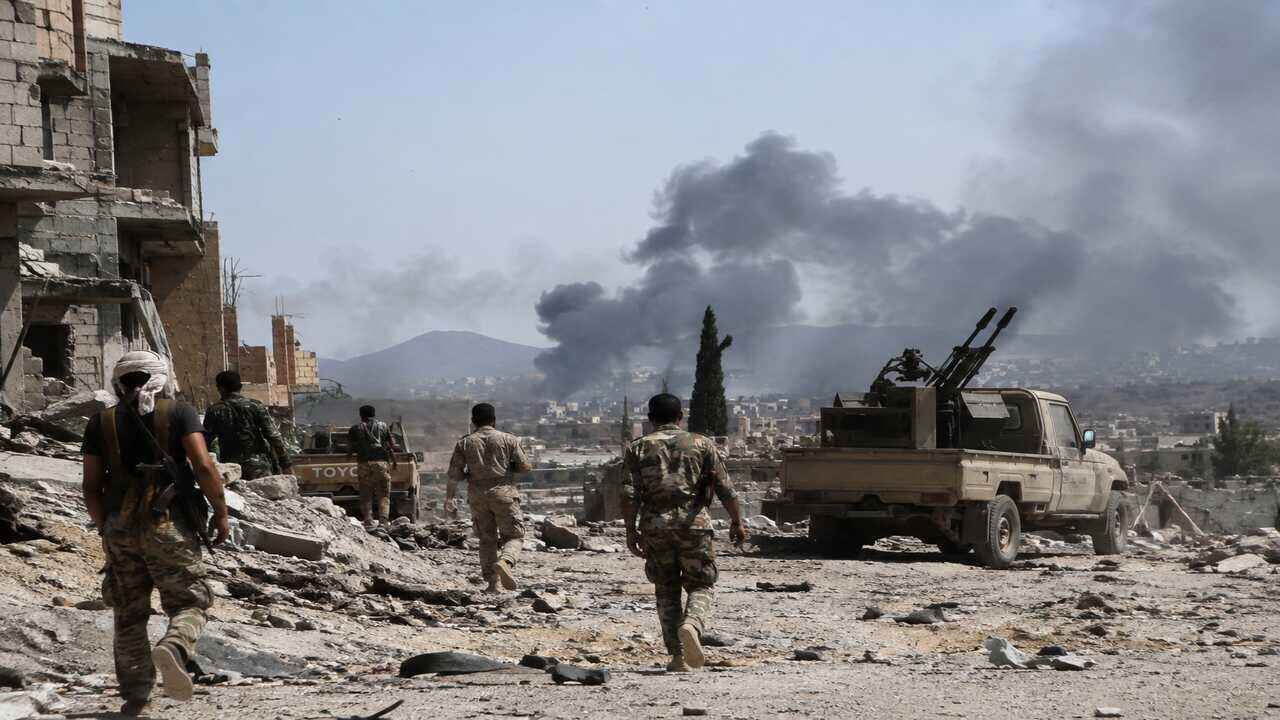
Fresh fighting between Yemeni government forces and Houthi fighters has left at least 44 people dead over a 24 hour period, according to military sources cited in reports. The clashes have mainly been reported in the southwestern provinces of Taiz and Lahj, where fighting has intensified around strategically important positions.
The latest violence comes as both sides increase their military presence in areas close to the Bab al Mandeb Strait. The waterway connects the Red Sea with the Gulf of Aden and is an important route for international shipping.
In Taiz province, fighting was reported around Al Kadha and Al Waziya. Government forces said they had repelled Houthi attacks in the area. Military sources reported six government soldiers and 11 Houthi fighters killed during the clashes.
Another major confrontation took place around the Kahbub mountain area in Lahj province. The location is strategically important because of its position overlooking the Bab al Mandeb Strait. Reports said government aligned forces and Houthi fighters were involved in heavy fighting over the area.
According to military sources cited in the latest casualty report, 12 government soldiers and 15 Houthi fighters were killed in the Lahj fighting. The reported Houthi casualties included a commander. Taken together with the losses reported in Taiz, the total death toll reached at least 44.
The fighting has intensified after a series of Houthi advances along Yemen’s western coast. Earlier this month, Houthi forces captured the port city of Mocha, a development that changed the military situation along the Red Sea coast. The group also moved to take control of Perim Island near the Bab al Mandeb Strait.
The recent territorial changes have increased concern over the security of the Bab al Mandeb route. The strait is an important passage for commercial shipping, and developments around the area could have wider consequences for trade and energy transportation.
Fighting has also been reported across several other parts of western Yemen in recent days. Yemeni government forces have carried out strikes against Houthi positions and reinforcements, while Houthi forces have continued attacks on government held positions.
The current escalation marks a sharp change after years in which the conflict had remained at a comparatively lower level in several areas. The recent Houthi offensive and the response from government aligned forces have once again pushed Yemen’s long running conflict into a more active phase.
Yemen’s civil war began after Houthi forces seized the capital Sanaa and other northern areas in 2014. In 2015, a Saudi led coalition intervened in support of the internationally recognised Yemeni government. The conflict has since caused a prolonged humanitarian crisis and repeated displacement.
The latest battles are particularly significant because of their location. Control of areas around Taiz, Lahj and the Bab al Mandeb region can influence access to important coastal routes and military positions.
For residents in the affected areas, the renewed fighting has brought fresh security concerns. Recent reports have also pointed to civilian displacement as violence has spread along the western coast and around Taiz.
The situation remains fluid, with both sides continuing to reinforce their positions. Further clashes around Kahbub and other areas near Bab al Mandeb could determine how the front lines develop in the coming days.